
Leptomantispa pulchella
This record describes Leptomantispa pulchella (species). Recorded family: Mantispidae. Recorded order: Neuroptera.
Identification and Appearance
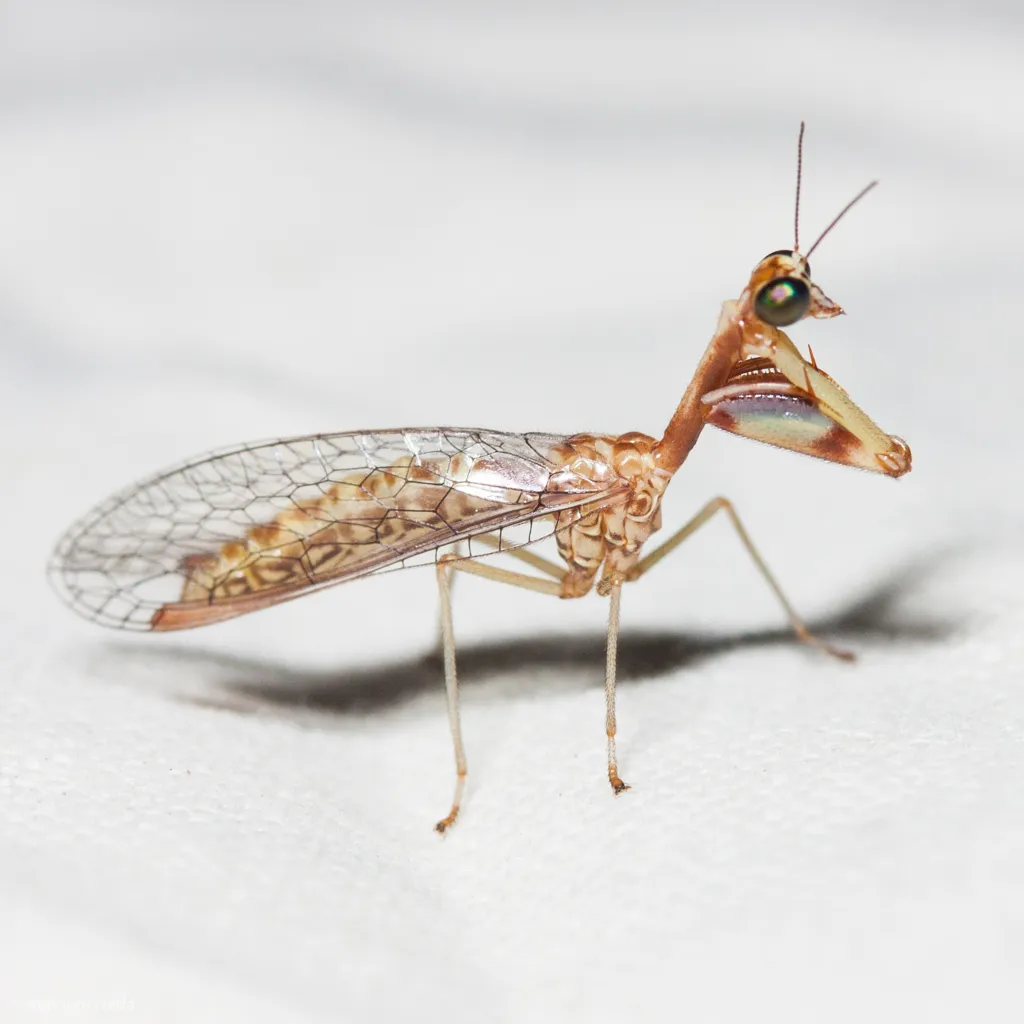
Wikipedia reference for Leptomantispa pulchella: http://en.wikipedia.org/wiki/Leptomantispa_pulchella.
Classification
- Kingdom
- Animalia
- Phylum
- Arthropoda
- Class
- Insecta
- Order
- Neuroptera (Antlions, Lacewings, and Allies)
- Superfamily
- Mantispoidea
- Family
- Mantispidae (Mantid Lacewings)
- Subfamily
- Mantispinae
- Genus
- Leptomantispa
Imported taxonomy record. Source availability varies; see the source references and editorial policy below.
Habitat and Range
Geographic Range
Widespread transcontinental; Canada (sw. ON & s. BC ( 3 ) ) south to Costa Rica ( 4 )
Diet and Behavior
Diet: Hosts are spiders commonly found on foliage ( Anyphaenidae , Salticidae , Clubionidae , etc.) who also build silken retreats on leaves and under bark ( 3 ) .
Life History
First-instar larvae board spiders and wait until they gain access to freshly laid egg cases; they will not feed on eggs unless they have spent some time on the dorsum of the spider pedicel, where they apparently feed on the host's haemolymph ( 3 )
Additional species information
Species notes from the sources
Etymology: Leptomantispa pulchella ( Banks , 1912)
About Antlions, Lacewings, and Allies: the wider group
Order-level background for Neuroptera, the group containing Leptomantispa pulchella. Species-specific details appear above.
Group overview
Neuroptera (lacewings, antlions, owlflies) includes ~6,000 described species. Green lacewing larvae are called 'aphid lions' - a single larva can consume up to 200 aphids per week.
Ecological role of the group
Antlion larvae build conical pit traps in sandy soil - an engineering feat studied by physicists for insights into granular mechanics. Adult lacewings are important pollinators of night-blooming flowers.
Economic and practical significance of the group
Lacewings are commercially reared and sold as biological pest control agents. The global biological pest control market, which heavily features lacewings, was valued at $6.6 billion in 2023 and is projected to reach $16.4 billion by 2033.
Recorded sources for this group: USDA IPM, biological control market research. Imported estimates may describe particular regions or reporting periods.
Photos of Leptomantispa pulchella (3)
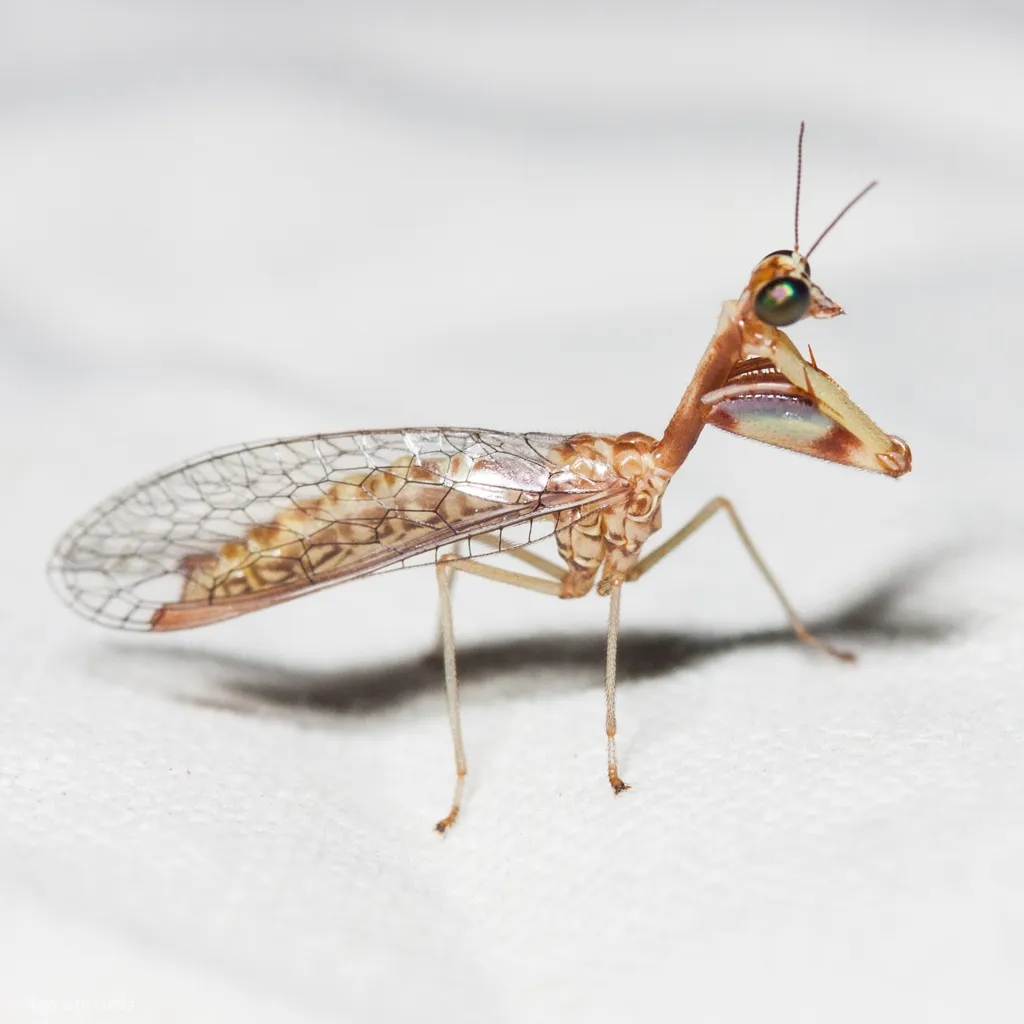
Photo credits: Contributed by john and jane balaban; Additional contributions by cotinis , Aaron Schusteff , v belov , PaleoJon
Frequently Asked Questions About Leptomantispa pulchella
How big is Leptomantispa pulchella?
Forewing 6.60 - 11.55 mm ♀; 7.20 - 11.75 mm ♂. US specimens are smaller, reaching only 9.90 mm, with those in British Columbia often larger. ( 3 ) In the US, generally smaller than Dicromantispa sayi .
Where is Leptomantispa pulchella found?
Range: Widespread transcontinental; Canada (sw. ON & s. BC ( 3 ) ) south to Costa Rica ( 4 )
What does Leptomantispa pulchella eat?
The diet of the Leptomantispa pulchella includes Hosts are spiders commonly found on foliage ( Anyphaenidae , Salticidae , Clubionidae , etc.) who also build silken retreats on leaves and under bark ( 3 ) ..
What is the life cycle of a Leptomantispa pulchella?
First-instar larvae board spiders and wait until they gain access to freshly laid egg cases; they will not feed on eggs unless they have spent some time on the dorsum of the spider pedicel, where they apparently feed on the host's haemolymph ( 3 )