
Marbled Scud
Jassa marmorata
This record describes Jassa marmorata (species). Recorded family: Ischyroceridae. Recorded order: Amphipoda.
Identification and Appearance
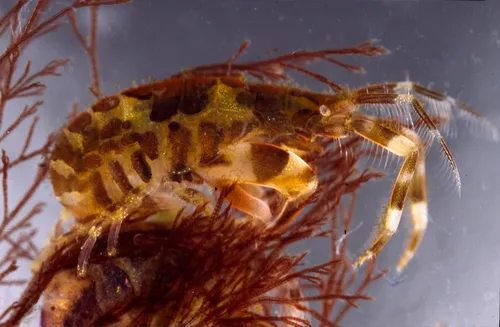
Jassa marmorata is a species of tube-building amphipod. It is native to the northeast Atlantic Ocean but has been introduced into northeast Asia. J. marmorata are greyish in colour with reddish brown markings. The can grow to a length of up to 10 millimetres (0.39 in). They are generally found in fouling communities and intertidal areas where they build tubes of detritus and algae fragments using silky mucus secretions. They are remarkable for having two distinct morphs...
Identification notes
Patterning generally distinctive; for more solidly colored individuals, the following characters separate from Ischyrocerus anguipes : Propodus of second chela is much larger than that of the first chela in both sexes (in I. anguipes , only the male has such an enlarged propodus) Hind margin of propodus of second chela with prominent tooth (absent in I. anguipes ) Second coxae dissimilar from third coxae (very similar in I. anguipes )
Wikipedia reference for Jassa marmorata: http://en.wikipedia.org/wiki/Jassa_marmorata.
Classification
- Kingdom
- Animalia
- Phylum
- Arthropoda
- Class
- Malacostraca
- Order
- Amphipoda (Amphipods)
- Suborder
- Senticaudata
- Family
- Ischyroceridae
- Genus
- Jassa
Imported taxonomy record. Source availability varies; see the source references and editorial policy below.
Additional species information
Species notes from the sources
Etymology: Jassa marmorata Holmes 1905
About Amphipods: the wider group
Order-level background for Amphipoda, the group containing Jassa marmorata. Species-specific details appear above.
Group overview
Amphipoda includes ~10,000 described species of scuds, sand hoppers, and whale lice. While mostly aquatic, some species like sand hoppers (Talitrus saltator) are fully terrestrial, living on beaches above the tide line.
Ecological role of the group
Amphipods are critical detritivores in aquatic ecosystems, shredding leaf litter and recycling nutrients. Deep-sea amphipods have been found at the bottom of the Mariana Trench (10,994m), making them among the deepest-living animals on Earth.
Economic and practical significance of the group
Amphipods are standard test organisms in aquatic toxicology - Hyalella azteca is the EPA's primary freshwater sediment toxicity test species. They are also important food for fish in both freshwater and marine ecosystems.
Recorded sources for this group: EPA ecotoxicology, deep-sea biology, marine research. Imported estimates may describe particular regions or reporting periods.
Photos of Marbled Scud (6)
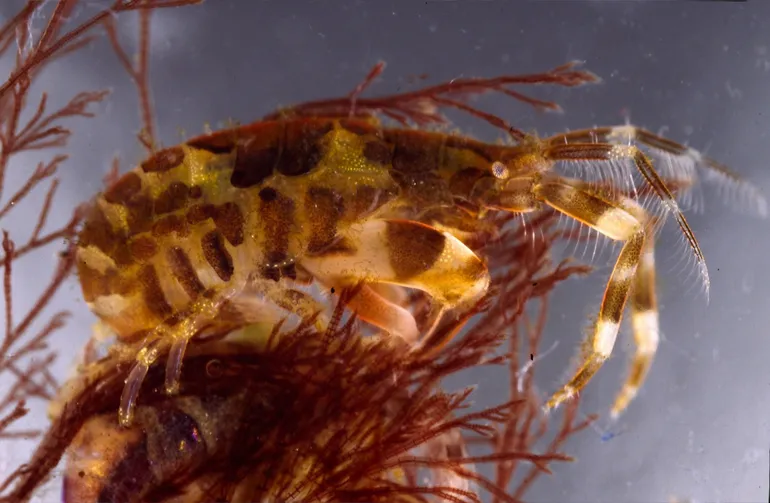
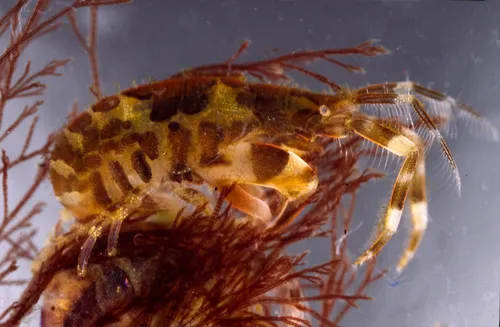
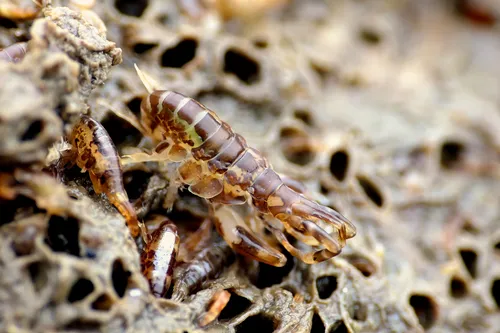
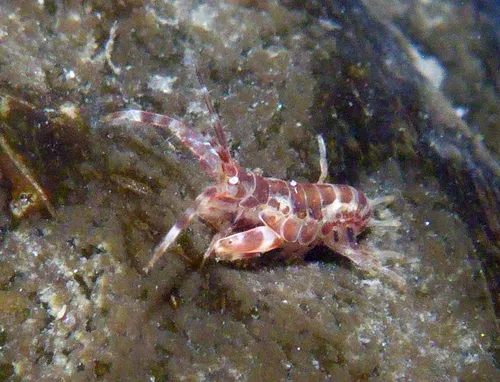
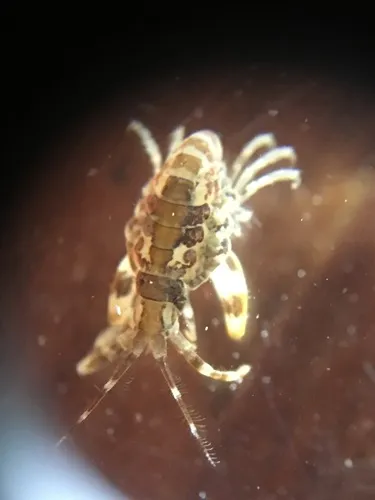
Photo credits: Contributed by Aaron Hunt