
Western Black-legged Tick
Ixodes pacificus
This record describes Ixodes pacificus (species). Recorded family: Ixodidae. Recorded order: Ixodida.
Identification and Appearance
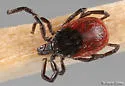
Adult and Nymph: legs, head, and thoracic plate black; female abdomen dark reddish; male abdomen blackish; 8 legs; nymph about half as large as adult Larva: 6 legs, lighter color, and about one-quarter as large as adult The Western Black-legged Tick is a vector of the Lyme Disease Borrelia burgdorferi spirochete, Babesia microti , and the equine granulocytic Ehrlichiosis equi rickettsia
Classification
Habitat and Range
Habitat
forests, north coastal scrub, high brush, and open grasslands; nymphs are commonly found on moss-covered tree trunks
Geographic Range
western United States and British Columbia (range does not overlap with Ixodes scapularis , the Deer Tick). Tick range maps , CDC
Seasonal Activity
may be present any time of year
Diet and Behavior
Diet: adults feed on blood of large mammals such as deer, dogs, coyotes, horses, and humans subadult stages feed on blood of lizards and small rodents
About Ticks: the wider group
Order-level background for Ixodida, the group containing Ixodes pacificus. Species-specific details appear above.
Group overview
Ixodida (ticks) includes ~900 described species in two major families: hard ticks (Ixodidae, ~700 species) and soft ticks (Argasidae, ~200 species). Ticks can increase their body weight by 200-600× when engorged with blood.
Ecological role of the group
Ticks are obligate blood-feeding parasites at all life stages after hatching. A single female can lay 3,000-8,000 eggs. Ticks can transmit more different pathogens than any other arthropod group - including bacteria, viruses, and protozoa simultaneously.
Economic and practical significance of the group
Tick-borne diseases are the most common vector-borne illnesses in the U.S. - Lyme disease alone accounts for 82% of all tickborne disease reports (CDC). Annual cases more than doubled from 22,000 to 48,000 between 2004-2016. Tick-related economic losses in U.S. cattle alone exceed $3 billion annually.
Recorded sources for this group: CDC tick surveillance data, USDA veterinary entomology. Imported estimates may describe particular regions or reporting periods.
Photos of Western Black-legged Tick (5)
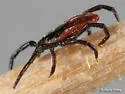
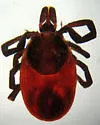
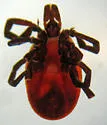
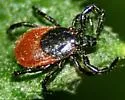
Photo credits: Contributed by Robin McLeod; Additional contributions by KenW
Frequently Asked Questions About Western Black-legged Tick
What is Western Black-legged Tick?
Western Black-legged Tick (Ixodes pacificus) is a species in the family Ixodidae, within the order Ixodida.
How big is Western Black-legged Tick?
adult body length about 3 mm
How do you identify Western Black-legged Tick?
Adult and Nymph: legs, head, and thoracic plate black; female abdomen dark reddish; male abdomen blackish; 8 legs; nymph about half as large as adult Larva: 6 legs, lighter color, and about one-quarter as large as adult
Where is Western Black-legged Tick found?
| Feature | Details |
|---|---|
| Habitat | forests, north coastal scrub, high brush, and open grasslands; nymphs are commonly found on moss-covered tree trunks |
| Range | western United States and British Columbia (range does not overlap with Ixodes scapularis , the Deer Tick). Tick range maps , CDC |
What does Western Black-legged Tick eat?
The diet of the Western Black-legged Tick includes adults feed on blood of large mammals such as deer, dogs, coyotes, horses, and humans subadult stages feed on blood of lizards and small rodents.
When is Western Black-legged Tick active?
Western Black-legged Tick: seasonal activity - may be present any time of year.