
Glover's Silkmoth - Hodges#7769
Hyalophora gloveri
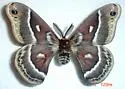
This record describes Hyalophora gloveri (species). Recorded family: Saturniidae. Recorded order: Lepidoptera.
Identification and Appearance
Classification
- Kingdom
- Animalia
- Phylum
- Arthropoda
- Class
- Insecta
- Order
- Lepidoptera (Butterflies and Moths)
- Superfamily
- Bombycoidea
- Family
- Saturniidae (Giant Silkworm and Royal Moths)
- Subfamily
- Saturniinae
- Tribe
- Attacini
- Genus
- Hyalophora
Imported taxonomy record. Source availability varies; see the source references and editorial policy below.
Habitat and Range
Habitat
Usually Alpine and Riparian (scattered in and among adjacent suitable habitats incl. foothills of the western prairies)
Seasonal Activity
Depending on location and weather patterns, life cycle activity (egg-adult) ranges from April/May-September. Adults are usually observed to fly from May to June (late July-August in s. AZ & n. Mex with larvae being seen from July to September/October). *Populations located across se. Arizona (Sonoran Region) have been observed to have 2 flight periods (generations). Although univoltine across most of the range, pop's in se. Arizona and n. Mexico have been observed to be partially bivoltine (altitude and annual precip seem to play a role). Adults in se. Arizona can be observed during a "first flight wave" in the spring and a "second flight period" in the late summer; the greatest numbers of adults are usu. observed to fly from late July to mid-August. The larvae of these later populations are often active through October.
Diet and Behavior
Diet: Several Trees and Shrubs in the Rosaceae esp.. Prunus spp., Willows, and Larch ... additional hosts are numerous incl. many other woody plants. Larvae may eat leaves of alder, birch, Antelope Bitterbrush (Purshia tridentata), buckbrush (Ceanothus spp.), buffaloberry, cherry, rose, Russian Olive (Eleagnus angustifolius), willow ----------------------------------------- The following list of host plants is based on gloveri populations in w. Montana and was contributed by P. White (pers. observ. & experiences). wild caterpillars have been found on the following: chokecherry sandbar willow australian "green" willow native "yellow" willow bitter brush(solitary food plant of gloveri in the Island Park ID region) Larvae were reared or attempted in captivity on the following: chokecherry* northwest sandbar willow (Salix exigua)* australian "green" willow+ coral bark willow or scarlett willow (Salix alba)+ bitter brush~ (larvea rejected plant after 3rd instar) golden currant (Ribes aureum)- wax currant (Ribes cereum)- wild rose~ (larvae rejected plant after 2nd instar) red alder (Alnus rubra)+ apple- (found a 5th instar nibbling on a lilac bush below apple / may have fallen/wandered off the apple tree ??) (*plants=most successful) (+plants=high growth rate) (no symbol=average growth) (- =slow growth rate) (~plants=impossible)
Life History
Holometabolous GENERALLY described as having one generation per year; eggs are laid singly on food plant, and hatch in 8-19 days, depending on temperature; overwinters as a pupa in spindle-shaped cocoon attached lengthwise to twig or trunk of tree or shrub and emerges as an adult the following spring or summer Univoltine across most of the range, some populations have been observed to be "bivoltine" (or "partially bivoltine" = "split brooded") in se. Arizona, New Mexico and n. Mexico (altitude, weather patterns and annual precip seem to play a role). These populations are also divergent in some of their physical traits; however, it is not known for certain whether these observed differences are environmentally induced or genetic (some preliminary captive rearing suggests their is a strong genetic component which appears to be subject to environmental influences .... but more work is needed!). 1) eggs may be laid singly or in groups on or near the leaves of host plants 2) hatching occurs within 9-14 days 3) larvae feed for 6 to 8 weeks (July-August) 3) overwinters as a pupa in tough, compact, teardrop-shaped cocoon usu. attached longitudinally to twig or outer part of host plant, often spun at the base of the host or in weedy tickets nearby (much less obvious than that of cecropia and often difficult to find), the outer layer of the cocoon is rugose & heavily striated, often concealed by and incorporats leaves and twigs of the host plant 4) adult eclosion occurs the following spring/early summer (May-early July) 5) Mating usually occurs in the predawn hours as seen in most other Hyalophora species
Additional species information
Species notes from the sources
Etymology: Hyalophora gloveri (Strecker, 1872), formerly treated as synonym of Hyalophora columbia , is listed as full species by St Laurent (in Pohl & Nanz (eds.) 2023) following Kitching et al. and Pohl et al. (2010; Appendix) .
About Butterflies and Moths: the wider group
Order-level background for Lepidoptera, the group containing Hyalophora gloveri. Species-specific details appear above.
Group overview
Lepidoptera includes approximately 180,000 described species of butterflies and moths. Moths outnumber butterflies roughly 10:1. The monarch butterfly's eastern population has declined by more than 80% since the mid-1990s, and the western population by over 95% since the 1980s. The IUCN lists the migratory monarch as Vulnerable.
Ecological role of the group
Butterflies and moths are essential indicators of ecosystem health. As caterpillars, they are a primary food source for birds - a single nest of blue tit chicks requires ~10,000 caterpillars. Adult moths pollinate many night-blooming plants.
Economic and practical significance of the group
Lepidoptera are critical pollinators. In Europe, grassland butterfly species have declined by almost 50% since the early 1990s. In the UK, three-quarters of butterflies are in decline. In the U.S., five butterfly species have gone extinct since 1950, with 29 listed as endangered.
Recorded sources for this group: IUCN Red List, Xerces Society, USFWS, PNAS, WWF. Imported estimates may describe particular regions or reporting periods.
Photos of Glover's Silkmoth - Hodges#7769 (5)
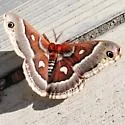
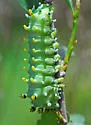
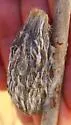
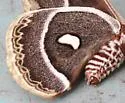
Photo credits: Contributed by Jason D. Roberts; Additional contributions by Bob Patterson , Steve Nanz , Robin McLeod , Chuck Entz , JohnMaxwell22 , Bill Reynolds
Frequently Asked Questions About Glover's Silkmoth - Hodges#7769
Where is Glover's Silkmoth - Hodges#7769 found?
Habitat: Usually Alpine and Riparian (scattered in and among adjacent suitable habitats incl. foothills of the western prairies)
What does Glover's Silkmoth - Hodges#7769 eat?
The diet of the Glover's Silkmoth - Hodges#7769 includes Several Trees and Shrubs in the Rosaceae esp.. Prunus spp., Willows, and Larch ... additional hosts are numerous incl. many other woody plants. Larvae may eat leaves of alder, birch, Antelope Bitterbrush (Purshia tridentata), buckbrush (Ceanothus spp.), buffaloberry, cherry, rose, Russian Olive (Eleagnus angustifolius), willow ----------------------------------------- The following list of host plants is based on gloveri populations in w. Montana and was contributed by P. White (pers. observ. & experiences). wild caterpillars have been found on the following: chokecherry sandbar willow australian green willow native yellow willow bitter brush(solitary food plant of gloveri in the Island Park ID region) Larvae were reared or attempted in captivity on the following: chokecherry* northwest sandbar willow (Salix exigua)* australian green willow+ coral bark willow or scarlett willow (Salix alba)+ bitter brush~ (larvea rejected plant after 3rd instar) golden currant (Ribes aureum)- wax currant (Ribes cereum)- wild rose~ (larvae rejected plant after 2nd instar) red alder (Alnus rubra)+ apple- (found a 5th instar nibbling on a lilac bush below apple / may have fallen/wandered off the apple tree ??) (*plants=most successful) (+plants=high growth rate) (no symbol=average growth) (- =slow growth rate) (~plants=impossible).
When is Glover's Silkmoth - Hodges#7769 active?
Glover's Silkmoth - Hodges#7769: seasonal activity - Depending on location and weather patterns, life cycle activity (egg-adult) ranges from April/May-September. Adults are usually observed to fly from May to June (late July-August in s. AZ & n. Mex with larvae being seen from July to September/October). *Populations located across se. Arizona (Sonoran Region) have been observed to have 2 flight periods (generations). Although univoltine across most of the range, pop's in se. Arizona and n. Mexico have been observed to be partially bivoltine (altitude and annual precip seem to play a role). Adults in se. Arizona can be observed during a first flight wave in the spring and a second flight period in the late summer; the greatest numbers of adults are usu. observed to fly from late July to mid-August. The larvae of these later populations are often active through October..
What is the life cycle of a Glover's Silkmoth - Hodges#7769?
Holometabolous GENERALLY described as having one generation per year; eggs are laid singly on food plant, and hatch in 8-19 days, depending on temperature; overwinters as a pupa in spindle-shaped cocoon attached lengthwise to twig or trunk of tree or shrub and emerges as an adult the following spring or summer Univoltine across most of the range, some populations have been observed to be bivoltine (or partially bivoltine = split brooded) in se. Arizona, New Mexico and n. Mexico (altitude, weather patterns and annual precip seem to play a role). These populations are also divergent in some of their physical traits; however, it is not known for certain whether these observed differences are environmentally induced or genetic (some preliminary captive rearing suggests their is a strong genetic component which appears to be subject to environmental influences .... but more work is needed!). 1) eggs may be laid singly or in groups on or near the leaves of host plants 2) hatching occurs within 9-14 days 3) larvae feed for 6 to 8 weeks (July-August) 3) overwinters as a pupa in tough, compact, teardrop-shaped cocoon usu. attached longitudinally to twig or outer part of host plant, often spun at the base of the host or in weedy tickets nearby (much less obvious than that of cecropia and often difficult to find), the outer layer of the cocoon is rugose & heavily striated, often concealed by and incorporats leaves and twigs of the host plant 4) adult eclosion occurs the following spring/early summer (May-early July) 5) Mating usually occurs in the predawn hours as seen in most other Hyalophora species