
Giant House-spider
Eratigena
This record describes Eratigena (genus). Recorded family: Agelenidae. Recorded order: Araneae.
Identification and Appearance
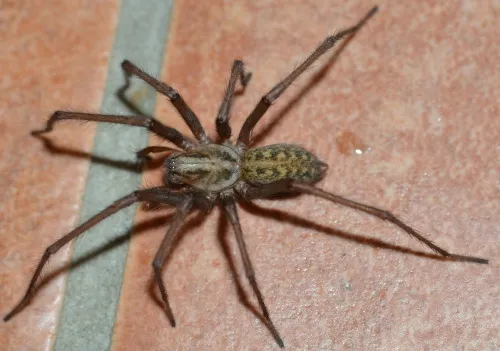
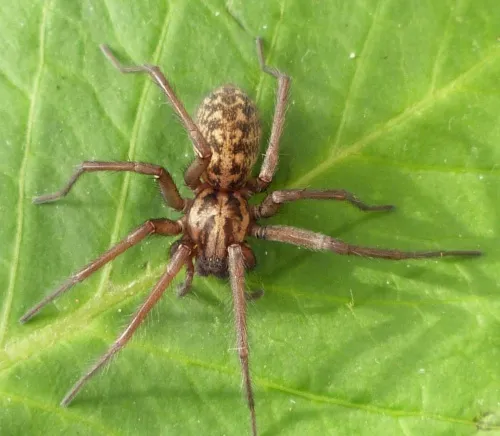
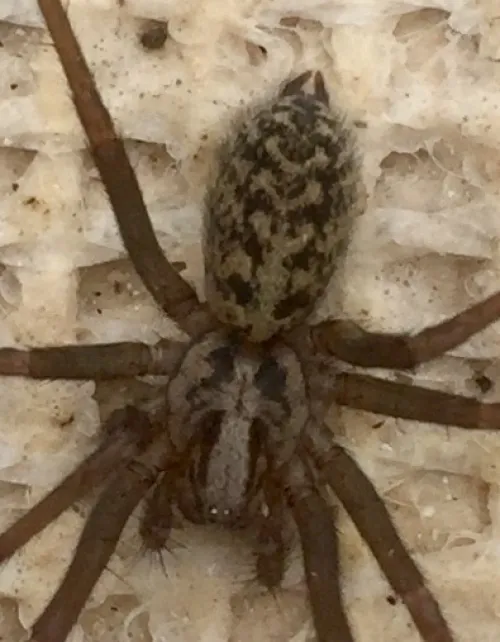
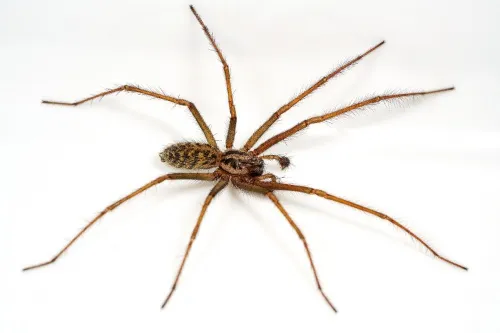
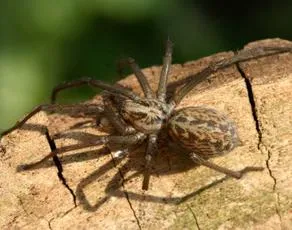
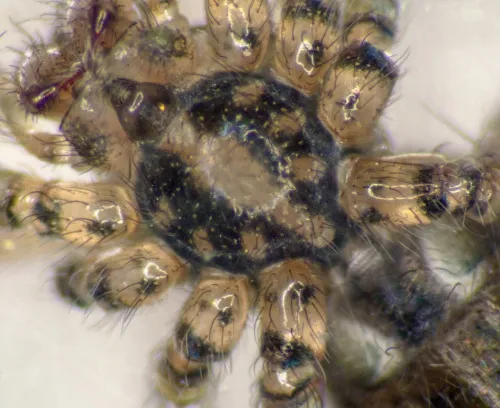
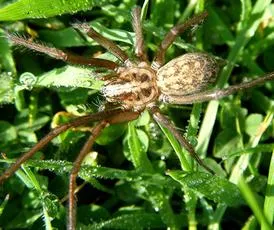
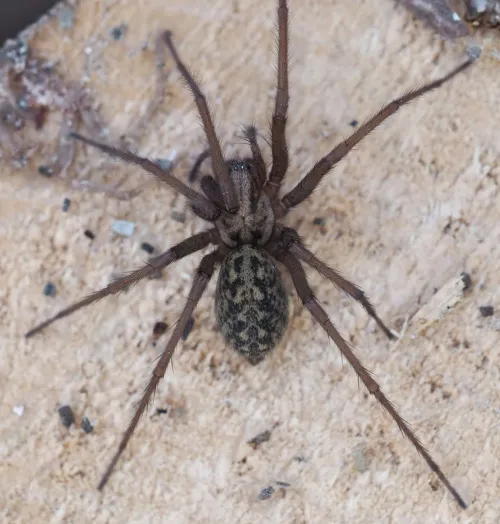
Females can reach 18 mm in length, with males having a slightly smaller body at around 12 mm to 15 mm in length. The female leg span is typically around 45 mm. The leg span of the male is highly variable, with spans between 25 mm to 75 mm being common. The former genus Tegenaria has recently been split: Tegenaria spp. have banded legs, Eratigena spp. have plain legs. Beyond this distinction, species can only be identified (with difficulty) by examination of the genitals of mature specimens. The term Eratigena atrica group has been commonly adopted for the species E. atrica (rare), E. duellica , E. saeva , and their hybrids. Because of the difficulty of separating these species, they can confidently be identified to genus level but not beyond unless there is confirmatory evidence from microscopic examination. These spiders were previously in the genus Tegenaria (with banded legs) but this was changed to Eratigena (with plain legs) a few years ago. Eratigena atrica may represent a complex of three closely-related species but but opinion is split, so these species are frequently referred to as the Eratigena atrica group because they are so difficult to separate. Eratigena duellica, E. saeva and E. atrica are all of a similar size and cannot be reliably separated without examining the genitalia. E. atrica is rare and has not been confirmed in VC55. E. saeva has a distribution covering Wales, Western and Northern Britain and has also not been confirmed in VC55. Indoors in dark corners, between boxes etc. where there is little disturbance. Males can often be seen wandering around during the late summer and early autumn looking for a mate. Females can reputedly live for several years and can survive for months without food or water. They make large and substantial sheet webs with a funnel to their safety retreat. Common and widespread in Britain but fewer records come from the north.
Classification
- Kingdom
- Animalia
- Phylum
- Arthropoda
- Class
- Arachnida
- Order
- Araneae (Spiders)
- Family
- Agelenidae (Funnel Weavers)
- Subfamily
- Ageleninae
- Genus
- Tegenaria
Imported taxonomy record. Source availability varies; see the source references and editorial policy below.
Habitat and Range
Habitat
Indoors in dark corners, between boxes etc. where there is little disturbance.
Seasonal Activity
Males can often be seen wandering around during the late summer and early autumn looking for a mate. Females can reputedly live for several years and can survive for months without food or water.
Diet and Behavior
Life History
They make large and substantial sheet webs with a funnel to their safety retreat.
Additional species information
Recorded status
Common and widespread in Britain but fewer records come from the north.
About Spiders: the wider group
Order-level background for Araneae, the group containing Eratigena. Species-specific details appear above.
Group overview
As of 2023, 51,673 spider species in 136 families have been recorded, though an estimated 150,000 species exist. Spiders rank 7th in total species diversity among all organism orders. Only 0.5% of spider species pose any risk to human health.
Ecological role of the group
Spider venom contains complex peptides with diverse pharmacological activities, making them valuable for drug development research. Spiders produce up to 7 types of silk from specialized glands. Spider silk genes have been inserted into mammals and plants for biotech applications.
Economic and practical significance of the group
The global spider community kills an estimated 400-800 million tons of prey annually (2017 study). Spiders provide billions of dollars in natural pest control for agriculture. Spider silk is 5× stronger than steel of the same diameter, driving a biomaterials research industry.
Recorded sources for this group: World Spider Catalog, PNAS, Nature, ScienceDirect. Imported estimates may describe particular regions or reporting periods.
Photos of Giant House-spider (10)
Frequently Asked Questions About Giant House-spider
What is Giant House-spider?
Giant House-spider (Eratigena) is a genus in the family Agelenidae, within the order Araneae.
How big is Giant House-spider?
and cannot be reliably separated without examining the genitalia.
Where is Giant House-spider found?
Habitat: Indoors in dark corners, between boxes etc. where there is little disturbance.
When is Giant House-spider active?
Giant House-spider: seasonal activity - Males can often be seen wandering around during the late summer and early autumn looking for a mate. Females can reputedly live for several years and can survive for months without food or water..
What is the life cycle of a Giant House-spider?
They make large and substantial sheet webs with a funnel to their safety retreat.