
Florida Woods Cockroach
Eurycotis floridana
This record describes Eurycotis floridana (species). Recorded family: Blattidae. Recorded order: Blattodea.
Identification and Appearance
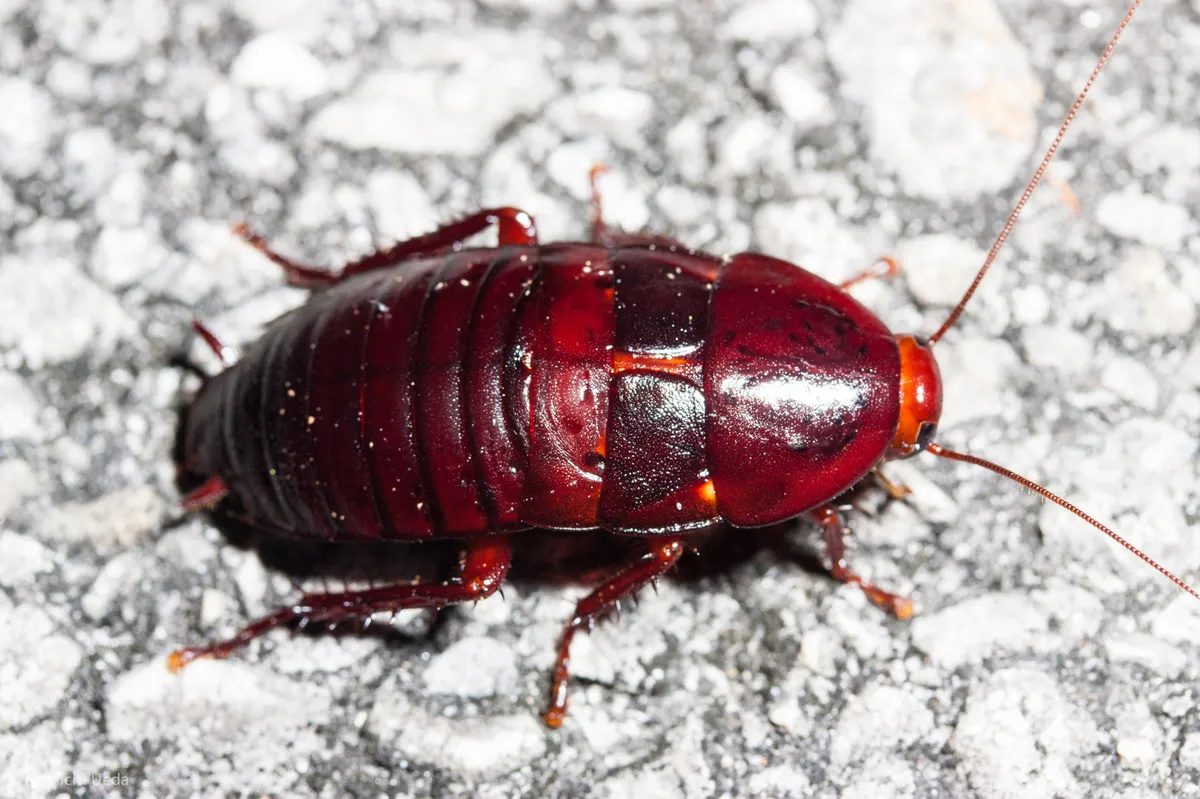
Large, red-brown to almost black, broader than most roaches, often with yellow markings along the edge of the thorax. Adults do not have functional wings. see the family page to compare with similar species. Adults are recognized by rectangular shape of tegmina that touch at midline: Adults are not sexually dimorphic. To tell sexes apart use this view: Nymphs have pale lateral stripes Ootheca more rectangular than in most other common species, particularly the Oriental cockroach. It has a sharp point on one side that can distinguish it from Smoky brown and Australian cockroaches. carried by female keel-side up: When threatened gives off an unpleasant-smelling chemical, supposedly reminiscent of Amaretto. The main component of this chemical is (E)-2-hexenal, which is also a significant component of many heteropteran concoctions.
Wikipedia reference for Eurycotis floridana: http://en.wikipedia.org/wiki/Florida_woods_cockroach.
Classification
Additional species information
Species notes from the sources
Etymology: Eurycotis floridana (Walker 1868)
About Cockroaches and Termites: the wider group
Order-level background for Blattodea, the group containing Eurycotis floridana. Species-specific details appear above.
Group overview
Blattodea includes ~4,600 cockroach species and ~3,000 termite species. Only about 30 cockroach species are associated with human habitats - less than 1% of all species.
Ecological role of the group
Termites contribute ~40% of soil arthropod biomass globally, far exceeding ants at ~10%. Cockroaches are ancient insects dating back 320 million years and are critical decomposers in tropical forest ecosystems, recycling leaf litter and dead wood.
Economic and practical significance of the group
Termites cause $5-30 billion in damage to structures in the U.S. annually. They damage approximately 600,000 American homes each year, with average repair costs of $3,000-$17,000. A subterranean termite colony can consume one pound of wood per day.
Recorded sources for this group: USDA, Orkin, Today's Homeowner, PNAS soil biomass study. Imported estimates may describe particular regions or reporting periods.
Photos of Florida Woods Cockroach (3)
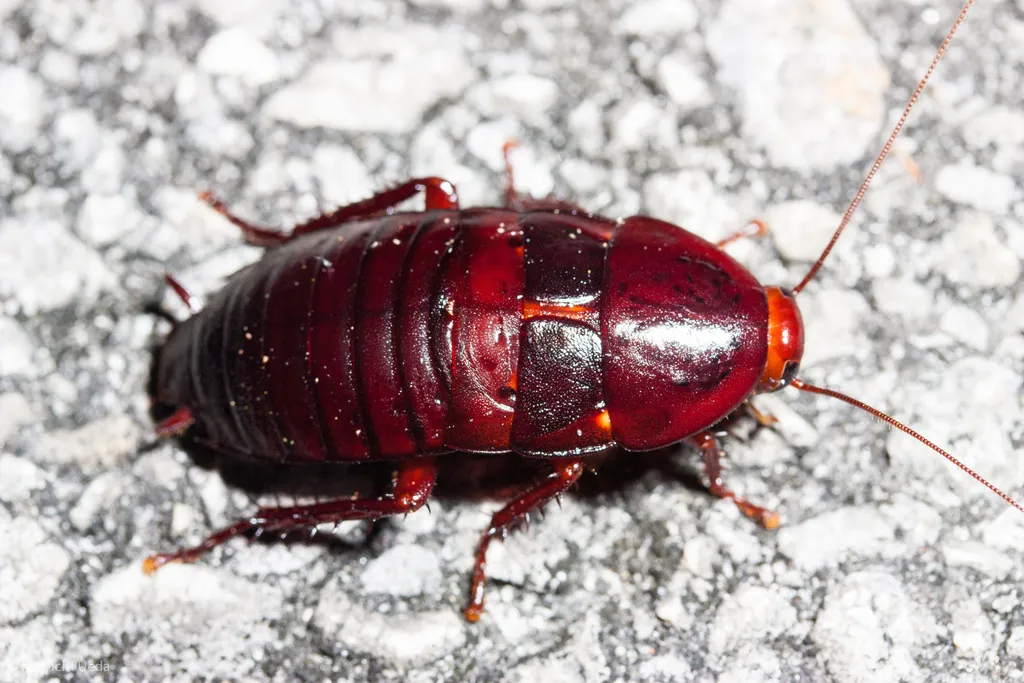
Photo credits: Contributed by Lynette Elliott; Additional contributions by Hannah Nendick-Mason , v belov , John Carlson , Arturo Santos
Frequently Asked Questions About Florida Woods Cockroach
What is Florida Woods Cockroach?
Florida Woods Cockroach (Eurycotis floridana) is a species in the family Blattidae, within the order Blattodea.
How big is Florida Woods Cockroach?
adults 24-50 mm
How do you identify Florida Woods Cockroach?
Large, red-brown to almost black, broader than most roaches, often with yellow markings along the edge of the thorax. Adults do not have functional wings. see the family page to compare with similar species. Adults are recognized by rectangular shape of tegmina that touch at midline: Adults are not sexually dimorphic. To tell sexes apart use this view: Nymphs have pale lateral stripes Ootheca more rectangular than in most other common species, particularly the Oriental cockroach. It has a sharp point on one side that can distinguish it from Smoky brown and Australian cockroaches. carried by female keel-side up: