
Eremochelis bilobatus
This record describes Eremochelis bilobatus (species). Recorded family: Eremobatidae. Recorded order: Solifugae.
Identification and Appearance
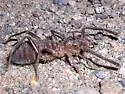
Classification
- Kingdom
- Animalia
- Phylum
- Arthropoda
- Class
- Arachnida
- Order
- Solifugae (Windscorpions)
- Family
- Eremobatidae
- Subfamily
- Therobatinae
- Genus
- Eremochelis
Imported taxonomy record. Source availability varies; see the source references and editorial policy below.
Additional species information
Species notes from the sources
Etymology: From Latin bis- "twice" + lobatus- "lobed", in reference to the shape of the genital plate
About Windscorpions: the wider group
Order-level background for Solifugae, the group containing Eremochelis bilobatus. Species-specific details appear above.
Group overview
Solifugae (sun spiders/camel spiders/wind scorpions) includes ~1,100 described species. Despite terrifying appearances, they are non-venomous and harmless to humans. They can run up to 10 mph (16 km/h), making them among the fastest arachnids.
Ecological role of the group
Solifuges are voracious nocturnal predators that hunt insects, spiders, and even small lizards. They have the largest jaws relative to body size of any arachnid. Unlike spiders, they have no venom and kill prey purely with mechanical force.
Economic and practical significance of the group
Solifuges have no significant economic impact. They gained widespread internet fame during the Iraq War when exaggerated photos circulated showing them as enormously large.
Recorded sources for this group: Arachnology research, natural history. Imported estimates may describe particular regions or reporting periods.