
Linden Looper - Hodges#6665
Erannis tiliaria
This record describes Erannis tiliaria (species). Recorded family: Geometridae. Recorded order: Lepidoptera.
Identification and Appearance
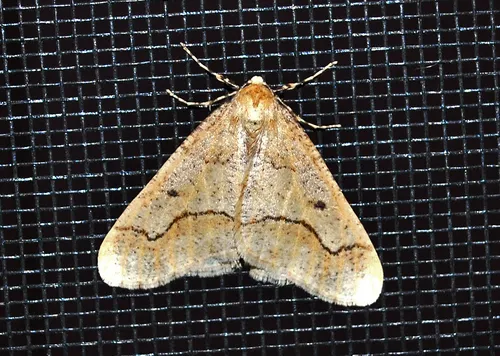
| Feature | Details |
|---|---|
| Male | FW unicolorous yellowish brown, brown, or pale ochraceous salmon ● May have darker brown bands, basad of AM and distad of PM ● FW display considerable variability in color and degree of maculation ● HW pale grayish white, more or less evenly covered with widely spaced pale, grayish brown scales. |
| Female | Wingless ● Head with black and white antennae ● Abdomen above tending to have two irregular longitudinal bands, with lateral spotting smaller than on dorsal bands ● Female's body tends to be rather variable in the size and number of the black spots. Female fall cankerworms and Operophtera winter moths are also wingless. |
Classification
- Kingdom
- Animalia
- Phylum
- Arthropoda
- Class
- Insecta
- Order
- Lepidoptera (Butterflies and Moths)
- Superfamily
- Geometroidea
- Family
- Geometridae (Geometrid Moths)
- Subfamily
- Ennominae
- Tribe
- Bistonini
- Genus
- Erannis
Imported taxonomy record. Source availability varies; see the source references and editorial policy below.
Habitat and Range
Geographic Range
Alberta to Nova Scotia, south to Missouri, Georgia, Utah and Texas. Has disappeared from many of the eastern portions of its range in the past 20 years.
Seasonal Activity
Flight period from late August into early December. Most specimens have been caught during October and November.
Diet and Behavior
Diet: Deciduous trees, including apple, ash, beech, birch, elm, linden, maple, oak, poplar, Prunus and Ribes . ( 3 )
Life History
Overwinter as eggs ( 4 ) Female crawl up the tree trunks and deposit their eggs singly or in small groups in bark crevices. ( 4 ) One generation per year. ( 4 ) larva; larva; spent pupa; adult male; adult female
About Butterflies and Moths: the wider group
Order-level background for Lepidoptera, the group containing Erannis tiliaria. Species-specific details appear above.
Group overview
Lepidoptera includes approximately 180,000 described species of butterflies and moths. Moths outnumber butterflies roughly 10:1. The monarch butterfly's eastern population has declined by more than 80% since the mid-1990s, and the western population by over 95% since the 1980s. The IUCN lists the migratory monarch as Vulnerable.
Ecological role of the group
Butterflies and moths are essential indicators of ecosystem health. As caterpillars, they are a primary food source for birds - a single nest of blue tit chicks requires ~10,000 caterpillars. Adult moths pollinate many night-blooming plants.
Economic and practical significance of the group
Lepidoptera are critical pollinators. In Europe, grassland butterfly species have declined by almost 50% since the early 1990s. In the UK, three-quarters of butterflies are in decline. In the U.S., five butterfly species have gone extinct since 1950, with 29 listed as endangered.
Recorded sources for this group: IUCN Red List, Xerces Society, USFWS, PNAS, WWF. Imported estimates may describe particular regions or reporting periods.
Photos of Linden Looper - Hodges#6665 (2)
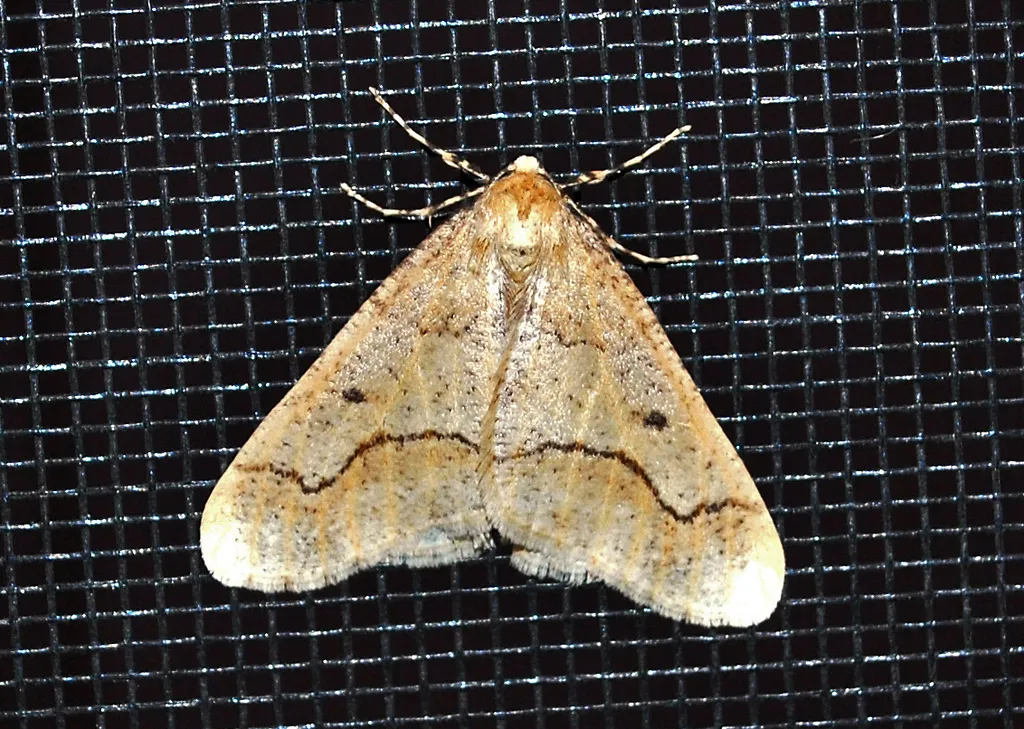
Photo credits: Contributed by john and jane balaban; Additional contributions by anitagould , Maury Heiman , ceiseman , Robert Lord Zimlich , marcie oconnor , Randy Hardy , dennepj10 , Marci Hess
Frequently Asked Questions About Linden Looper - Hodges#6665
What is Linden Looper - Hodges#6665?
Linden Looper - Hodges#6665 (Erannis tiliaria) is a species in the family Geometridae, within the order Lepidoptera.
How big is Linden Looper - Hodges#6665?
Wingspan of males is 32-42 mm. FWL ≈ 17-25mm females are wingless
How do you identify Linden Looper - Hodges#6665?
| Feature | Details |
|---|---|
| Male | FW unicolorous yellowish brown, brown, or pale ochraceous salmon ● May have darker brown bands, basad of AM and distad of PM ● FW display considerable variability in color and degree of maculation ● HW pale grayish white, more or less evenly covered with widely spaced pale, grayish brown scales. |
| Female | Wingless ● Head with black and white antennae ● Abdomen above tending to have two irregular longitudinal bands, with lateral spotting smaller than on dorsal bands ● Female's body tends to be rather variable in the size and number of the black spots. |
Where is Linden Looper - Hodges#6665 found?
Range: Alberta to Nova Scotia, south to Missouri, Georgia, Utah and Texas. Has disappeared from many of the eastern portions of its range in the past 20 years.
What does Linden Looper - Hodges#6665 eat?
The diet of the Linden Looper - Hodges#6665 includes Deciduous trees, including apple, ash, beech, birch, elm, linden, maple, oak, poplar, Prunus and Ribes . ( 3 ).
When is Linden Looper - Hodges#6665 active?
Linden Looper - Hodges#6665: seasonal activity - Flight period from late August into early December. Most specimens have been caught during October and November..
What is the life cycle of a Linden Looper - Hodges#6665?
Overwinter as eggs ( 4 ) Female crawl up the tree trunks and deposit their eggs singly or in small groups in bark crevices. ( 4 ) One generation per year. ( 4 ) larva; larva; spent pupa; adult male; adult female