
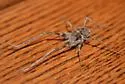
Greenhouse Camel Cricket
Diestrammena asynamora
This record describes Diestrammena asynamora (species). Recorded family: Rhaphidophoridae. Recorded order: Orthoptera.
Identification and Appearance
Classification
- Kingdom
- Animalia
- Phylum
- Arthropoda
- Class
- Insecta
- Order
- Orthoptera (Grasshoppers, Crickets, Katydids)
- Suborder
- Ensifera
- Family
- Rhaphidophoridae (Camel Crickets)
- Subfamily
- Aemodogryllinae
- Genus
- Diestrammena
Imported taxonomy record. Source availability varies; see the source references and editorial policy below.
Habitat and Range
Habitat
Perhaps originally found in caves or similar environments. In North America common in basements, cellars, wells, irrigation boxes, sheds, under benches in greenhouses, and similar relatively warm dark damp or humid environments. Often found in aggregations of many individuals. Where conditions are excessively dry, these insects usually are not found.
Geographic Range
Could turn up worldwide anywhere humans provide suitable habitat. Easily transported in freight, luggage, and nursery stock. Introduced into and apparently now locally common in most of Europe and in the U.S. and southernmost Canada from the Atlantic coast to the east base of the Rockies. Probably originated in China.
Seasonal Activity
Probably can be found in all growth stages year-round, but adults seem to be most abundant in summer and autumn.
Diet and Behavior
Diet: An opportunistic scavenger, will feed on varied organic material, dead or alive. Sometimes causes damage, particularly to young plants in greenhouses.
Additional species information
Species notes from the sources
Etymology: In 1898, S. H. Scudder identified insects found by Otto Lugger in Minnesota as Diestrammena maromorata . Subsequently the species turned up in numerous locations east of the Rockies in North America, primarily in the northeastern United States. Until 1914 this species was misidentified as D. marmorata (= D. japanica ) in both Europe (where it had similarly been introduced) and North America, but in that year Chopard discovered and corrected the identification error. However, it was not until 1944 that Rehn again pointed out this error in North America, and that the mistake was generally known and accepted as fact in North America. Sometime more recently, what is apparently the real D. japanica has been introduced into approximately the New York City area, and is apparently limited, so far, to states relatively nearby to that city.
About Grasshoppers, Crickets, Katydids: the wider group
Order-level background for Orthoptera, the group containing Diestrammena asynamora. Species-specific details appear above.
Group overview
Orthoptera includes ~28,000 described species of grasshoppers, crickets, and katydids. Desert locusts can form swarms covering 460 square miles containing up to 80 million individuals per square kilometer.
Ecological role of the group
Grasshoppers and crickets are a primary food source for birds, reptiles, and small mammals. Cricket farming is a growing industry - crickets require 12× less feed than cattle to produce the same amount of protein, using 2,000× less water.
Economic and practical significance of the group
A single large locust swarm can consume the same amount of food in one day as 35,000 people. The 2019-2021 East Africa locust crisis affected food security for 42 million people across multiple countries. Global crop losses from locusts can reach billions annually.
Recorded sources for this group: FAO, UN World Food Programme, research publications. Imported estimates may describe particular regions or reporting periods.
Photos of Greenhouse Camel Cricket (5)
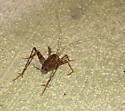
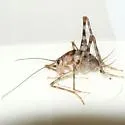
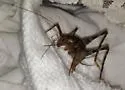
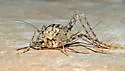
Photo credits: Contributed by Jeffrey Cole; Additional contributions by Beatriz Moisset , David Ferguson , Tyler Hedlund
Frequently Asked Questions About Greenhouse Camel Cricket
Where is Greenhouse Camel Cricket found?
| Feature | Details |
|---|---|
| Habitat | Perhaps originally found in caves or similar environments. In North America common in basements, cellars, wells, irrigation boxes, sheds, under benches in greenhouses, and similar relatively warm dark damp or humid environments. Often found in aggregations of many individuals. Where conditions are excessively dry, these insects usually are not found. |
| Range | Could turn up worldwide anywhere humans provide suitable habitat. Easily transported in freight, luggage, and nursery stock. Introduced into and apparently now locally common in most of Europe and in the U.S. and southernmost Canada from the Atlantic coast to the east base of the Rockies. Probably originated in China. |
What does Greenhouse Camel Cricket eat?
The diet of the Greenhouse Camel Cricket includes An opportunistic scavenger, will feed on varied organic material, dead or alive. Sometimes causes damage, particularly to young plants in greenhouses..
When is Greenhouse Camel Cricket active?
Greenhouse Camel Cricket: seasonal activity - Probably can be found in all growth stages year-round, but adults seem to be most abundant in summer and autumn..