
Spotted Pink Lady Beetle
Coleomegilla maculata
This record describes Coleomegilla maculata (species). Recorded family: Coccinellidae. Recorded order: Coleoptera.
Identification and Appearance
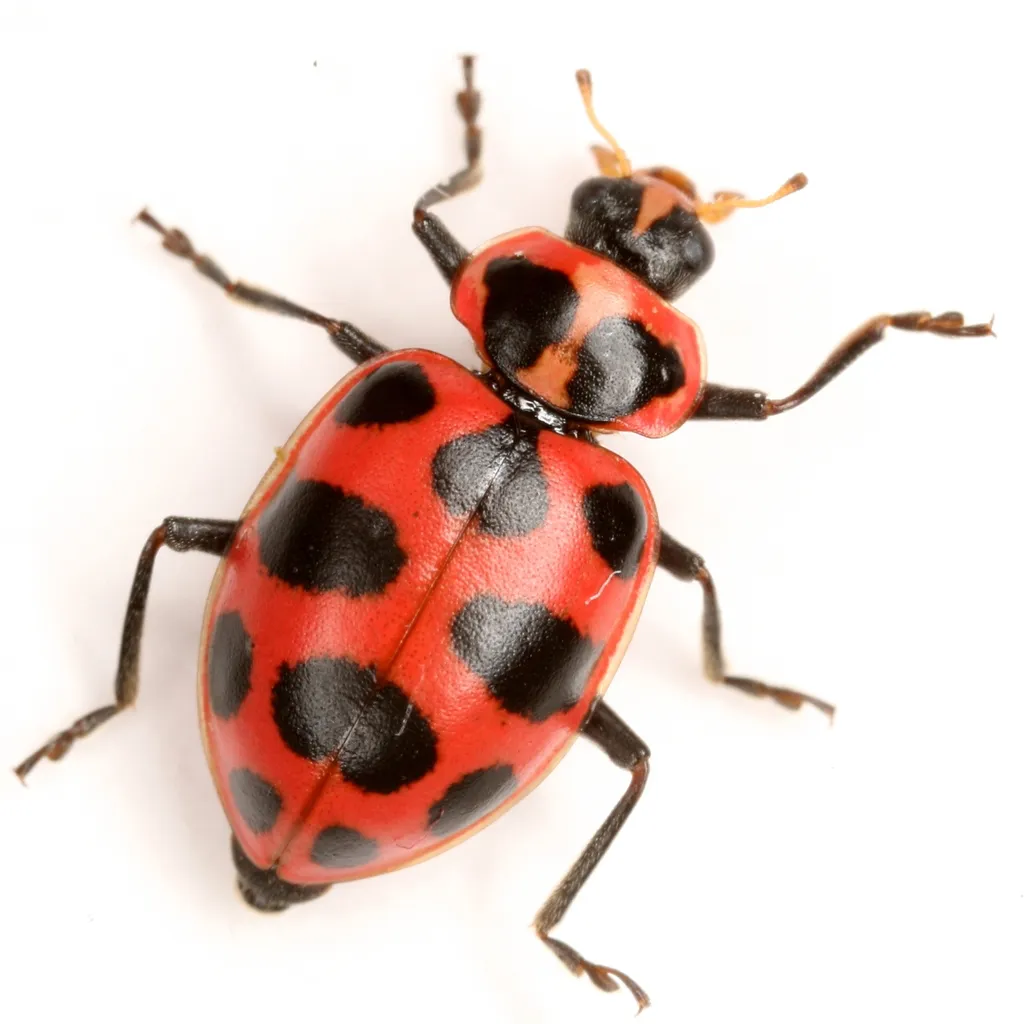
Adults Subspecies C. m. lengi (widespread eastern) C. m. fuscilabris (southeastern) C. m. strenua (southwestern) Larvae Because pollen is an essential component of the diet of Coleomegilla , the planting or preservation of refuges, or interplantings, of early-flowering species with a high pollen load may be beneficial especially to provide a food source during late spring before the build up of aphids. Flowering dandelions, for example, have been recorded as a heavily used pollen source for dispersing adults in late spring potato fields. Tolerance to some pesticides at recommended application rates is likely. Overwintering adults may be less susceptible than active adults and larvae. Can develop from egg to adult on pollen alone. ( 5 )
Wikipedia reference for Coleomegilla maculata: http://en.wikipedia.org/wiki/Coleomegilla_maculata.
Classification
- Kingdom
- Animalia
- Phylum
- Arthropoda
- Class
- Insecta
- Order
- Coleoptera (Beetles)
- Suborder
- Polyphaga
- Superfamily
- Coccinelloidea
- Family
- Coccinellidae (Lady Beetles)
- Subfamily
- Coccinellinae
- Genus
- Coleomegilla
Imported taxonomy record. Source availability varies; see the source references and editorial policy below.
Habitat and Range
Habitat
Prefers moist habitats where it can be locally abundant.
Geographic Range
e. NA to Calif. / Mex. to S. Amer. / Cuba - Map , Map , Map (BugGuide data indicate range extends farther north than Gordon's map to include Maine, New Brunswick, Quebec, plus Colorado and Nevada) Gordon distinguishes 3 subspecies, with some relatively slight variations in markings: 1) The most widespread subspecies, C. m. lengi Timberlake, occurs throughout the eastern states (except northern New England, and Florida) and west through the Great Plains. - Map 2) C. m. fuscilabris (Mulsant) occurs in Florida and along the coasts, west to Louisiana, and north to Myrtle Beach, South Carolina. - Map 3) C. m. strenua (Casey) occurs along the Mexican border from Texas to California (and presumably south into Mexico). - Map note that recent research suggests these may be full spp.
Diet and Behavior
Diet: Adults and larvae are important aphid predators but also prey on mites, insect eggs, and small larvae. Reported prey include pea, green peach, melon (cotton), cabbage, and potato aphids and greenbug; eggs of European corn borer, imported cabbageworm, fall webworm, and corn earworm; asparagus beetle, Mexican bean beetle, and Colorado potato beetle eggs and larvae. Unlike most lady beetles, plant pollen may constitute up to 50% of the diet. This is the only North American lady beetle that can complete its life cycle on plant pollen. Common pollen food sources are dandelion, squash, corn, and lily.
Life History
Adults overwinter in large aggregations beneath leaf litter and stones along hedgerows or in protected sites along crop borders, especially those of fields planted to corn in the previous season. They emerge from early to mid-spring and disperse, often by walking along the ground, to seek prey and egg laying sites in nearby crops. Female lady beetles may lay from 200 to more than 1,000 eggs over a one to three month period commencing in spring or early summer. Eggs are usually deposited near prey such as aphids, often in small clusters in protected sites on leaves and stems. Larvae grow from about 1 mm to 9 mm in length and may wander up to 12 m in search of prey. The larva attaches itself by the abdomen to a leaf or other surface to pupate. The pupal stage may last from 3 to 12 days depending on temperature. Eggs; newborns; larval instars 1, 2, 3, 4, prepupa (end of instar 4); pupa; adult.
About Primitive Winged Insects: the wider group
Order-level background for Coleoptera, the group containing Coleomegilla maculata. Species-specific details appear above.
Group overview
Coleoptera is the largest order of insects with over 400,000 described species, representing ~25% of all known animal species and ~40% of all insects. In the U.S. alone, nearly 30,000 beetle species have been identified.
Ecological role of the group
Beetles are prominent decomposers, especially in forests, breaking down dead wood and recycling nutrients. As predators, they reduce populations of pest insects. Many species are also important pollinators of flowering plants.
Economic and practical significance of the group
Beetles have major economic significance: leaf beetles (Chrysomelidae) and weevils (Curculionoidea) are among the most destructive agricultural pests globally, costing billions annually, while predatory species like ladybugs provide natural pest control.
Recorded sources for this group: Britannica, Smithsonian, NCSU Entomology. Imported estimates may describe particular regions or reporting periods.
Photos of Spotted Pink Lady Beetle (2)
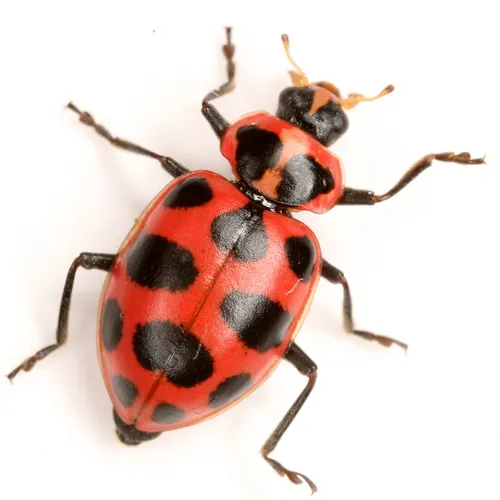
Photo credits: Contributed by john and jane balaban; Additional contributions by Hannah Nendick-Mason , Beatriz Moisset , Robin McLeod , Mike Quinn , Ron M. , David Ferguson , James Bailey , Abigail Parker , Marci Hess , PaleoJon
Frequently Asked Questions About Spotted Pink Lady Beetle
What is Spotted Pink Lady Beetle?
Spotted Pink Lady Beetle (Coleomegilla maculata) is a species in the family Coccinellidae, within the order Coleoptera.
How big is Spotted Pink Lady Beetle?
length 5-6 mm larva to 9 mm
How do you identify Spotted Pink Lady Beetle?
Adults Subspecies C. m. lengi (widespread eastern) C. m. fuscilabris (southeastern) C. m. strenua (southwestern) Larvae
Where is Spotted Pink Lady Beetle found?
| Feature | Details |
|---|---|
| Habitat | Prefers moist habitats where it can be locally abundant. |
| Range | e. NA to Calif. / Mex. to S. Amer. / Cuba - Map , Map , Map (BugGuide data indicate range extends farther north than Gordon's map to include Maine, New Brunswick, Quebec, plus Colorado and Nevada) Gordon distinguishes 3 subspecies, with some relatively slight variations in markings: 1) The most widespread subspecies, C. m. lengi Timberlake, occurs throughout the eastern states (except northern New England, and Florida) and west through the Great Plains. - Map 2) C. m. fuscilabris (Mulsant) occurs in Florida and along the coasts, west to Louisiana, and north to Myrtle Beach, South Carolina. - Map 3) C. m. strenua (Casey) occurs along the Mexican border from Texas to California (and presumably south into Mexico). - Map note that recent research suggests these may be full spp. |
What does Spotted Pink Lady Beetle eat?
The diet of the Spotted Pink Lady Beetle includes Adults and larvae are important aphid predators but also prey on mites, insect eggs, and small larvae. Reported prey include pea, green peach, melon (cotton), cabbage, and potato aphids and greenbug; eggs of European corn borer, imported cabbageworm, fall webworm, and corn earworm; asparagus beetle, Mexican bean beetle, and Colorado potato beetle eggs and larvae. Unlike most lady beetles, plant pollen may constitute up to 50% of the diet. This is the only North American lady beetle that can complete its life cycle on plant pollen. Common pollen food sources are dandelion, squash, corn, and lily..
What is the life cycle of a Spotted Pink Lady Beetle?
Adults overwinter in large aggregations beneath leaf litter and stones along hedgerows or in protected sites along crop borders, especially those of fields planted to corn in the previous season. They emerge from early to mid-spring and disperse, often by walking along the ground, to seek prey and egg laying sites in nearby crops. Female lady beetles may lay from 200 to more than 1,000 eggs over a one to three month period commencing in spring or early summer. Eggs are usually deposited near prey such as aphids, often in small clusters in protected sites on leaves and stems. Larvae grow from about 1 mm to 9 mm in length and may wander up to 12 m in search of prey. The larva attaches itself by the abdomen to a leaf or other surface to pupate. The pupal stage may last from 3 to 12 days depending on temperature. Eggs; newborns; larval instars 1, 2, 3, 4, prepupa (end of instar 4); pupa; adult.