
Juniper Budworm - Hodges#3647
Choristoneura houstonana
This record describes Choristoneura houstonana (species). Recorded family: Tortricidae. Recorded order: Lepidoptera.
Identification and Appearance
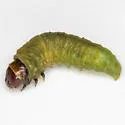
Adult - checkered with raised patches of pale rust and rose lavender scales. Hindwing white. ( 3 ) Type Locality: Texas
Classification
- Kingdom
- Animalia
- Phylum
- Arthropoda
- Class
- Insecta
- Order
- Lepidoptera (Butterflies and Moths)
- Superfamily
- Tortricoidea
- Family
- Tortricidae (Tortricid Moths)
- Subfamily
- Tortricinae
- Tribe
- Archipini
- Genus
- Choristoneura
Imported taxonomy record. Source availability varies; see the source references and editorial policy below.
Habitat and Range
Geographic Range
TN and MS west to CA, with most records from the Plains and Southwest; also coastal SC to MA. This disjunct distribution may be indicative of a cryptic species complex. - Map ( 4 )
Seasonal Activity
Mature larvae present in central Texas primarily from late April to early June. ( 5 ) Graph showing seasonal pattern of larval abundance through time in central Texas. ( 5 ) During the spring and early summer of 2002, an unusual outbreak of the juniper budworm was documented across the following Central Texas counties: Travis, Hayes, Comal, and Blanco. Two generations per year in TX and OK.
Diet and Behavior
Diet: Ashe juniper ( Juniperus ashei ) is apparently the only food in Central Texas for the juniper budworm.
Life History
The larva of juniper budworm goes through 8-11 instars, or caterpillar stages, as it grows. Then it changes to a pupa from which the adult moth emerges. Life history studies on this insect were done in Kansas where one generation per year was reported. However, records of adult moths in the Texas A&M University insect collection indicate there are probably two generations per year in Texas (labeled specimens showed moths were collected in June and October). As the larvae feed in the juniper foliage, they construct silken tubes and pupation occurs in the shelter where the larvae fed. Adult moths appear shortly after pupation occurs. In Kansas, larvae overwinter in the infested juniper trees, pupate in late June and July, and emerge as adult moths in July. In Texas, however, the overwintering stage is not known, but it is probably the egg stage or as very young larvae. The adult moths are about 1/4-inch long and are similar to the color of dead Ashe juniper foliage. They have a mottled tan and brown color pattern on their wings. They are active mostly at night and are attracted to lights. They generally remain at rest on the host plant during the day and only fly when disturbed. Unless they fly, they are difficult to detect. (Texas Forest Service)
About Butterflies and Moths: the wider group
Order-level background for Lepidoptera, the group containing Choristoneura houstonana. Species-specific details appear above.
Group overview
Lepidoptera includes approximately 180,000 described species of butterflies and moths. Moths outnumber butterflies roughly 10:1. The monarch butterfly's eastern population has declined by more than 80% since the mid-1990s, and the western population by over 95% since the 1980s. The IUCN lists the migratory monarch as Vulnerable.
Ecological role of the group
Butterflies and moths are essential indicators of ecosystem health. As caterpillars, they are a primary food source for birds - a single nest of blue tit chicks requires ~10,000 caterpillars. Adult moths pollinate many night-blooming plants.
Economic and practical significance of the group
Lepidoptera are critical pollinators. In Europe, grassland butterfly species have declined by almost 50% since the early 1990s. In the UK, three-quarters of butterflies are in decline. In the U.S., five butterfly species have gone extinct since 1950, with 29 listed as endangered.
Recorded sources for this group: IUCN Red List, Xerces Society, USFWS, PNAS, WWF. Imported estimates may describe particular regions or reporting periods.
Photos of Juniper Budworm - Hodges#3647 (5)
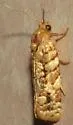
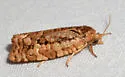
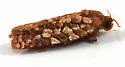
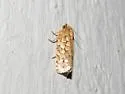
Photo credits: Contributed by Mike Quinn; Additional contributions by Steve Nanz , Nick Block , Randy Hardy , Jason Dombroskie , Kyhl Austin , Blocky
Frequently Asked Questions About Juniper Budworm - Hodges#3647
What is Juniper Budworm - Hodges#3647?
Juniper Budworm - Hodges#3647 (Choristoneura houstonana) is a species in the family Tortricidae, within the order Lepidoptera.
How big is Juniper Budworm - Hodges#3647?
Forewing length 7.5-11 mm. ( 3 )
How do you identify Juniper Budworm - Hodges#3647?
Adult - checkered with raised patches of pale rust and rose lavender scales. Hindwing white. ( 3 )
Where is Juniper Budworm - Hodges#3647 found?
Range: TN and MS west to CA, with most records from the Plains and Southwest; also coastal SC to MA. This disjunct distribution may be indicative of a cryptic species complex. - Map ( 4 )
What does Juniper Budworm - Hodges#3647 eat?
The diet of the Juniper Budworm - Hodges#3647 includes Ashe juniper ( Juniperus ashei ) is apparently the only food in Central Texas for the juniper budworm..
When is Juniper Budworm - Hodges#3647 active?
Juniper Budworm - Hodges#3647: seasonal activity - Mature larvae present in central Texas primarily from late April to early June. ( 5 ) Graph showing seasonal pattern of larval abundance through time in central Texas. ( 5 ) During the spring and early summer of 2002, an unusual outbreak of the juniper budworm was documented across the following Central Texas counties: Travis, Hayes, Comal, and Blanco. Two generations per year in TX and OK..
What is the life cycle of a Juniper Budworm - Hodges#3647?
The larva of juniper budworm goes through 8-11 instars, or caterpillar stages, as it grows. Then it changes to a pupa from which the adult moth emerges. Life history studies on this insect were done in Kansas where one generation per year was reported. However, records of adult moths in the Texas A&M University insect collection indicate there are probably two generations per year in Texas (labeled specimens showed moths were collected in June and October). As the larvae feed in the juniper foliage, they construct silken tubes and pupation occurs in the shelter where the larvae fed. Adult moths appear shortly after pupation occurs. In Kansas, larvae overwinter in the infested juniper trees, pupate in late June and July, and emerge as adult moths in July. In Texas, however, the overwintering stage is not known, but it is probably the egg stage or as very young larvae. The adult moths are about 1/4-inch long and are similar to the color of dead Ashe juniper foliage. They have a mottled tan and brown color pattern on their wings. They are active mostly at night and are attracted to lights. They generally remain at rest on the host plant during the day and only fly when disturbed. Unless they fly, they are difficult to detect. (Texas Forest Service)