
Japanese Skeleton Shrimp
Caprella mutica
This record describes Caprella mutica (species). Recorded family: Caprellidae. Recorded order: Amphipoda.
Identification and Appearance
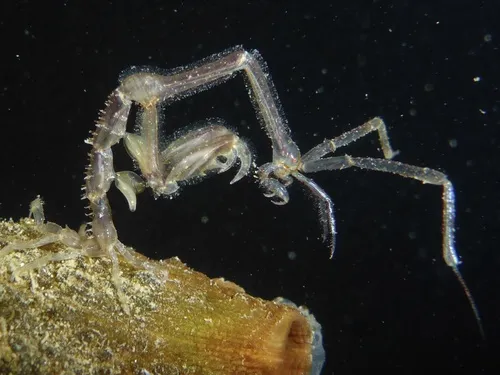
Caprella mutica, commonly known as the Japanese skeleton shrimp, is a species of skeleton shrimp. They are relatively large caprellids, reaching a maximum length of 50 mm (2.0 in). They are sexually dimorphic, with the males usually being much larger than the females. They are characterized by their hairy first and second thoracic segments and the rows of spines on their bodies. Body color ranges from green to red to blue, depending on the environment. They are omnivorous highly...
Identification notes
On the Northeast US coast, the native Caprellid species are all under 16mm in length. Habitat is also a useful indicator: C. mutica is often exclusively synanthropic , found living in and around areas of human activity. For more details, see the cited reference.
Wikipedia reference for Caprella mutica: https://en.wikipedia.org/wiki/Caprella mutica.
Classification
- Kingdom
- Animalia
- Phylum
- Arthropoda
- Class
- Malacostraca
- Order
- Amphipoda (Amphipods)
- Suborder
- Senticaudata
- Family
- Caprellidae (Skeleton Shrimp)
- Genus
- Caprella
Imported taxonomy record. Source availability varies; see the source references and editorial policy below.
Habitat and Range
Geographic Range
Native to the subarctic Sea of Japan around parts of Hokkaido, Sakhalin, the Kuril Is. and the coast of Russia at least to the border with North Korea. Introduced populations first discovered on the West Coast of NA in 1973, Northern Europe in 1995, New Zealand in 2002, and the East Coast of NA in 2003.
About Amphipods: the wider group
Order-level background for Amphipoda, the group containing Caprella mutica. Species-specific details appear above.
Group overview
Amphipoda includes ~10,000 described species of scuds, sand hoppers, and whale lice. While mostly aquatic, some species like sand hoppers (Talitrus saltator) are fully terrestrial, living on beaches above the tide line.
Ecological role of the group
Amphipods are critical detritivores in aquatic ecosystems, shredding leaf litter and recycling nutrients. Deep-sea amphipods have been found at the bottom of the Mariana Trench (10,994m), making them among the deepest-living animals on Earth.
Economic and practical significance of the group
Amphipods are standard test organisms in aquatic toxicology - Hyalella azteca is the EPA's primary freshwater sediment toxicity test species. They are also important food for fish in both freshwater and marine ecosystems.
Recorded sources for this group: EPA ecotoxicology, deep-sea biology, marine research. Imported estimates may describe particular regions or reporting periods.
Photos of Japanese Skeleton Shrimp (9)
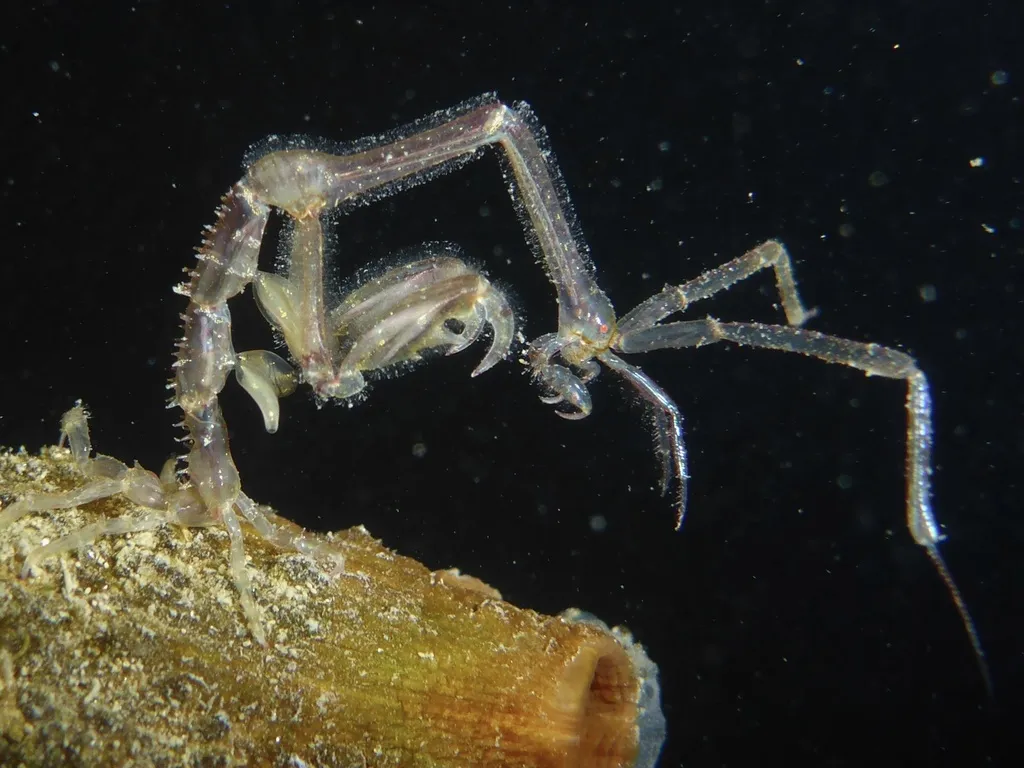
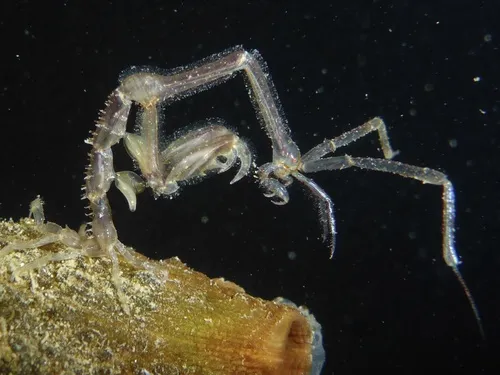
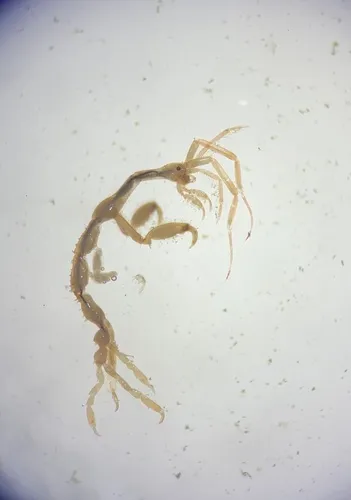
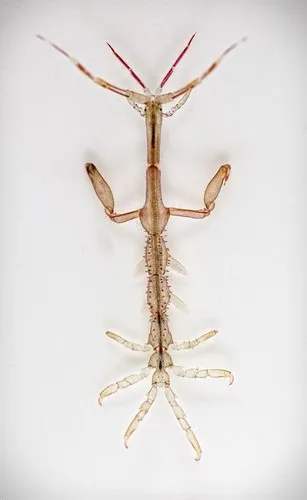
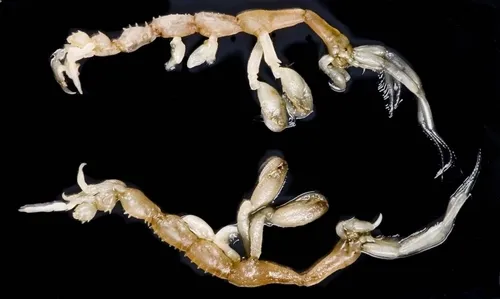
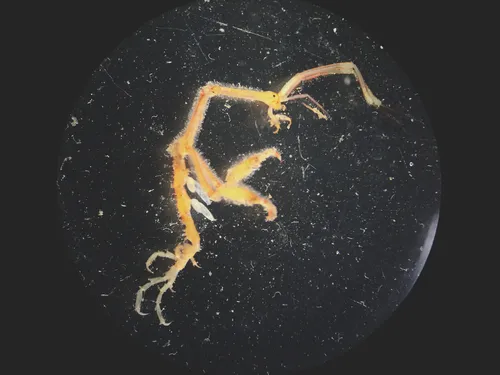
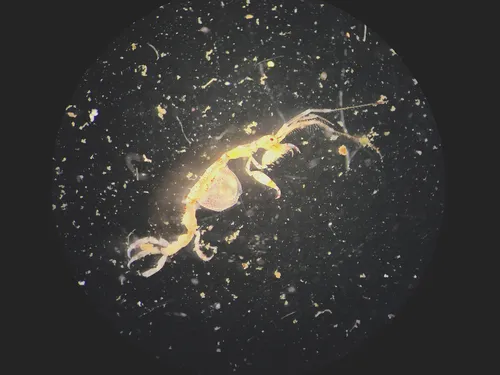
Photo credits: Contributed by Aaron Hunt; Additional contributions by Robert Lord Zimlich
Frequently Asked Questions About Japanese Skeleton Shrimp
What is Japanese Skeleton Shrimp?
Japanese Skeleton Shrimp (Caprella mutica) is a species in the family Caprellidae, within the order Amphipoda.
How big is Japanese Skeleton Shrimp?
Males can reach 50mm
How do you identify Japanese Skeleton Shrimp?
On the Northeast US coast, the native Caprellid species are all under 16mm in length. Habitat is also a useful indicator: C. mutica is often exclusively synanthropic , found living in and around areas of human activity. For more details, see the cited reference.
Where is Japanese Skeleton Shrimp found?
Range: Native to the subarctic Sea of Japan around parts of Hokkaido, Sakhalin, the Kuril Is. and the coast of Russia at least to the border with North Korea. Introduced populations first discovered on the West Coast of NA in 1973, Northern Europe in 1995, New Zealand in 2002, and the East Coast of NA in 2003.