
Brachypanorpa carolinensis
This record describes Brachypanorpa carolinensis (species). Recorded family: Panorpodidae. Recorded order: Mecoptera.
Identification and Appearance
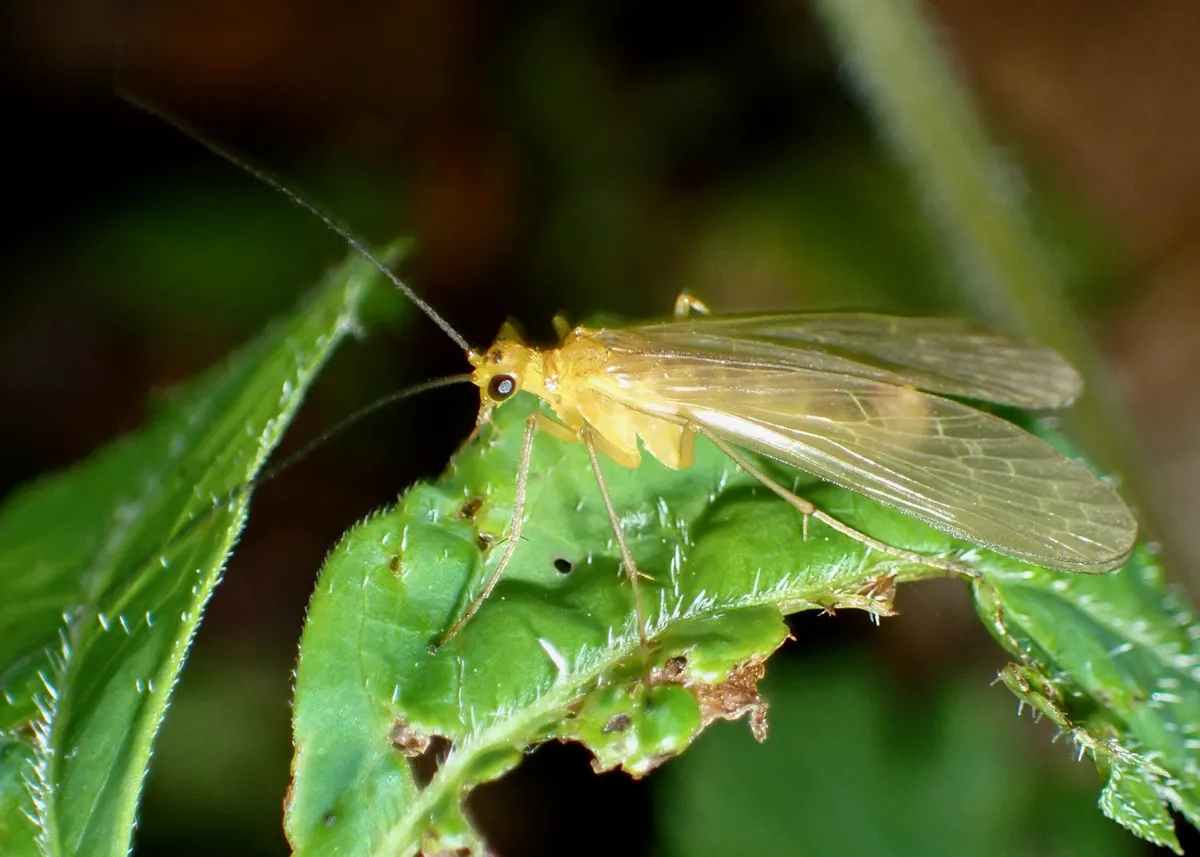
Description (Carpenter, 1931): Male. - Body light brown, legs and antennae darker; genital bulb rounded; hypovalvae fused for half their lengths; teeth of forceps directed downward; rostrum broad, apical incision shallow; no ocellar spines. Fore wing: length, 10-11 mm.; width, 3 mm.; membrane uniformly light brown, with a greasy appearance. Female. - Color similar to that of the male; wings not quite reaching the end of the abdomen (see illustration below for exceptions); length of fore wing, 5-6 mm.; width, 1 mm.; wing veins with short, inconspicuous hairs. Some females brachypterous (Carpenter, 1953), but others have wings extending beyond tip of abdomen. See illustration: Not all females are brachypterous Carpenter (1953). Reading that paper, it seems that brachypterous females were found more often at higher elevation sites, however that conclusion was not drawn there.
Wikipedia reference for Brachypanorpa carolinensis: https://en.wikipedia.org/wiki/Brachypanorpa_carolinensis.
Classification
- Kingdom
- Animalia
- Phylum
- Arthropoda
- Class
- Insecta
- Order
- Mecoptera (Scorpionflies, Hangingflies, and Allies)
- Family
- Panorpodidae (Short-faced Scorpionflies)
- Genus
- Brachypanorpa
Imported taxonomy record. Source availability varies; see the source references and editorial policy below.
Habitat and Range
Habitat
Shady mountain forests (Carpenter, 1953).
Geographic Range
Restricted area in Southern Appalachians of Carolinas to Georgia. Cotype specimens and current BugGuide records from Black Mountain area of North Carolina (Buncombe County). Carpenter (1953) notes records from Linville Gorge area of North Carolina to Unicoi Gap in Georgia--a distance of about 120 miles.
Seasonal Activity
May-July, depending on altitude
About Scorpionflies, Hangingflies, and Allies: the wider group
Order-level background for Mecoptera, the group containing Brachypanorpa carolinensis. Species-specific details appear above.
Group overview
Mecoptera (scorpionflies) includes ~600 described species. Males of many species have an upturned abdomen tip resembling a scorpion's stinger, but they are completely harmless. Mecoptera are among the oldest insect orders with fossils dating to the Permian period (~270 million years ago).
Ecological role of the group
Scorpionflies are primarily scavengers feeding on dead insects and decaying organic matter. Some species practice 'nuptial gifting' - males offer prey items or salivary secretions to females as mating gifts.
Economic and practical significance of the group
Scorpionflies have little direct economic impact but are valuable research subjects - they are considered ancestral to fleas and possibly to all holometabolous insects (those with complete metamorphosis).
Recorded sources for this group: Entomological research, paleontology. Imported estimates may describe particular regions or reporting periods.
Photos of Brachypanorpa carolinensis (3)
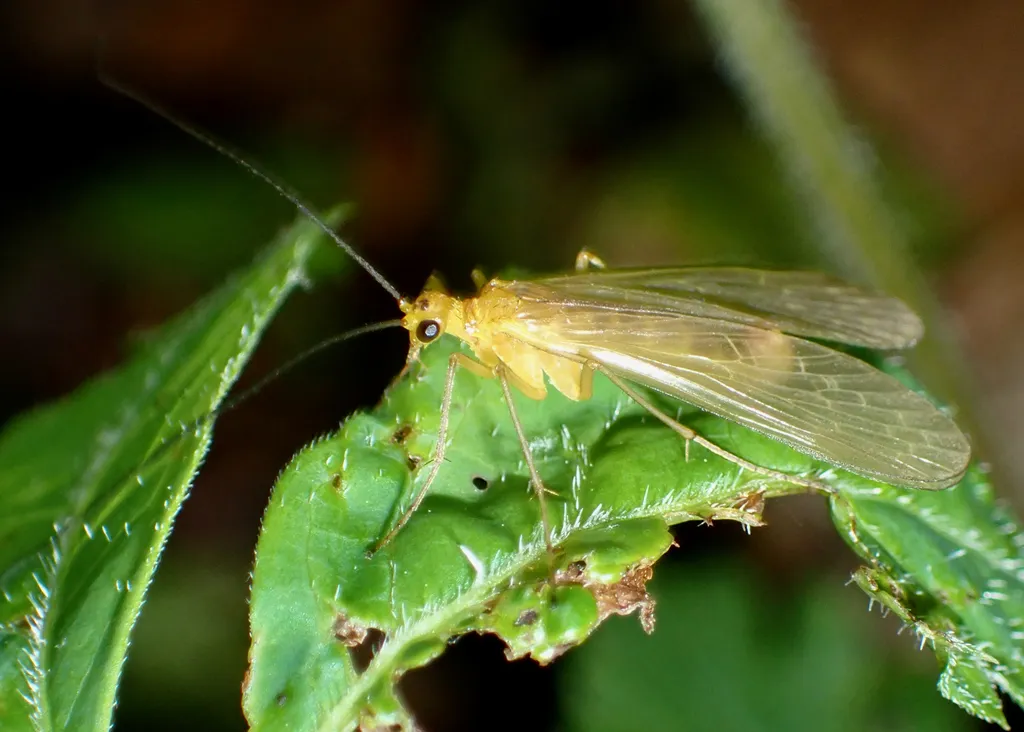
Photo credits: Contributed by Ken Wolgemuth; Additional contributions by cotinis
Frequently Asked Questions About Brachypanorpa carolinensis
What is Brachypanorpa carolinensis?
Brachypanorpa carolinensis is a species in the family Panorpodidae, within the order Mecoptera.
How big is Brachypanorpa carolinensis?
male: 16-18 mm length (Banks, 1905)
How do you identify Brachypanorpa carolinensis?
Description (Carpenter, 1931): Male. - Body light brown, legs and antennae darker; genital bulb rounded; hypovalvae fused for half their lengths; teeth of forceps directed downward; rostrum broad, apical incision shallow; no ocellar spines. Fore wing: length, 10-11 mm.; width, 3 mm.; membrane uniformly light brown, with a greasy appearance. Female. - Color similar to that of the male; wings not quite reaching the end of the abdomen (see illustration below for exceptions); length of fore wing, 5-6 mm.; width, 1 mm.; wing veins with short, inconspicuous hairs. Some females brachypterous (Carpenter, 1953), but others have wings extending beyond tip of abdomen. See illustration:
Where is Brachypanorpa carolinensis found?
| Feature | Details |
|---|---|
| Habitat | Shady mountain forests (Carpenter, 1953). |
| Range | Restricted area in Southern Appalachians of Carolinas to Georgia. Cotype specimens and current BugGuide records from Black Mountain area of North Carolina (Buncombe County). Carpenter (1953) notes records from Linville Gorge area of North Carolina to Unicoi Gap in Georgia--a distance of about 120 miles. |
When is Brachypanorpa carolinensis active?
Brachypanorpa carolinensis: seasonal activity - May-July, depending on altitude.