
Snow-born Boreus
Boreus nivoriundus
This record describes Boreus nivoriundus (species). Recorded family: Boreidae. Recorded order: Mecoptera.
Identification and Appearance
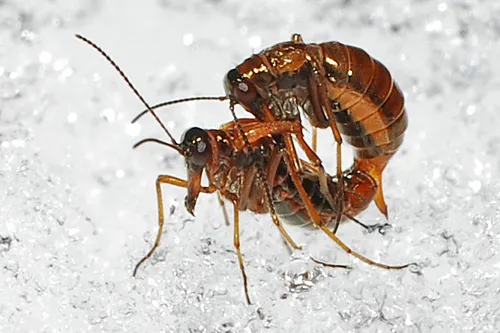
Adapted from Asa Fitch's original 1847 description: head, eyes, antennae black; rostrum brown with black tip; side of thorax black; top of thorax varying from brown to cinnamon except basal half of prothorax black; abdomen varies from black to brown, with terminal segment brown or cinnamon; ovipositor brown or reddish with black tip; rudimentary wings brown or cinnamon; legs yellow or brown with thin black ring at each joint. B. brumalis (Mid-winter Boreus), the only other eastern species, is colored differently: legs, antennae, eyes, rostrum dull black; abdomen shiny blackish-green with light brown lateral stripes; ovipositor shiny black; rudimentary wings in male brownish-black; in female, the tiny wingpads are barely visible as two minute grayish-black spots on the thorax
Wikipedia reference for Boreus nivoriundus: http://en.wikipedia.org/wiki/Boreus_nivoriundus.
Classification
Habitat and Range
Habitat
on surface of snow, at high elevation in southern part of range
Geographic Range
NB-QC to NY-OH-TN (probably also occurs in adjacent areas)
Seasonal Activity
adults found on snow from December to April
Diet and Behavior
Diet: Larvae and adults feed on mosses. In New England, utilizes Atrichum spp., Polytrichum commune and P. ohioense moss.
Additional species information
Species notes from the sources
Etymology: Boreus nivoriundus Fitch 1847
About Scorpionflies, Hangingflies, and Allies: the wider group
Order-level background for Mecoptera, the group containing Boreus nivoriundus. Species-specific details appear above.
Group overview
Mecoptera (scorpionflies) includes ~600 described species. Males of many species have an upturned abdomen tip resembling a scorpion's stinger, but they are completely harmless. Mecoptera are among the oldest insect orders with fossils dating to the Permian period (~270 million years ago).
Ecological role of the group
Scorpionflies are primarily scavengers feeding on dead insects and decaying organic matter. Some species practice 'nuptial gifting' - males offer prey items or salivary secretions to females as mating gifts.
Economic and practical significance of the group
Scorpionflies have little direct economic impact but are valuable research subjects - they are considered ancestral to fleas and possibly to all holometabolous insects (those with complete metamorphosis).
Recorded sources for this group: Entomological research, paleontology. Imported estimates may describe particular regions or reporting periods.
Photos of Snow-born Boreus (3)
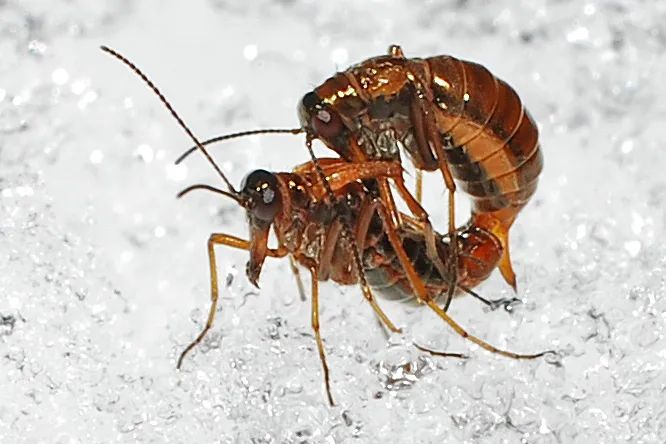
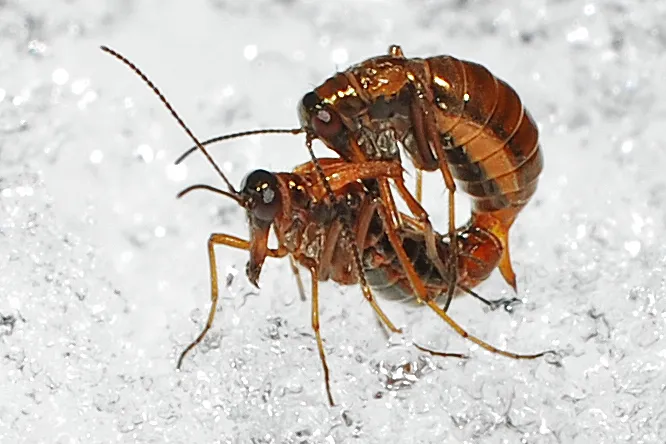
Photo credits: Contributed by Robin McLeod; Additional contributions by Ben Coulter , v belov
Frequently Asked Questions About Snow-born Boreus
What is Snow-born Boreus?
Snow-born Boreus (Boreus nivoriundus) is a species in the family Boreidae, within the order Mecoptera.
How big is Snow-born Boreus?
3-5 mm
How do you identify Snow-born Boreus?
Adapted from Asa Fitch's original 1847 description: head, eyes, antennae black; rostrum brown with black tip; side of thorax black; top of thorax varying from brown to cinnamon except basal half of prothorax black; abdomen varies from black to brown, with terminal segment brown or cinnamon; ovipositor brown or reddish with black tip; rudimentary wings brown or cinnamon; legs yellow or brown with thin black ring at each joint. B. brumalis (Mid-winter Boreus), the only other eastern species, is colored differently: legs, antennae, eyes, rostrum dull black; abdomen shiny blackish-green with light brown lateral stripes; ovipositor shiny black; rudimentary wings in male brownish-black; in female, the tiny wingpads are barely visible as two minute grayish-black spots on the thorax
Where is Snow-born Boreus found?
| Feature | Details |
|---|---|
| Habitat | on surface of snow, at high elevation in southern part of range |
| Range | NB-QC to NY-OH-TN (probably also occurs in adjacent areas) |
What does Snow-born Boreus eat?
The diet of the Snow-born Boreus includes Larvae and adults feed on mosses. In New England, utilizes Atrichum spp., Polytrichum commune and P. ohioense moss..
When is Snow-born Boreus active?
Snow-born Boreus: seasonal activity - adults found on snow from December to April.