
Banksiola crotchi
This record describes Banksiola crotchi (species). Recorded family: Phryganeidae. Recorded order: Trichoptera.
Identification and Appearance
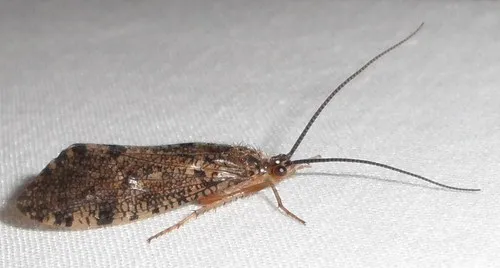
| Feature | Details |
|---|---|
| Head | Brown. Eyes large and dark. Whiskers (palpi) are short; 4 segments on male and 3 segments on females. Antenna: Thick, as long as body and have even bands of dark and light rings. |
| Thorax | Brown, slightly hairy. Wings: Background is cream-color with fine dark brown net-like marks and dark blotches. The blotches can vary significantly. |
| Legs | Brownish-yellow, short yellowish bristles and black spines. |
| Abdomen | Dark yellowish brown, lighter on underside. Types: Holotype as Banksiola crotchi male by Banks, 1943. MCZ #25956. Locality: Victoria, Vancouver Island, British Columbia, Canada collected by G. R. Crotch. In the Museum of Comparative Zoology, New York. Holotype as Banksiola selina male by Betten, 1944. Locality: Zion, Illinois, along Dead River: June 3, 1938, collected by Mohr & Burks. In Illinois Natural History Survey, Champaign, Ill. Also allotype female. |
Wikipedia reference for Banksiola crotchi: https://en.wikipedia.org/wiki/Banksiola_crotchi.
Classification
- Kingdom
- Animalia
- Phylum
- Arthropoda
- Class
- Insecta
- Order
- Trichoptera (Caddisflies)
- Suborder
- Integripalpia
- Superfamily
- Phryganeoidea
- Family
- Phryganeidae (Giant Casemaker Caddisflies)
- Genus
- Banksiola
Imported taxonomy record. Source availability varies; see the source references and editorial policy below.
Habitat and Range
Habitat
Standing waters, ponds and marshes. Adults are attracted to lights.
Geographic Range
Transcontinental in Canada. Northern and western U.S. from Maine to Illinois, west to Montana, Oregon, Utah, California and New Mexico.
Seasonal Activity
May to August in south; June and July in north.
Diet and Behavior
Diet: Larvae feed on plants and later on smaller insects.
Life History
Larvae hatch out during August and September, building cases from pieces of plant material and algae, arranged in a spiral around their body. Generally feeding on algae, by the 5th instar they start to feed on smaller insects. Over-winter as mature larvae; pupate in spring. Adults emerge at dusk, and walk or swim on the water, sometimes in circles before they head for shore and flight. One generation per year.
About Caddisflies: the wider group
Order-level background for Trichoptera, the group containing Banksiola crotchi. Species-specific details appear above.
Group overview
Trichoptera (caddisflies) includes ~14,500 described species worldwide. Larvae are aquatic and build protective cases from silk, sand, pebbles, and plant material - each species creates a distinctive case design.
Ecological role of the group
Caddisfly larvae are critical food sources for trout and other freshwater fish, making them essential to recreational fishing industries worth billions annually. Their silk is being researched as an underwater adhesive for medical applications.
Economic and practical significance of the group
Caddisfly larvae are among the most important biological indicators of water quality. Their presence or absence in streams is used by the EPA and state agencies to assess pollution levels and ecosystem health.
Recorded sources for this group: EPA, freshwater ecology research. Imported estimates may describe particular regions or reporting periods.
Photos of Banksiola crotchi (3)
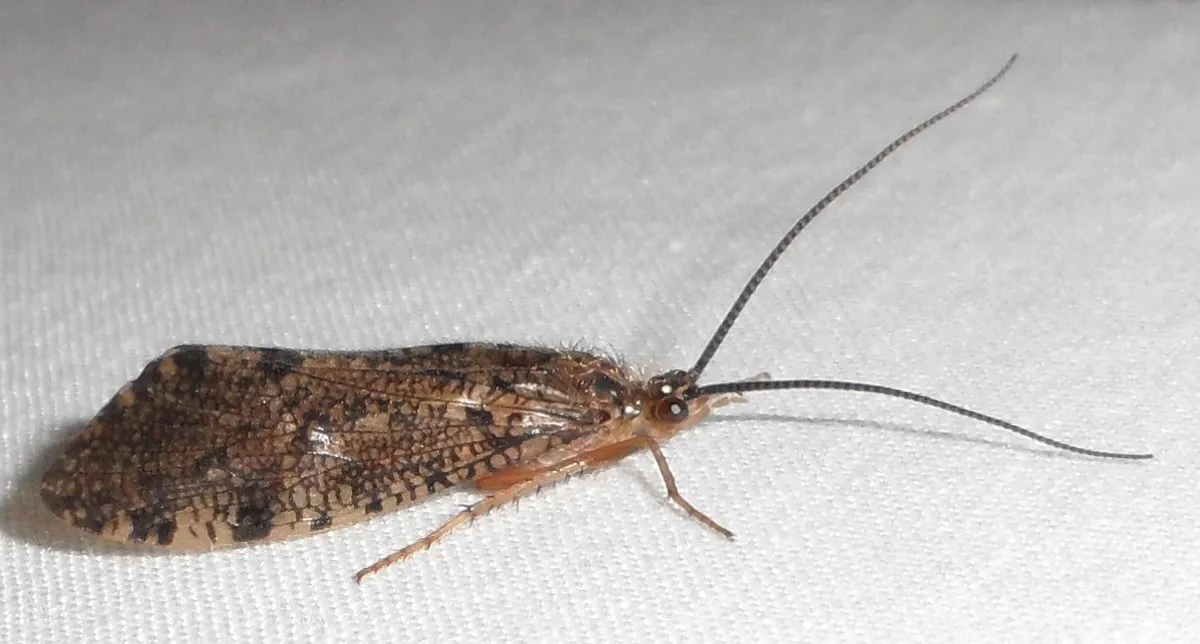
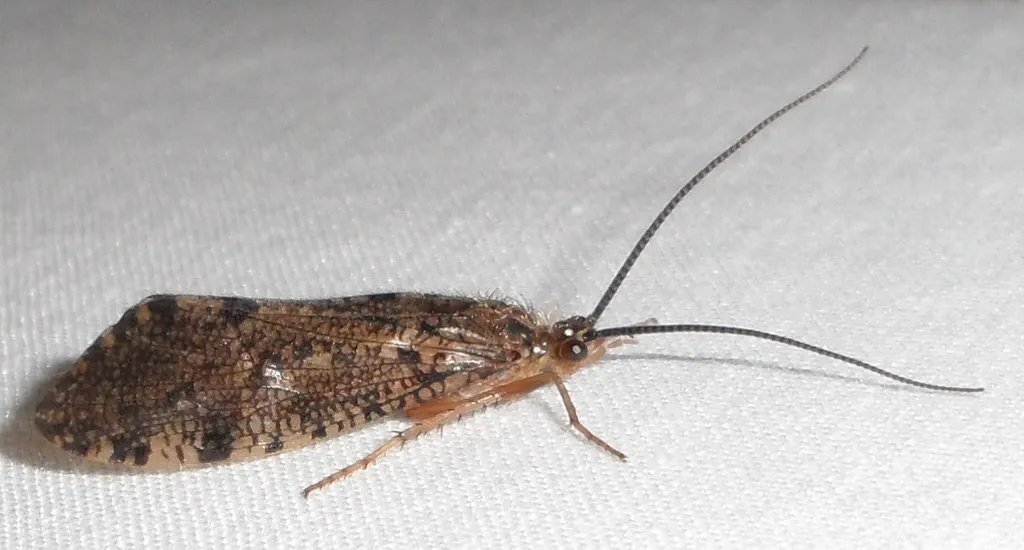
Photo credits: Contributed by tom murray; Additional contributions by Steve Nanz , lee_penner
Frequently Asked Questions About Banksiola crotchi
What is Banksiola crotchi?
Banksiola crotchi is a species in the family Phryganeidae, within the order Trichoptera.
How big is Banksiola crotchi?
Females 14 to 20 mm long Males 12 to 15 mm long.
How do you identify Banksiola crotchi?
| Feature | Details |
|---|---|
| Head | Brown. Eyes large and dark. Whiskers (palpi) are short; 4 segments on male and 3 segments on females. Antenna: Thick, as long as body and have even bands of dark and light rings. |
| Thorax | Brown, slightly hairy. Wings: Background is cream-color with fine dark brown net-like marks and dark blotches. The blotches can vary significantly. |
| Legs | Brownish-yellow, short yellowish bristles and black spines. |
| Abdomen | Dark yellowish brown, lighter on underside. |
Where is Banksiola crotchi found?
| Feature | Details |
|---|---|
| Habitat | Standing waters, ponds and marshes. Adults are attracted to lights. |
| Range | Transcontinental in Canada. Northern and western U.S. from Maine to Illinois, west to Montana, Oregon, Utah, California and New Mexico. |
What does Banksiola crotchi eat?
The diet of the Banksiola crotchi includes Larvae feed on plants and later on smaller insects..
When is Banksiola crotchi active?
Banksiola crotchi: seasonal activity - May to August in south; June and July in north..
What is the life cycle of a Banksiola crotchi?
Larvae hatch out during August and September, building cases from pieces of plant material and algae, arranged in a spiral around their body. Generally feeding on algae, by the 5th instar they start to feed on smaller insects. Over-winter as mature larvae; pupate in spring. Adults emerge at dusk, and walk or swim on the water, sometimes in circles before they head for shore and flight. One generation per year.