
Orange Tortrix - Hodges#3612
Argyrotaenia franciscana
This record describes Argyrotaenia franciscana (species). Recorded family: Tortricidae. Recorded order: Lepidoptera.
Identification and Appearance
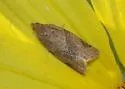
Adult - sinuate costa, grey with whitish antemedial band, dorsal area and outlining the distal costal spot. Females have broader forewing and diffuse markings. ( 3 ) Larva - larval head and prothoracic shield are light brown and unmarked. Body color vaires with host plant, but larvae are usually pale to dark green. ( 4 )
Classification
- Kingdom
- Animalia
- Phylum
- Arthropoda
- Class
- Insecta
- Order
- Lepidoptera (Butterflies and Moths)
- Superfamily
- Tortricoidea
- Family
- Tortricidae (Tortricid Moths)
- Subfamily
- Tortricinae
- Tribe
- Archipini
- Genus
- Argyrotaenia
Imported taxonomy record. Source availability varies; see the source references and editorial policy below.
Habitat and Range
Habitat
Primarily in the cooler coastal areas and river valleys. ( 4 )
Geographic Range
Pacific Coast from British Columbia to California (records from Florida refer to A. ivana ). Moth Photographers Group - large range map with some collection locations and dates. Type locality: San Francisco, California, May 16, 1871.
Seasonal Activity
Flies year round in California.
Diet and Behavior
Diet: Pest of citrus and other fruit trees. A remarkably polyphagous species...scroll down to "Host Plants" on this TortAI ID fact sheet for a long list. In a 2002 article for the journal Fremontia , Jerry Powell wrote: "Some species feed on an array of angiosperms, or conifers, some even on both, but rarely does their diet include monocots, which mainly serve specialists with modified mandibles. The Argyrotaenia franciscana complex (Tortricidae) in coastal California is a good example; larvae have been found on a vast array of angiosperms, both woody and herbaceous, native and exotic, and occasionally on conifers. Even within populations, A. franciscana is polyphagous, recorded on 24 species of plants in 15 families at the UC Big Creek Reserve in Monterey County. These include Sequoia (coast redwood), Cupressus macrocarpa (Monterey cypress), and the succulents, Sedum (stonecrop) and Dudleya , feeding in the inflorescences. On San Miguel Island, A. franciscana insulana larvae have been found on 22 species, which is 10% of the flora, but not on monocots."
Life History
See this TortAI ID fact sheet for detailed info on life cycle. ( 4 )
Additional species information
Species notes from the sources
Etymology: Specific epithet for the type location (San Francisco).
About Butterflies and Moths: the wider group
Order-level background for Lepidoptera, the group containing Argyrotaenia franciscana. Species-specific details appear above.
Group overview
Lepidoptera includes approximately 180,000 described species of butterflies and moths. Moths outnumber butterflies roughly 10:1. The monarch butterfly's eastern population has declined by more than 80% since the mid-1990s, and the western population by over 95% since the 1980s. The IUCN lists the migratory monarch as Vulnerable.
Ecological role of the group
Butterflies and moths are essential indicators of ecosystem health. As caterpillars, they are a primary food source for birds - a single nest of blue tit chicks requires ~10,000 caterpillars. Adult moths pollinate many night-blooming plants.
Economic and practical significance of the group
Lepidoptera are critical pollinators. In Europe, grassland butterfly species have declined by almost 50% since the early 1990s. In the UK, three-quarters of butterflies are in decline. In the U.S., five butterfly species have gone extinct since 1950, with 29 listed as endangered.
Recorded sources for this group: IUCN Red List, Xerces Society, USFWS, PNAS, WWF. Imported estimates may describe particular regions or reporting periods.
Photos of Orange Tortrix - Hodges#3612 (5)
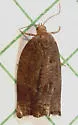
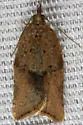
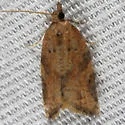
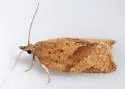
Photo credits: Contributed by Tim Loh; Additional contributions by Robin McLeod , Maury Heiman , Aaron Schusteff , Vox Sciurorum , Chuck Sexton , Randy Hardy , Jason Dombroskie
Frequently Asked Questions About Orange Tortrix - Hodges#3612
What is Orange Tortrix - Hodges#3612?
Orange Tortrix - Hodges#3612 (Argyrotaenia franciscana) is a species in the family Tortricidae, within the order Lepidoptera.
How big is Orange Tortrix - Hodges#3612?
Forewing length 5.5-8.5 mm. ( 3 )
How do you identify Orange Tortrix - Hodges#3612?
Adult - sinuate costa, grey with whitish antemedial band, dorsal area and outlining the distal costal spot. Females have broader forewing and diffuse markings. ( 3 ) Larva - larval head and prothoracic shield are light brown and unmarked. Body color vaires with host plant, but larvae are usually pale to dark green. ( 4 )
Where is Orange Tortrix - Hodges#3612 found?
| Feature | Details |
|---|---|
| Habitat | Primarily in the cooler coastal areas and river valleys. ( 4 ) |
| Range | Pacific Coast from British Columbia to California (records from Florida refer to A. ivana ). Moth Photographers Group - large range map with some collection locations and dates. Type locality: San Francisco, California, May 16, 1871. |
What does Orange Tortrix - Hodges#3612 eat?
The diet of the Orange Tortrix - Hodges#3612 includes Pest of citrus and other fruit trees. A remarkably polyphagous species...scroll down to Host Plants on this TortAI ID fact sheet for a long list. In a 2002 article for the journal Fremontia , Jerry Powell wrote: Some species feed on an array of angiosperms, or conifers, some even on both, but rarely does their diet include monocots, which mainly serve specialists with modified mandibles. The Argyrotaenia franciscana complex (Tortricidae) in coastal California is a good example; larvae have been found on a vast array of angiosperms, both woody and herbaceous, native and exotic, and occasionally on conifers. Even within populations, A. franciscana is polyphagous, recorded on 24 species of plants in 15 families at the UC Big Creek Reserve in Monterey County. These include Sequoia (coast redwood), Cupressus macrocarpa (Monterey cypress), and the succulents, Sedum (stonecrop) and Dudleya , feeding in the inflorescences. On San Miguel Island, A. franciscana insulana larvae have been found on 22 species, which is 10% of the flora, but not on monocots..
When is Orange Tortrix - Hodges#3612 active?
Orange Tortrix - Hodges#3612: seasonal activity - Flies year round in California..
What is the life cycle of a Orange Tortrix - Hodges#3612?
See this TortAI ID fact sheet for detailed info on life cycle. ( 4 )