
Navel Orangeworm - Hodges#5724
Amyelois transitella
This record describes Amyelois transitella (species). Recorded family: Pyralidae. Recorded order: Lepidoptera.
Identification and Appearance
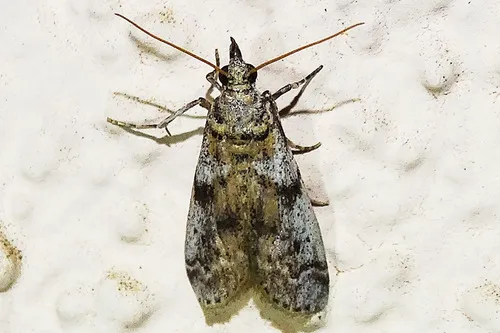
Larva - ½ to ¾ inch long, reddish orange when first hatched, changing to cream color after the first molt. Later, their color depends on the color of their food NOW biological control agent: Chrysidoidea (Cuckoo Wasps and Allies) » Bethylidae » Epyrinae » Goniozus legneri: first found in California in 1942 and spread widely by 1949.
Classification
- Kingdom
- Animalia
- Phylum
- Arthropoda
- Class
- Insecta
- Order
- Lepidoptera (Butterflies and Moths)
- Superfamily
- Pyraloidea
- Family
- Pyralidae (Pyralid Moths)
- Subfamily
- Phycitinae
- Tribe
- Phycitini
- Genus
- Amyelois
Imported taxonomy record. Source availability varies; see the source references and editorial policy below.
Habitat and Range
Geographic Range
s. US, but mostly Calif. / Mex. / W. Indies - Map (MPG)
Seasonal Activity
Adults fly in California from the end of March to the end of Oct
Diet and Behavior
Diet: Polyphagous in Florida hosting on orange, grapefruit, peach, apple, dates, figs, Acacia, Cassia, Pithecellobium, Robinia, Sapindus, Yucca, and walnut. ( 3 ) The navel orangeworm is a critical pest in California of almonds, pistachios and walnuts, which cover more than 1.1 million acres and yield an annual farm gate value of more than $3 billion. Damage by navel orangeworm may also decrease quality, reducing the competitiveness of these products in the export market, valued at over $1.5 billion. ( 4 )
Life History
Creamy-white lustrous eggs are laid in small groups. During incubation, they change color to pink and reddish orange. Total egg production per female ranges from 3 to 244, with an average of 85. At 82° F the incubation period is 5 days. As the larvae feed, they produce abundant silken webbing, and the interiors of figs and dates that have been occupied by them are littered with coarse pellets of excreta. The larvae develop more rapidly when relative humidity is high. At 55 percent, they take 55 days to develop, but at 95 percent they require only 22 days. Pupation lasts for about a week. The pupae are dark brown. At 82° F, the egg-to-adult period is only 36 days at 95 percent relative humidity, but 69 days at 55 percent ( 4 )
About Butterflies and Moths: the wider group
Order-level background for Lepidoptera, the group containing Amyelois transitella. Species-specific details appear above.
Group overview
Lepidoptera includes approximately 180,000 described species of butterflies and moths. Moths outnumber butterflies roughly 10:1. The monarch butterfly's eastern population has declined by more than 80% since the mid-1990s, and the western population by over 95% since the 1980s. The IUCN lists the migratory monarch as Vulnerable.
Ecological role of the group
Butterflies and moths are essential indicators of ecosystem health. As caterpillars, they are a primary food source for birds - a single nest of blue tit chicks requires ~10,000 caterpillars. Adult moths pollinate many night-blooming plants.
Economic and practical significance of the group
Lepidoptera are critical pollinators. In Europe, grassland butterfly species have declined by almost 50% since the early 1990s. In the UK, three-quarters of butterflies are in decline. In the U.S., five butterfly species have gone extinct since 1950, with 29 listed as endangered.
Recorded sources for this group: IUCN Red List, Xerces Society, USFWS, PNAS, WWF. Imported estimates may describe particular regions or reporting periods.
Photos of Navel Orangeworm - Hodges#5724 (2)
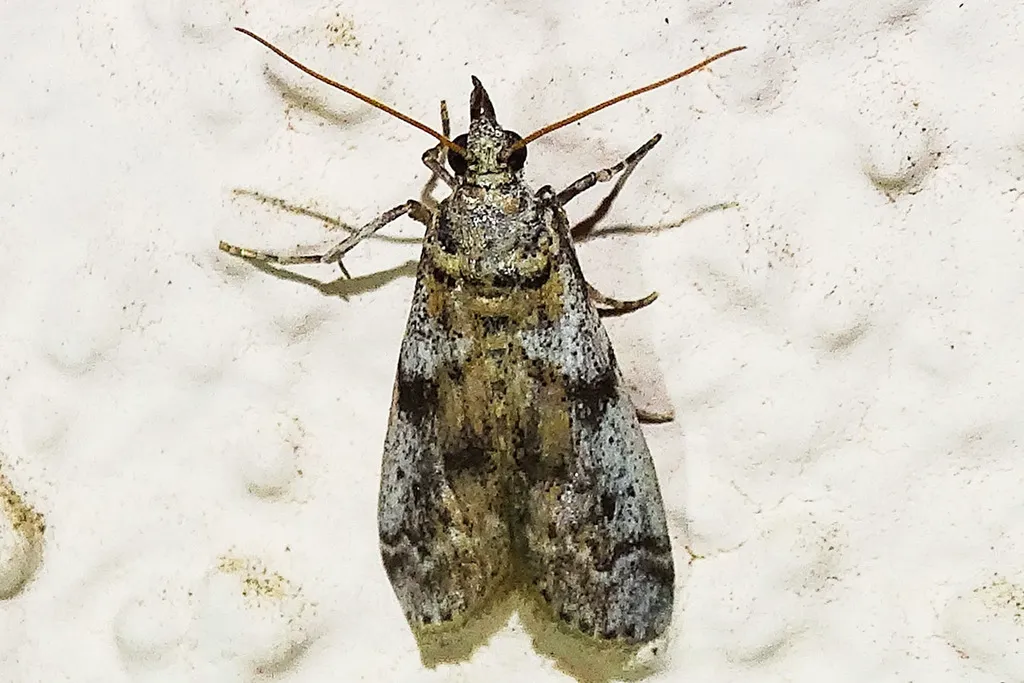
Photo credits: Contributed by Mike Quinn; Additional contributions by Beatriz Moisset , Maury Heiman , Robert Lord Zimlich , Randy Hardy , Blocky
Frequently Asked Questions About Navel Orangeworm - Hodges#5724
What is Navel Orangeworm - Hodges#5724?
Navel Orangeworm - Hodges#5724 (Amyelois transitella) is a species in the family Pyralidae, within the order Lepidoptera.
How big is Navel Orangeworm - Hodges#5724?
Adult length is 9.7 to 10.9 mm
How do you identify Navel Orangeworm - Hodges#5724?
Larva - ½ to ¾ inch long, reddish orange when first hatched, changing to cream color after the first molt. Later, their color depends on the color of their food
Where is Navel Orangeworm - Hodges#5724 found?
Range: s. US, but mostly Calif. / Mex. / W. Indies - Map (MPG)
What does Navel Orangeworm - Hodges#5724 eat?
The diet of the Navel Orangeworm - Hodges#5724 includes Polyphagous in Florida hosting on orange, grapefruit, peach, apple, dates, figs, Acacia, Cassia, Pithecellobium, Robinia, Sapindus, Yucca, and walnut. ( 3 ) The navel orangeworm is a critical pest in California of almonds, pistachios and walnuts, which cover more than 1.1 million acres and yield an annual farm gate value of more than $3 billion. Damage by navel orangeworm may also decrease quality, reducing the competitiveness of these products in the export market, valued at over $1.5 billion. ( 4 ).
When is Navel Orangeworm - Hodges#5724 active?
Navel Orangeworm - Hodges#5724: seasonal activity - Adults fly in California from the end of March to the end of Oct.
What is the life cycle of a Navel Orangeworm - Hodges#5724?
Creamy-white lustrous eggs are laid in small groups. During incubation, they change color to pink and reddish orange. Total egg production per female ranges from 3 to 244, with an average of 85. At 82° F the incubation period is 5 days. As the larvae feed, they produce abundant silken webbing, and the interiors of figs and dates that have been occupied by them are littered with coarse pellets of excreta. The larvae develop more rapidly when relative humidity is high. At 55 percent, they take 55 days to develop, but at 95 percent they require only 22 days. Pupation lasts for about a week. The pupae are dark brown. At 82° F, the egg-to-adult period is only 36 days at 95 percent relative humidity, but 69 days at 55 percent ( 4 )