
=NOT IN OUR AREA=
Agra oblongopunctata
This record describes Agra oblongopunctata (species). Recorded family: Carabidae. Recorded order: Coleoptera.
Identification and Appearance
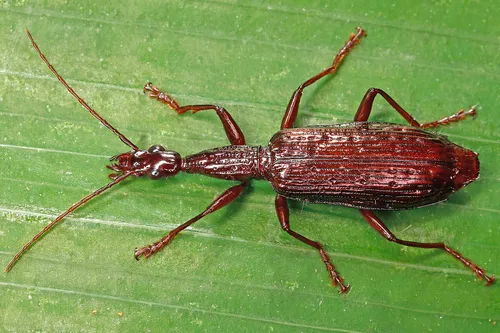
Townsend (1902): Agra oblongopunctata , Chevr. - Beaten from masses of clematis vines in palmetto thickets at San Tomas, June 16th and 27th. Beaten from clematis in woods back of Fort Brown, July 3rd. Distr. This is a distinctively tropical Mexican genus, now first known to reach the Lower Rio Grande. It occurs in the thickest vine tangles of the palmetto thickets or semi-tropical jungles. The writer has taken this species in the States of Vera Cruz and Tabasco. It is the first member of the Agrini reported from within the boundaries of the United States.
Classification
- Kingdom
- Animalia
- Phylum
- Arthropoda
- Class
- Insecta
- Order
- Coleoptera (Beetles)
- Suborder
- Adephaga
- Family
- Carabidae (Ground Beetles)
- Subfamily
- Harpalinae
- Tribe
- Lebiini
- Genus
- Agra
Imported taxonomy record. Source availability varies; see the source references and editorial policy below.
Habitat and Range
Habitat
Adults are arboreal, many living in the high canopy of tropical evergreen forests . Lots of specimens of Texas Agra have been found in the tree Celtis ... Celtis pallida – Desert Hackberry, Shiny Hackberry (SOUTHWESTERN US / TEXAS, N MEXICO)
Geographic Range
Veracruz, south thru Central America, then throughout South America into northern Argentina.
Diet and Behavior
Diet: Agra members are predators on small arthropods; larvae are under bark predators, as well.
Life History
Likely annual. Females are the only carabids that have a telescopic ovipositor that is used to put their eggs deep in holes in deciduous trees from Texas to Argentina.
About Primitive Winged Insects: the wider group
Order-level background for Coleoptera, the group containing Agra oblongopunctata. Species-specific details appear above.
Group overview
Coleoptera is the largest order of insects with over 400,000 described species, representing ~25% of all known animal species and ~40% of all insects. In the U.S. alone, nearly 30,000 beetle species have been identified.
Ecological role of the group
Beetles are prominent decomposers, especially in forests, breaking down dead wood and recycling nutrients. As predators, they reduce populations of pest insects. Many species are also important pollinators of flowering plants.
Economic and practical significance of the group
Beetles have major economic significance: leaf beetles (Chrysomelidae) and weevils (Curculionoidea) are among the most destructive agricultural pests globally, costing billions annually, while predatory species like ladybugs provide natural pest control.
Recorded sources for this group: Britannica, Smithsonian, NCSU Entomology. Imported estimates may describe particular regions or reporting periods.
Photos of =NOT IN OUR AREA= (2)
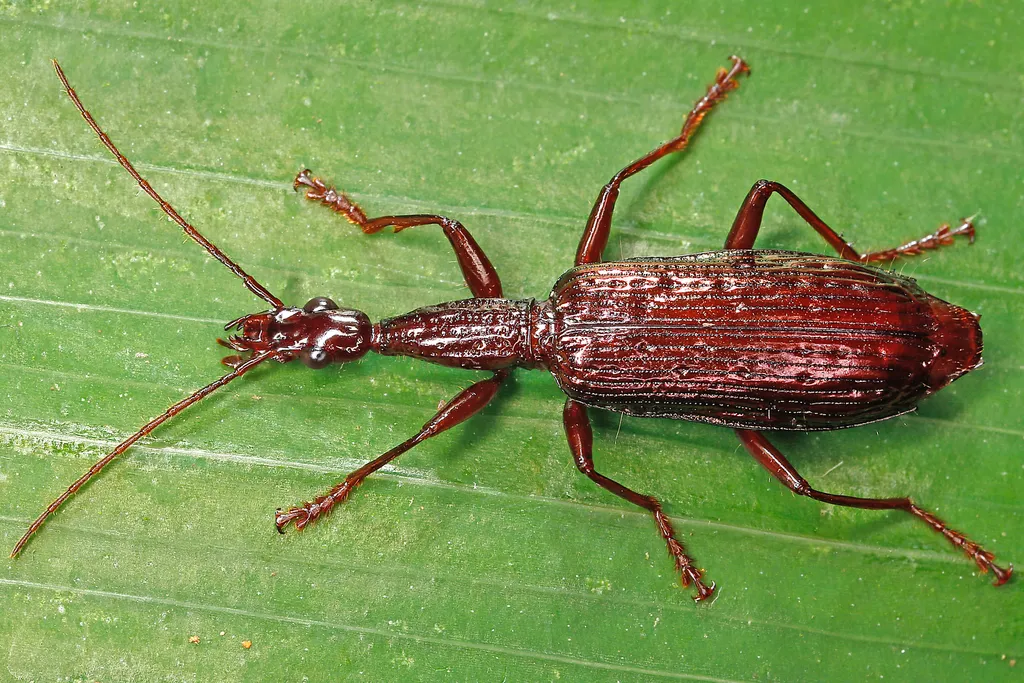
Photo credits: (c) gernotkunz, all rights reserved, uploaded by gernotkunz | Contributed by Mike Quinn; Additional contributions by v belov , Terry Erwin
Frequently Asked Questions About =NOT IN OUR AREA=
What is =NOT IN OUR AREA=?
=NOT IN OUR AREA= (Agra oblongopunctata) is a species in the family Carabidae, within the order Coleoptera.
How big is =NOT IN OUR AREA=?
Agra members range from 7mm to more than 3 centimeters
Where is =NOT IN OUR AREA= found?
| Feature | Details |
|---|---|
| Habitat | Adults are arboreal, many living in the high canopy of tropical evergreen forests . Lots of specimens of Texas Agra have been found in the tree Celtis ... Celtis pallida – Desert Hackberry, Shiny Hackberry (SOUTHWESTERN US / TEXAS, N MEXICO) |
| Range | Veracruz, south thru Central America, then throughout South America into northern Argentina. |
What does =NOT IN OUR AREA= eat?
The diet of the =NOT IN OUR AREA= includes Agra members are predators on small arthropods; larvae are under bark predators, as well..
What is the life cycle of a =NOT IN OUR AREA=?
Likely annual. Females are the only carabids that have a telescopic ovipositor that is used to put their eggs deep in holes in deciduous trees from Texas to Argentina.