
Acleris celiana - Hodges#3533
Acleris celiana
This record describes Acleris celiana (species). Recorded family: Tortricidae. Recorded order: Lepidoptera.
Identification and Appearance
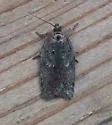
Dark chestnut brown FW typically has mottled whitish AM band and darker basal patch. Some individuals are darker with bold white and chestnut streaks extending along costa. genitalia ID Info? I think you are correct but this phenotype seems to pop up in many species. The BIN for celiana is BOLD:AAB6218 and it seems to contain the best matches but I don't how to eliminate those other species: • C. macdunnoughi : Sample CNCLEP00025133 in BOLD:AAA7793 , the BIN for macdunnoughi , is very similar. • C. hastiana : This woud appear to be a complex involving several BINs with similar examples. (These BINs are close to each other in the tree. I don't think they reflect misidentifications though there may be undescribed species.): BOLD:AAA9796 (Europe) - see BC ZSM Lep 61217 BOLD:AAA9793 (Northwest US and western Canada) - see RWWA-2390 BOLD:AAA9792 (Northeast US and eastern Canada) - see CGWC-3931 BOLD:AAA9794 (Northwest US and western Canada) - see NoA-08-121 There are other species with similar but less convincing examples. For what it's worth I'm fine your determination but I'm just wondering what it is that you find convincing about celiana . … Steve Nanz, 28 January, 2020 - 7:42am Here is a moth close to your phenotype, along with it's genitalia. The latter is a good match to my 1st male genitalia, except for the number of cornuti in the aedeagus (males of some moth species are known to lose cornuti during mating). AWT March 27 2020
Classification
- Kingdom
- Animalia
- Phylum
- Arthropoda
- Class
- Insecta
- Order
- Lepidoptera (Butterflies and Moths)
- Superfamily
- Tortricoidea
- Family
- Tortricidae (Tortricid Moths)
- Subfamily
- Tortricinae
- Tribe
- Tortricini
- Genus
- Acleris
Imported taxonomy record. Source availability varies; see the source references and editorial policy below.
Habitat and Range
Geographic Range
Type locality: New York, Massachusetts ( Sanborn ).
About Butterflies and Moths: the wider group
Order-level background for Lepidoptera, the group containing Acleris celiana. Species-specific details appear above.
Group overview
Lepidoptera includes approximately 180,000 described species of butterflies and moths. Moths outnumber butterflies roughly 10:1. The monarch butterfly's eastern population has declined by more than 80% since the mid-1990s, and the western population by over 95% since the 1980s. The IUCN lists the migratory monarch as Vulnerable.
Ecological role of the group
Butterflies and moths are essential indicators of ecosystem health. As caterpillars, they are a primary food source for birds - a single nest of blue tit chicks requires ~10,000 caterpillars. Adult moths pollinate many night-blooming plants.
Economic and practical significance of the group
Lepidoptera are critical pollinators. In Europe, grassland butterfly species have declined by almost 50% since the early 1990s. In the UK, three-quarters of butterflies are in decline. In the U.S., five butterfly species have gone extinct since 1950, with 29 listed as endangered.
Recorded sources for this group: IUCN Red List, Xerces Society, USFWS, PNAS, WWF. Imported estimates may describe particular regions or reporting periods.
Photos of Acleris celiana - Hodges#3533 (5)
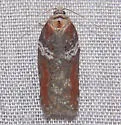
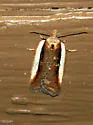
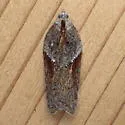
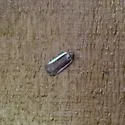
Photo credits: Contributed by tom murray; Additional contributions by Steve Nanz , Tony-2 , Randy Hardy , Fyn Kynd
Frequently Asked Questions About Acleris celiana - Hodges#3533
What is Acleris celiana - Hodges#3533?
Acleris celiana - Hodges#3533 (Acleris celiana) is a species in the family Tortricidae, within the order Lepidoptera.
How big is Acleris celiana - Hodges#3533?
Wingspan 25 mm. Total length 10 mm
How do you identify Acleris celiana - Hodges#3533?
Dark chestnut brown FW typically has mottled whitish AM band and darker basal patch. Some individuals are darker with bold white and chestnut streaks extending along costa. genitalia
Where is Acleris celiana - Hodges#3533 found?
Range: Type locality: New York, Massachusetts ( Sanborn ).