
Willow Emerald Damselfly
Chalcolestes viridis
This record describes Chalcolestes viridis (species). Recorded family: Lestidae. Recorded order: Odonata.
Identification and Appearance
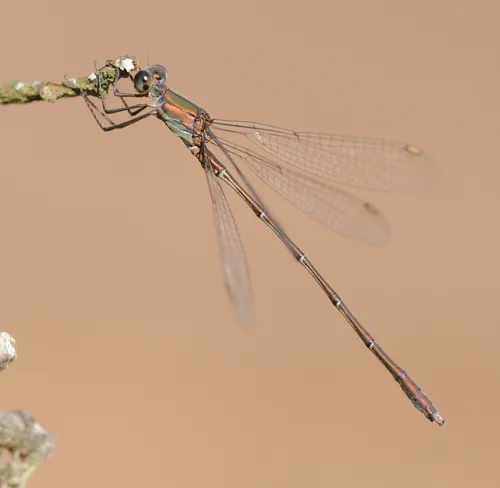
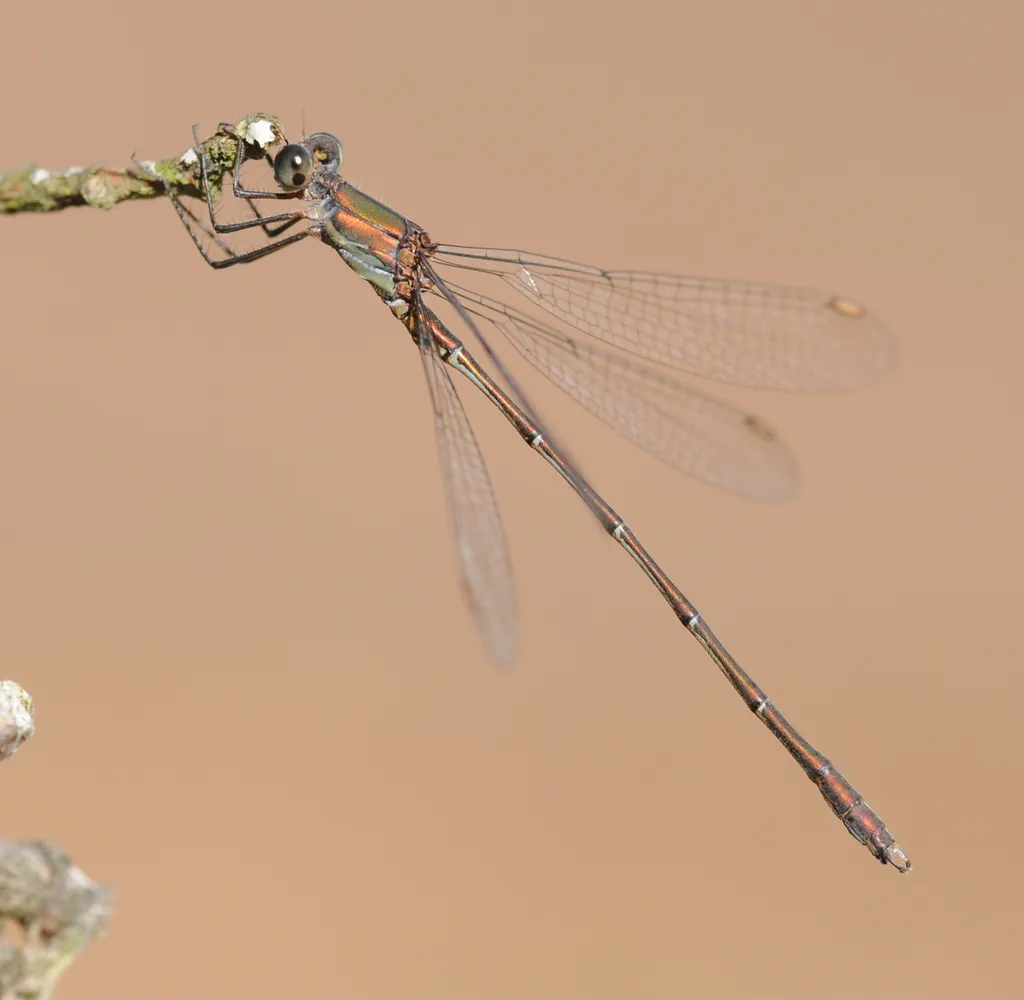
Length: 39 to 48 mm. Hindwing span: 23 to 48 mm. A dark metallic green damselfly with pale brown wing markings (pterostigma). Similar in appearance to the Emerald Damselfly. Willow Emerald Damselfly is longer than Emerald Damselfly, appears thinner and lacks the blue pruinescence. The dark bordered, pale brown pterostigma is a key identification feature of Willow Emerald Damselfly. Unless identified by a recognised expert, a photo is required. If the photo doesn't show the key ID features then in the comments box describe the size and identifying characters you have observed. Favoured habitat is shrub or tree-lined water bodies including ponds, lakes, canals and slow-flowing sections of rivers. Adults are often encountered perched on branch tips, with wings held at a characteristic 45 degree angle. Ovipositing scars on the tips of young willow shoots usually overhanging water indicate the presence and local breeding of this species Flying August and September and on into October. First British record came from Felixstowe in 2007 and it has spread rapidly. First record for VC55 came from willows beside the Eye Brook inlet to Eyebrook Reservoir on 8th September 2019. This species is increasing in our area.
Wikipedia reference for Chalcolestes viridis: http://en.wikipedia.org/wiki/Chalcolestes_viridis.
Classification
Habitat and Range
Habitat
Favoured habitat is shrub or tree-lined water bodies including ponds, lakes, canals and slow-flowing sections of rivers. Adults are often encountered perched on branch tips, with wings held at a characteristic 45 degree angle. Ovipositing scars on the tips of young willow shoots usually overhanging water indicate the presence and local breeding of this species
Seasonal Activity
Flying August and September and on into October.
Additional species information
Recorded status
First British record came from Felixstowe in 2007 and it has spread rapidly.
About Dragonflies and Damselflies: the wider group
Order-level background for Odonata, the group containing Chalcolestes viridis. Species-specific details appear above.
Group overview
Odonata includes ~6,000 described species of dragonflies and damselflies. Dragonflies are among the fastest flying insects, reaching 36 mph (58 km/h). They can fly in any direction including backward, and hover in place - each wing operates independently.
Ecological role of the group
Dragonflies predate dinosaurs by nearly 100 million years - fossils date to 325 million years ago. The largest dragonfly ancestor, Meganeuropsis permiana (285 mya), had a 75cm wingspan, enabled by atmospheric oxygen levels of 31-35% compared to today's 21%. Dragonflies have a 95% hunting success rate - the highest of any predator.
Economic and practical significance of the group
Dragonflies are voracious predators that consume hundreds of mosquitoes daily, providing natural pest control worth millions in reduced mosquito-borne disease risk. A single dragonfly can eat 30 to hundreds of mosquitoes per day.
Recorded sources for this group: Natural History Museum London, Britannica, fossil record research. Imported estimates may describe particular regions or reporting periods.
Photos of Willow Emerald Damselfly (2)
Frequently Asked Questions About Willow Emerald Damselfly
What is Willow Emerald Damselfly?
Willow Emerald Damselfly (Chalcolestes viridis) is a species in the family Lestidae, within the order Odonata.
How big is Willow Emerald Damselfly?
39 to 48 mm. Hindwing span: 23 to 48 mm. A dark metallic green damselfly with pale brown wing markings (pterostigma).
Where is Willow Emerald Damselfly found?
Habitat: Favoured habitat is shrub or tree-lined water bodies including ponds, lakes, canals and slow-flowing sections of rivers. Adults are often encountered perched on branch tips, with wings held at a characteristic 45 degree angle. Ovipositing scars on the tips of young willow shoots usually overhanging water indicate the presence and local breeding of this species
When is Willow Emerald Damselfly active?
Willow Emerald Damselfly: seasonal activity - Flying August and September and on into October..