
White-lipped Snail
Cepaea hortensis
This record describes Cepaea hortensis (species). Recorded family: Helicidae. Recorded order: Pulmonata.
Identification and Appearance
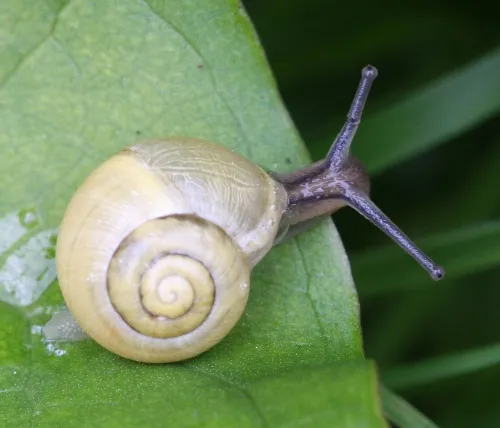
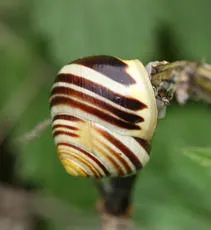
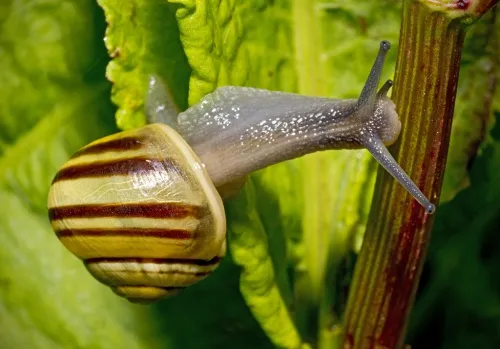
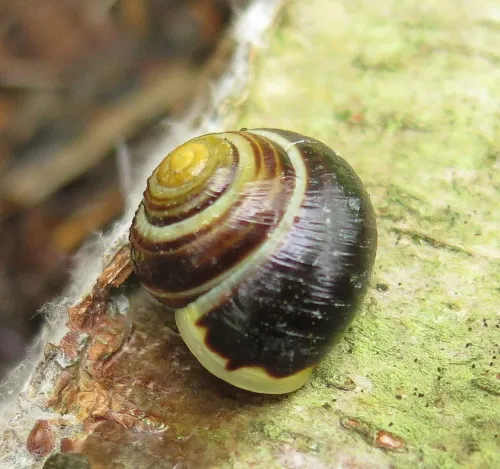
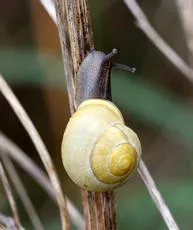
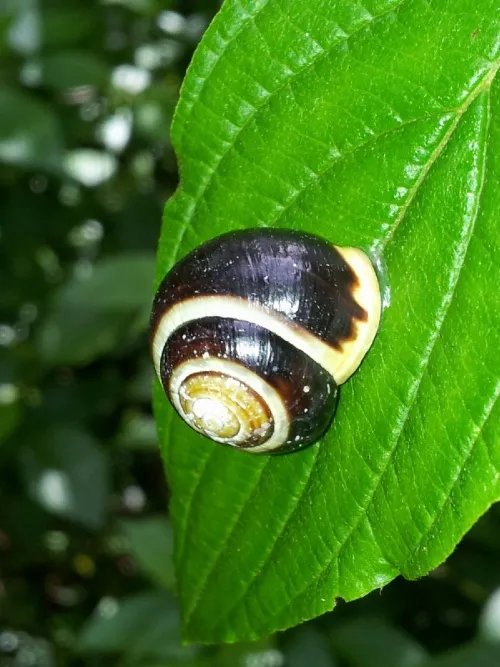
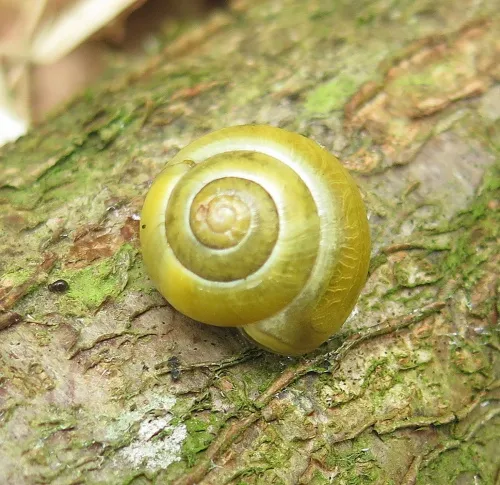
Shell height: 15 to 16 mm, width 16 to 22 mm. The white-lipped banded snail has a glossy, smooth shell, which is typically yellow in colour but may be pink, brown or red, with up to 5 variable spiral dark bands and nearly always has an obvious white lip around the shell opening. The body of the snail is usually greenish-grey becoming yellow towards the rear. Very similar to Cepaea nemoralis , the Brown-lipped Snail, but generally smaller and of course having a pale band around the lip of the shell, not dark. However this lip can break off so it is not always clear cut. Arianta arbustorum can also be broadly similar but this species usually has blotches as well as the stripes. Unless identified by a recognised expert, a photo is required. If the photo doesn't show the key ID features then in the comments box describe the size and identifying characters you have observed. This species occurs in a range of habitats, including waste ground, woodland, hedgerows and grassland and is often found in dense vegetation. In Scotland, it inhabits sand dunes and cliffs. During the day in damp conditions. It can also be found in dry conditions tightly attached to tree trunks or fences. The preferred food plants of this snail include Nettles, Ragwort and Hogweed. Although these snails posses both male and female organs, and are capable of self reproduction, they usually mate with another snail between spring and autumn. Common and widespread in Britain but mainly coastal in Scotland.
Classification
Habitat and Range
Habitat
This species occurs in a range of habitats, including waste ground, woodland, hedgerows and grassland and is often found in dense vegetation. In Scotland, it inhabits sand dunes and cliffs.
Seasonal Activity
During the day in damp conditions. It can also be found in dry conditions tightly attached to tree trunks or fences.
Diet and Behavior
Life History
The preferred food plants of this snail include Nettles, Ragwort and Hogweed. Although these snails posses both male and female organs, and are capable of self reproduction, they usually mate with another snail between spring and autumn.
Additional species information
Recorded status
Common and widespread in Britain but mainly coastal in Scotland.
About Pulmonata: the wider group
Order-level background for Pulmonata, the group containing Cepaea hortensis. Species-specific details appear above.
Group overview
Pulmonata includes terrestrial and freshwater snails and slugs with ~30,000 described species. The giant African land snail (Lissachatina fulica) can reach 20cm and is one of the most invasive species globally.
Ecological role of the group
Terrestrial gastropods are important decomposers and calcium recyclers in forest ecosystems. They are also critical food sources for birds, hedgehogs, and beetles. Many species are hermaphrodites, possessing both male and female reproductive organs.
Economic and practical significance of the group
Slugs and snails cause billions in crop damage worldwide. The global molluscicide market was valued at $800 million in 2023. Conversely, edible snails (escargot) support a global industry worth over $4 billion annually.
Recorded sources for this group: FAO, agricultural pest management, gastropod research. Imported estimates may describe particular regions or reporting periods.
Photos of White-lipped Snail (7)
Frequently Asked Questions About White-lipped Snail
What is White-lipped Snail?
White-lipped Snail (Cepaea hortensis) is a species in the family Helicidae, within the order Pulmonata.
Where is White-lipped Snail found?
Habitat: This species occurs in a range of habitats, including waste ground, woodland, hedgerows and grassland and is often found in dense vegetation. In Scotland, it inhabits sand dunes and cliffs.
When is White-lipped Snail active?
White-lipped Snail: seasonal activity - During the day in damp conditions. It can also be found in dry conditions tightly attached to tree trunks or fences..
What is the life cycle of a White-lipped Snail?
The preferred food plants of this snail include Nettles, Ragwort and Hogweed. Although these snails posses both male and female organs, and are capable of self reproduction, they usually mate with another snail between spring and autumn.