
Bordered Mantis
Stagmomantis limbata
This record describes Stagmomantis limbata (species). Recorded family: Mantidae. Recorded order: Mantodea.
Identification and Appearance
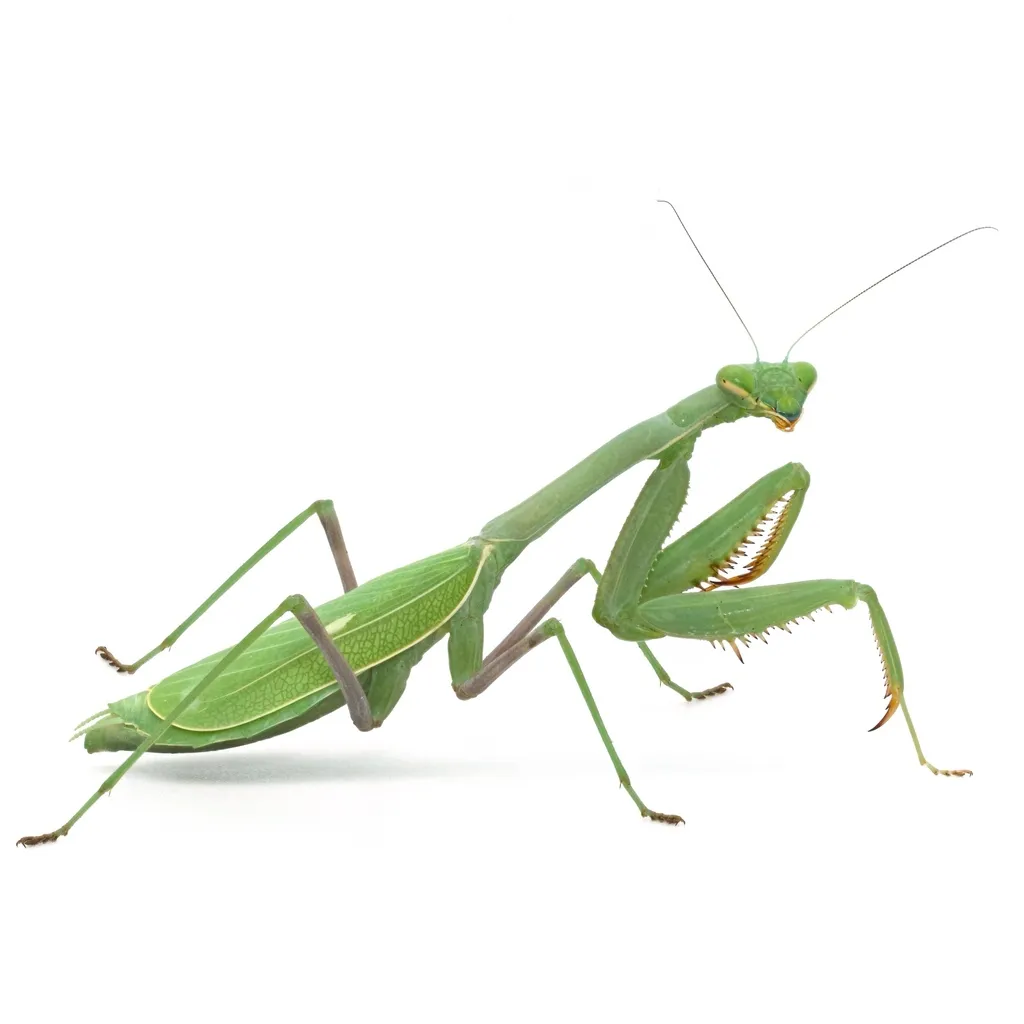
| Feature | Description |
|---|---|
| Additional details | Moderately large Mantid. Facial plate (below and between antennae) about twice as wide as long (as for genus), eyes not as protruding as in Carolina Mantid. Females most often fairly plain green (often yellowish abdomen), but sometimes gray, or light brown, with dark spot in middle of tegmina. Tegmina do not completely cover wide abdomen. Hind wings checkered or striped yellow. Blue upper lip more pronounced in females, brighter in green forms and darker in brown forms. Males slender, long-winged, variable in color but most often green and brown with sides of folded tegmina green and top brownish (may be solid gray, brown, green, or any combination of these). |
| Abdomen | Abdomen without prominent dark spots on top. |
| Wings | Wings transparent, usually with cloudy brownish spots on outer half. males often fly to lights in numbers; females flightless |
Wikipedia reference for Stagmomantis limbata: http://en.wikipedia.org/wiki/Stagmomantis_limbata.
Classification
Habitat and Range
Habitat
Variable, often in open semi-arid areas in tall forbs, shrubs, or trees, but more abundant in lusher, often riparian and wooded areas of streamsides, roadsides, canyons, in towns, etc.
Geographic Range
sw US (CA to CO-TX) to Venezuela
Seasonal Activity
Overwinter as eggs; hatch in spring or early summer; adults mostly in summer and autumn. Females in particular may sometimes survive well into winter.
Additional species information
Species notes from the sources
Etymology: Stagmomantis limbata (Hahn 1835)
About Mantids: the wider group
Order-level background for Mantodea, the group containing Stagmomantis limbata. Species-specific details appear above.
Group overview
Mantodea (praying mantises) includes ~2,400 described species in 430 genera. The praying mantis is the only insect that can turn its head 180 degrees to look over its shoulder.
Ecological role of the group
Mantises are apex insect predators with lightning-fast strike speeds - they can catch prey in as little as 50-70 milliseconds. Some species catch hummingbirds and small lizards. Female mantises sometimes practice sexual cannibalism, consuming the male during or after mating in about 25% of encounters.
Economic and practical significance of the group
Mantises are sold commercially as garden pest control. The Chinese mantis (Tenodera sinensis) was introduced to the U.S. in 1896 for pest control and is now established across the eastern United States.
Recorded sources for this group: Smithsonian, entomology research. Imported estimates may describe particular regions or reporting periods.
Photos of Bordered Mantis (3)
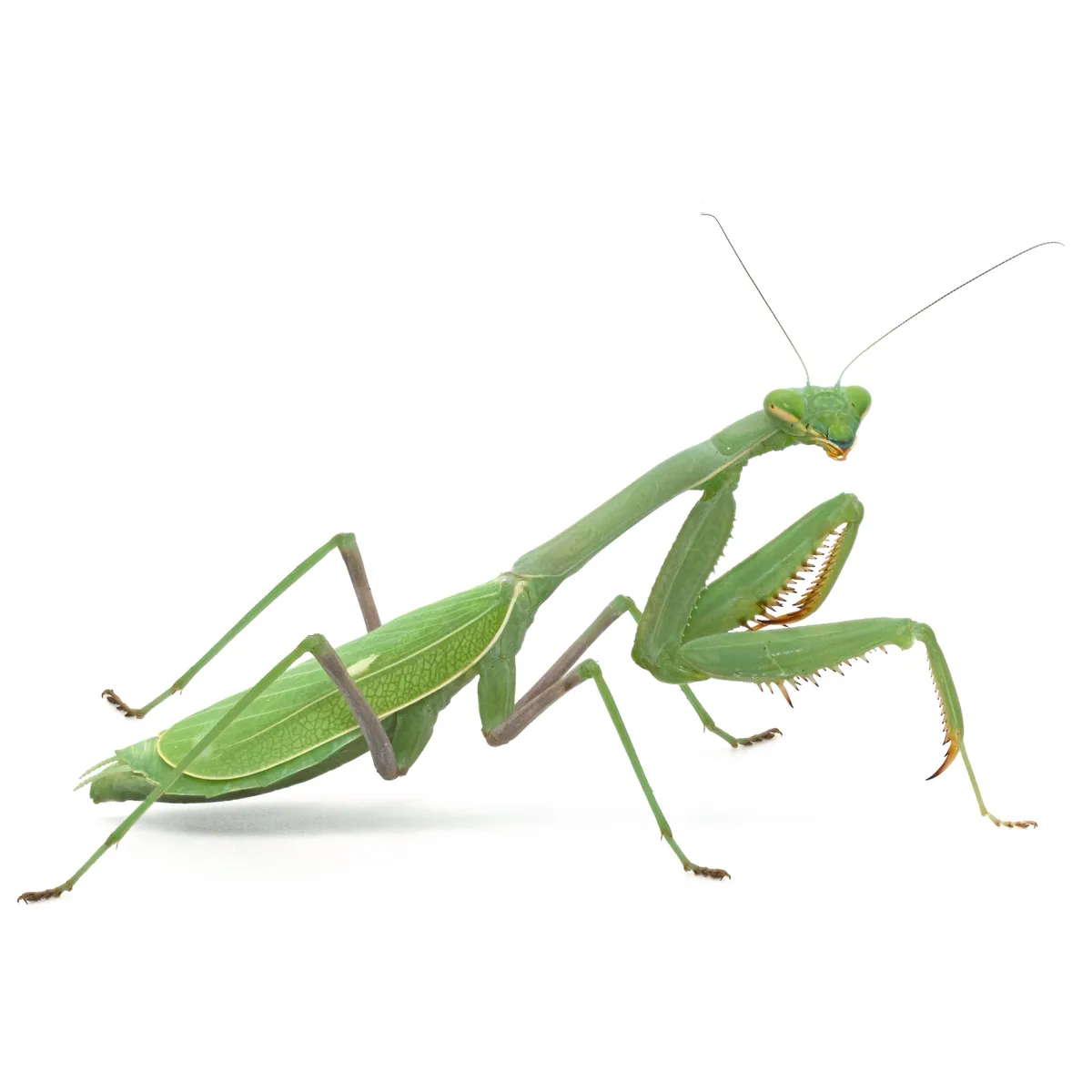
Photo credits: Contributed by Tom Bentley; Additional contributions by David Ferguson , v belov , John Stanard , James Bailey
Frequently Asked Questions About Bordered Mantis
What is Bordered Mantis?
Bordered Mantis (Stagmomantis limbata) is a species in the family Mantidae, within the order Mantodea.
How do you identify Bordered Mantis?
| Feature | Description |
|---|---|
| Additional details | Moderately large Mantid. Facial plate (below and between antennae) about twice as wide as long (as for genus), eyes not as protruding as in Carolina Mantid. Females most often fairly plain green (often yellowish abdomen), but sometimes gray, or light brown, with dark spot in middle of tegmina. Tegmina do not completely cover wide abdomen. Hind wings checkered or striped yellow. Blue upper lip more pronounced in females, brighter in green forms and darker in brown forms. Males slender, long-winged, variable in color but most often green and brown with sides of folded tegmina green and top brownish (may be solid gray, brown, green, or any combination of these). |
| Abdomen | Abdomen without prominent dark spots on top. |
| Wings | Wings transparent, usually with cloudy brownish spots on outer half. |
Where is Bordered Mantis found?
| Feature | Details |
|---|---|
| Habitat | Variable, often in open semi-arid areas in tall forbs, shrubs, or trees, but more abundant in lusher, often riparian and wooded areas of streamsides, roadsides, canyons, in towns, etc. |
| Range | sw US (CA to CO-TX) to Venezuela |
When is Bordered Mantis active?
Bordered Mantis: seasonal activity - Overwinter as eggs; hatch in spring or early summer; adults mostly in summer and autumn. Females in particular may sometimes survive well into winter..