
Selenocheir arcuata
This record describes Selenocheir arcuata (species). Recorded family: Xystodesmidae. Recorded order: Polydesmida.
Identification and Appearance
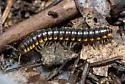
Acropodite of the gonopod blade-like and forming a broad, poorly defined arc without distinct distal curvature. Cuadrolateral corners of the paranota angular on segments 2-3, blunted on 4-8 and distinctly rounded on remaining tergites. see As with other Xystodesmids, it excretes a cyanide-based fluid from its ozopores on the edges of each tergite that smell of almond extract.
Classification
- Kingdom
- Animalia
- Phylum
- Arthropoda
- Class
- Diplopoda
- Order
- Polydesmida (Flat-backed Millipedes)
- Family
- Xystodesmidae
- Tribe
- Chonaphini
- Genus
- Selenocheir
Imported taxonomy record. Source availability varies; see the source references and editorial policy below.
Habitat and Range
Habitat
Moist forests and creekside areas
Geographic Range
Northern Sacramento valley and Coast Range of California. Approximate range extends from ~5 miles north of Willow Creek CA south to the northern portions of Clear Lake CA.
Additional species information
Species notes from the sources
Etymology: Selenocheir arcuata (Shelley 1994)
About Flat-backed Millipedes: the wider group
Order-level background for Polydesmida, the group containing Selenocheir arcuata. Species-specific details appear above.
Group overview
Polydesmida (flat-backed millipedes) is the largest millipede order with ~3,500 described species. Many species produce hydrogen cyanide (HCN) as a chemical defense - a strategy unique among arthropods.
Ecological role of the group
Flat-backed millipedes are major leaf litter decomposers in forest ecosystems, recycling calcium, nitrogen, and other nutrients. Their fecal pellets contribute significantly to soil formation and humus production.
Economic and practical significance of the group
Millipedes are generally beneficial decomposers but can occasionally damage seedlings and soft fruits in gardens. Some tropical species cause skin irritation through their cyanide-based defensive secretions.
Recorded sources for this group: Myriapod research, soil ecology. Imported estimates may describe particular regions or reporting periods.
Photos of Selenocheir arcuata (3)
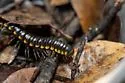
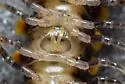
Photo credits: Contributed by Bennett Grappone
Frequently Asked Questions About Selenocheir arcuata
What is Selenocheir arcuata?
Selenocheir arcuata is a species in the family Xystodesmidae, within the order Polydesmida.
How big is Selenocheir arcuata?
Adults approximately 30mm
How do you identify Selenocheir arcuata?
Acropodite of the gonopod blade-like and forming a broad, poorly defined arc without distinct distal curvature. Cuadrolateral corners of the paranota angular on segments 2-3, blunted on 4-8 and distinctly rounded on remaining tergites. see
Where is Selenocheir arcuata found?
| Feature | Details |
|---|---|
| Habitat | Moist forests and creekside areas |
| Range | Northern Sacramento valley and Coast Range of California. Approximate range extends from ~5 miles north of Willow Creek CA south to the northern portions of Clear Lake CA. |