
Rhamphus pulicarius
This record describes Rhamphus pulicarius (species).
Identification and Appearance
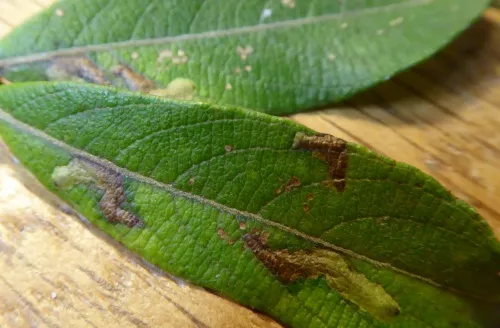
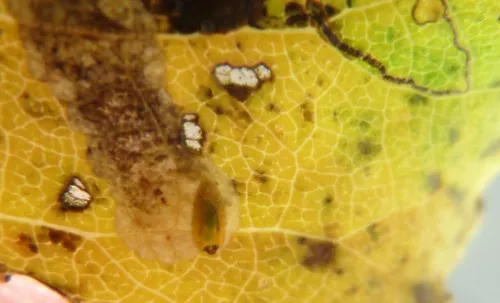
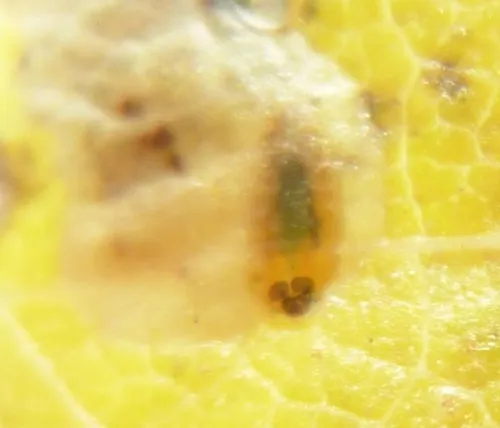
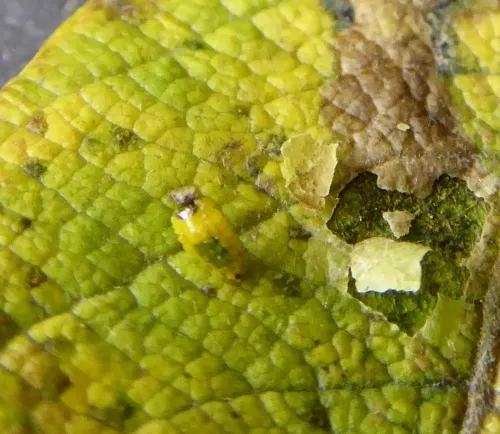
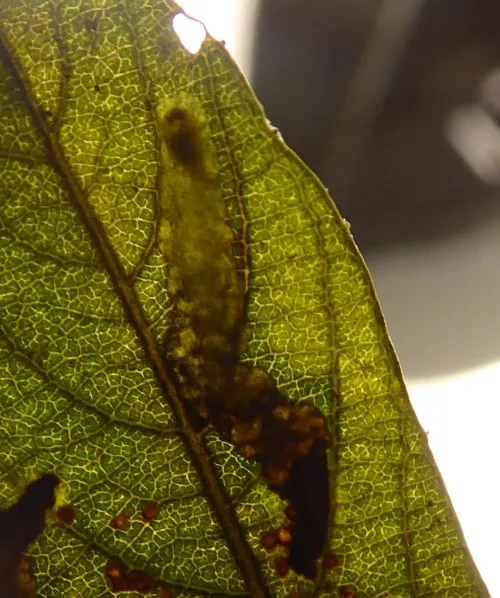
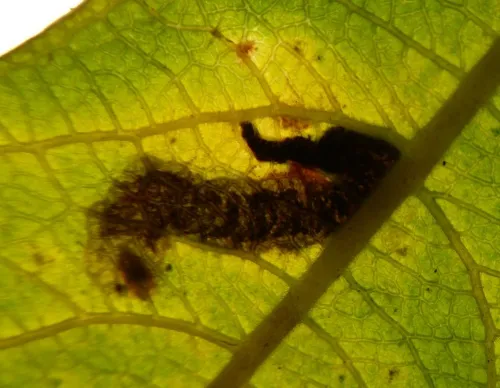
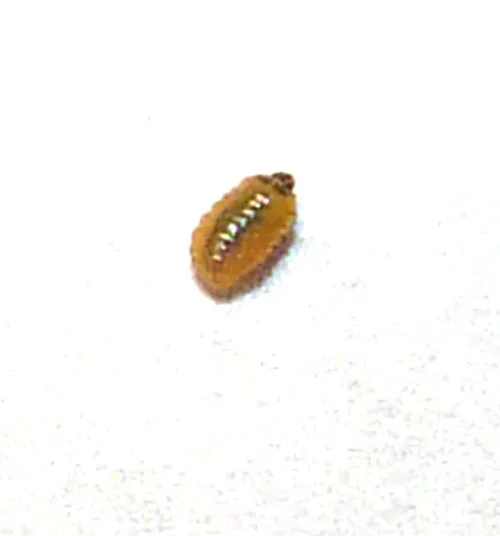
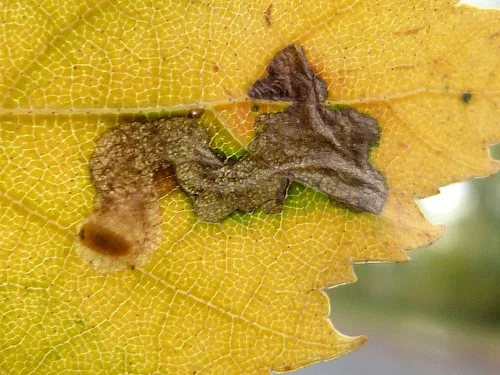
A small black weevil 1.4 to 2 mm, with heavily punctured elytra. Short broad mines are formed by the larva, most often on sallows. The larva is small, squat, and yellow or orange in colour, with a dark head, and mines sallow, poplar or ocasionally birch leaves, in a short, broad gallery becoming a blotch; often pear-shaped. Several species of moths also mine leaves of sallows, birch and poplar Adult : Unless identified by a recognised expert, photographic evidence is required and the specimen should be examined with a microscope. In the comments box, state the key or ID method used. Note the beetle's size and describe the identifying characters. It is advisable to retain the specimen in case further checks are needed. Mine: provide a good backlit photograph that shows the larva inside the mine, and state the host plant. Where the larval foodplants - Birch, Willow, and Poplar - occur. The larval mines can be seen from August to October. The larva feed on Birch, Willow, and Poplar producing a mine in the leaves. Widespread, particularly in the southern half of Britain. http://www.leafmines.co.uk/html/Coleoptera/r.pulicarius.htm
Classification
- Genus
- Rhamphus
Imported taxonomy record. Source availability varies; see the source references and editorial policy below.
Habitat and Range
Habitat
Where the larval foodplants - Birch, Willow, and Poplar - occur.
Seasonal Activity
The larval mines can be seen from August to October.
Diet and Behavior
Life History
The larva feed on Birch, Willow, and Poplar producing a mine in the leaves.
Additional species information
Recorded status
Widespread, particularly in the southern half of Britain.
Photos of Rhamphus pulicarius (10)
Frequently Asked Questions About Rhamphus pulicarius
What is Rhamphus pulicarius?
Rhamphus pulicarius is a species.
How big is Rhamphus pulicarius?
and describe the identifying characters. It is advisable to retain the specimen in case further checks are needed.
Where is Rhamphus pulicarius found?
Habitat: Where the larval foodplants - Birch, Willow, and Poplar - occur.
When is Rhamphus pulicarius active?
Rhamphus pulicarius: seasonal activity - The larval mines can be seen from August to October..
What is the life cycle of a Rhamphus pulicarius?
The larva feed on Birch, Willow, and Poplar producing a mine in the leaves.