
Surinam Cockroach
Pycnoscelus surinamensis
This record describes Pycnoscelus surinamensis (species). Recorded family: Blaberidae. Recorded order: Blattodea.
Identification and Appearance
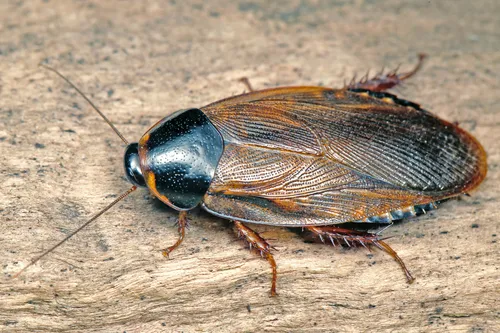
Adults with pale leading edge on the dark brown to black pronotum. Wings olive-green to brown, entirely cover the abdomen, (except on particularly well fed or very gravid individuals): Nymphs typically dark brown in coloration and have no noticeable patterns or markings on the exoskeleton. The nymphs are also easily recognizable compared to some other Blaberid nymphs, due to the smooth appearance of the head, thorax and upper abdomen segments, and rough, matte appearance of the last few abdominal segments. However, it is worth noting that Panchlora nivea nymphs also have a similar appearance: Reproduces through parthenogenesis in the US, where no males are found. It has two sexes in some parts of the world (Europe and Indo-Malaysia), though. The egg capsule is retained inside the female's abdomen until young are ready to emerge:
Wikipedia reference for Pycnoscelus surinamensis: http://en.wikipedia.org/wiki/Surinam_cockroach.
Classification
- Kingdom
- Animalia
- Phylum
- Arthropoda
- Class
- Insecta
- Order
- Blattodea (Cockroaches and Termites)
- Superfamily
- Blaberoidea
- Family
- Blaberidae (Ovoviviparous Cockroaches)
- Genus
- Pycnoscelus
Imported taxonomy record. Source availability varies; see the source references and editorial policy below.
Habitat and Range
Geographic Range
circumtropical, of Asian origin ; in our area, FL-TX (elsewhere in the US may inhabit greenhouses and other indoor areas where tropical plants are grown)
Additional species information
Species notes from the sources
Etymology: Pycnoscelus surinamensis (Linnaeus 1758)
About Cockroaches and Termites: the wider group
Order-level background for Blattodea, the group containing Pycnoscelus surinamensis. Species-specific details appear above.
Group overview
Blattodea includes ~4,600 cockroach species and ~3,000 termite species. Only about 30 cockroach species are associated with human habitats - less than 1% of all species.
Ecological role of the group
Termites contribute ~40% of soil arthropod biomass globally, far exceeding ants at ~10%. Cockroaches are ancient insects dating back 320 million years and are critical decomposers in tropical forest ecosystems, recycling leaf litter and dead wood.
Economic and practical significance of the group
Termites cause $5-30 billion in damage to structures in the U.S. annually. They damage approximately 600,000 American homes each year, with average repair costs of $3,000-$17,000. A subterranean termite colony can consume one pound of wood per day.
Recorded sources for this group: USDA, Orkin, Today's Homeowner, PNAS soil biomass study. Imported estimates may describe particular regions or reporting periods.
Photos of Surinam Cockroach (3)
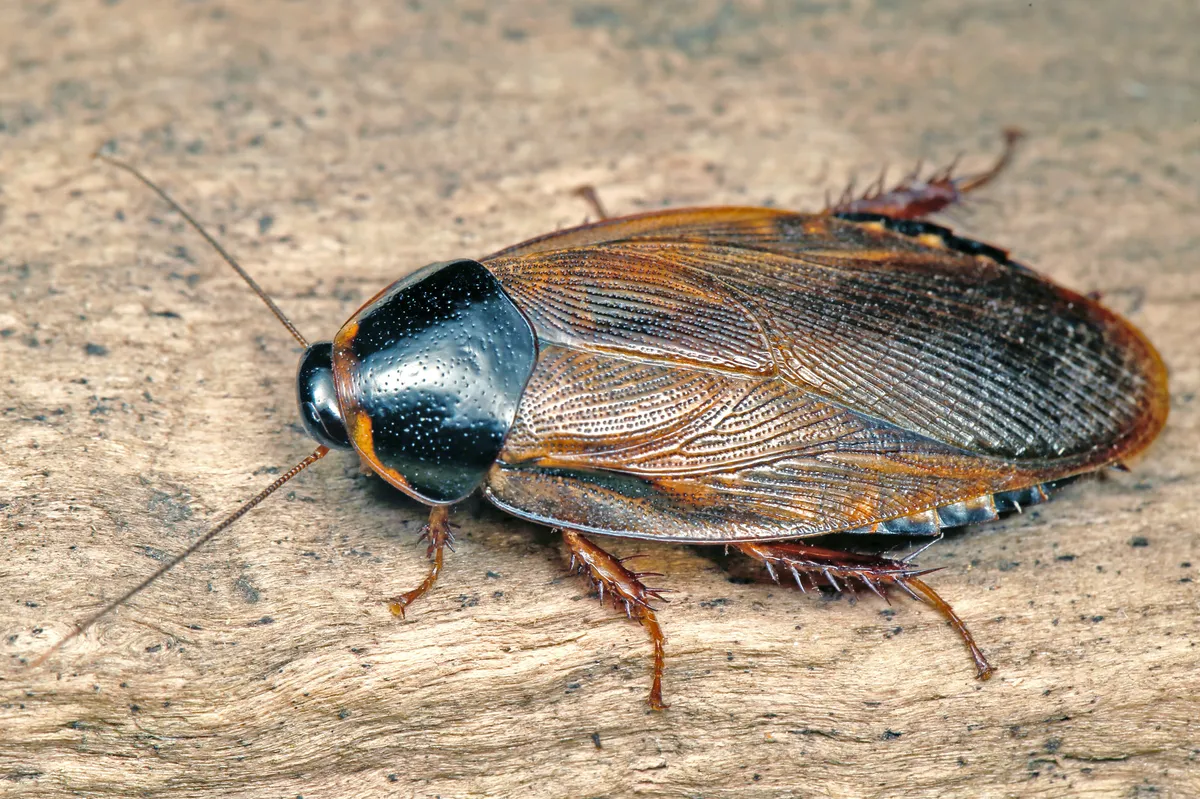
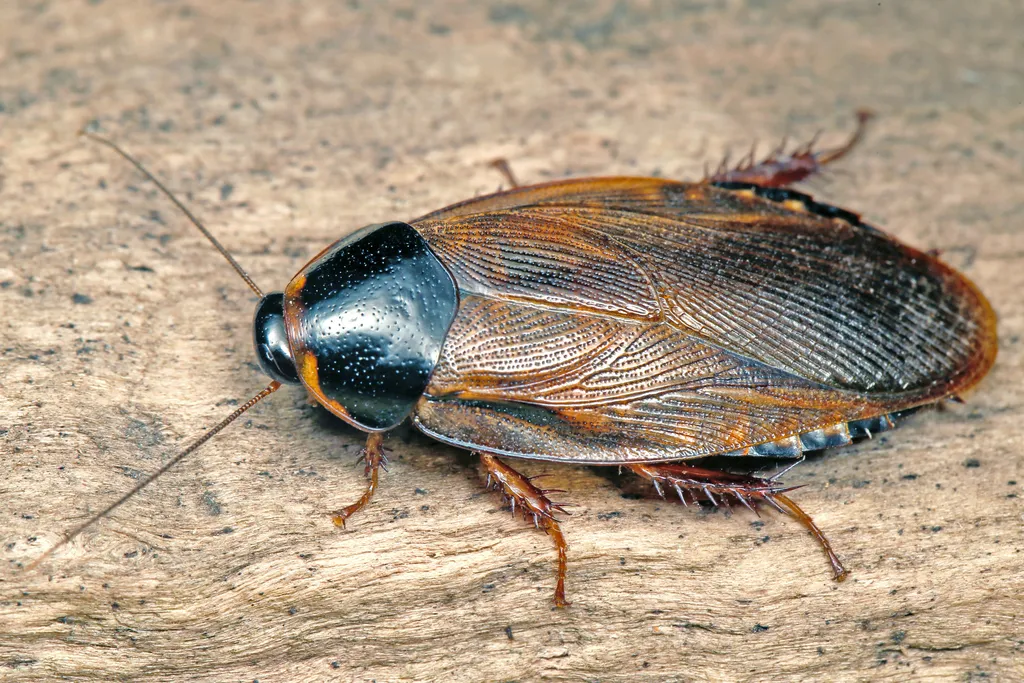
Photo credits: Contributed by tom murray; Additional contributions by Hannah Nendick-Mason , Ron M. , Robert Lord Zimlich , v belov , John Carlson , Hisserdude
Frequently Asked Questions About Surinam Cockroach
What is Surinam Cockroach?
Surinam Cockroach (Pycnoscelus surinamensis) is a species in the family Blaberidae, within the order Blattodea.
How big is Surinam Cockroach?
Adults ~20 mm
How do you identify Surinam Cockroach?
Adults with pale leading edge on the dark brown to black pronotum. Wings olive-green to brown, entirely cover the abdomen, (except on particularly well fed or very gravid individuals): Nymphs typically dark brown in coloration and have no noticeable patterns or markings on the exoskeleton. The nymphs are also easily recognizable compared to some other Blaberid nymphs, due to the smooth appearance of the head, thorax and upper abdomen segments, and rough, matte appearance of the last few abdominal segments. However, it is worth noting that Panchlora nivea nymphs also have a similar appearance:
Where is Surinam Cockroach found?
Range: circumtropical, of Asian origin ; in our area, FL-TX (elsewhere in the US may inhabit greenhouses and other indoor areas where tropical plants are grown)