
Water Springtail
Podura aquatica
This record describes Podura aquatica (species). Recorded family: Poduridae. Recorded order: Poduromorpha.
Identification and Appearance
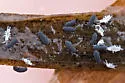
Although it can be confused at first with some other semi-aquatic hypogastrurids it can easily be distinguished by the very long arms or dentes of the pincerlike jumping organ or furca. Juveniles are orange; adults are bluish with reddish antennae and legs. [from comments by Frans Janssens]
Classification
- Kingdom
- Animalia
- Phylum
- Arthropoda
- Class
- Collembola
- Order
- Poduromorpha
- Family
- Poduridae
- Genus
- Podura
Imported taxonomy record. Source availability varies; see the source references and editorial policy below.
Habitat and Range
Habitat
Semi-aquatic. Often found floating on the surface of small bodies of standing water such as ponds, as well as on stream and pond banks.
Geographic Range
holarctic
Additional species information
Species notes from the sources
Etymology: Podura aquatica Linnæus 1758
About Poduromorpha: the wider group
Order-level background for Poduromorpha, the group containing Podura aquatica. Species-specific details appear above.
Group overview
Poduromorpha is an order of elongated springtails with ~3,400 described species. Many species are among the few arthropods found in extreme environments - they inhabit Antarctic ice, deep caves, and high-altitude snowfields.
Ecological role of the group
Poduromorphan springtails are important decomposers in soil surface layers. Some cave-dwelling species are completely depigmented and eyeless, having adapted to total darkness over millions of years. They are key food sources for ground beetles and spiders.
Economic and practical significance of the group
Snow fleas (Hypogastrura nivicola) contain antifreeze proteins being researched for medical applications including organ preservation and ice cream manufacturing to prevent ice crystal formation.
Recorded sources for this group: Collembola research, cryobiology, cave biology. Imported estimates may describe particular regions or reporting periods.
Photos of Water Springtail (5)
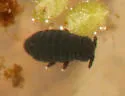
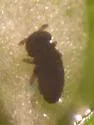
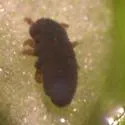
Photo credits: Contributed by Chuck Entz; Additional contributions by ceiseman , v belov
Frequently Asked Questions About Water Springtail
What is Water Springtail?
Water Springtail (Podura aquatica) is a species in the family Poduridae, within the order Poduromorpha.
How big is Water Springtail?
0.5‒2.5 mm
How do you identify Water Springtail?
Although it can be confused at first with some other semi-aquatic hypogastrurids it can easily be distinguished by the very long arms or dentes of the pincerlike jumping organ or furca. Juveniles are orange; adults are bluish with reddish antennae and legs. [from comments by Frans Janssens]
Where is Water Springtail found?
| Feature | Details |
|---|---|
| Habitat | Semi-aquatic. Often found floating on the surface of small bodies of standing water such as ponds, as well as on stream and pond banks. |
| Range | holarctic |