
Texas Unicorn Mantis
Phyllovates chlorophaea
This record describes Phyllovates chlorophaea (species). Recorded family: Mantidae. Recorded order: Mantodea.
Identification and Appearance
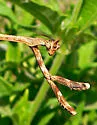
Head bears a pair of flattened dorsal projections between the eyes and antennae. Green wings, often with a few small brown spots; rest of body various shades of brown. This species is becoming popular among captive breeding enthusiasts, not only for its distinctive appearance and large size, but also because its preference for smaller prey means that cannibalism is much rarer than in most other mantid species. Captives have been reported using a defensive posture in which they raise the forelimbs, spread the wings, and expose the brightly marked abdomen. Often comes to lights in south Texas.
Classification
Habitat and Range
Habitat
Gardens and forests
Geographic Range
c TX to C. America
Diet and Behavior
Diet: Seems to prefer flying insects much smaller than itself. In the wild frequently eats small butterflies and moths. In captivity will take flies, crickets, and occasionally roaches. Ambush predator, less prone to pursue prey than many other mantid species.
Life History
Nymphs frequently curl their abdomen up over their back, in a posture reminiscent of a scorpion's tail, and also often hang upside-down from stems or branches in mimicry of a dead leaf.
Additional species information
Species notes from the sources
Etymology: Phyllovates chlorophaea ( Blanchard 1836)
About Mantids: the wider group
Order-level background for Mantodea, the group containing Phyllovates chlorophaea. Species-specific details appear above.
Group overview
Mantodea (praying mantises) includes ~2,400 described species in 430 genera. The praying mantis is the only insect that can turn its head 180 degrees to look over its shoulder.
Ecological role of the group
Mantises are apex insect predators with lightning-fast strike speeds - they can catch prey in as little as 50-70 milliseconds. Some species catch hummingbirds and small lizards. Female mantises sometimes practice sexual cannibalism, consuming the male during or after mating in about 25% of encounters.
Economic and practical significance of the group
Mantises are sold commercially as garden pest control. The Chinese mantis (Tenodera sinensis) was introduced to the U.S. in 1896 for pest control and is now established across the eastern United States.
Recorded sources for this group: Smithsonian, entomology research. Imported estimates may describe particular regions or reporting periods.
Photos of Texas Unicorn Mantis (5)
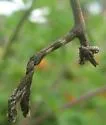
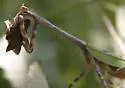
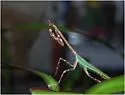
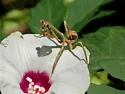
Photo credits: Contributed by Joshua Stuart Rose; Additional contributions by cotinis , Mike Quinn , Maury Heiman , v belov
Frequently Asked Questions About Texas Unicorn Mantis
What is Texas Unicorn Mantis?
Texas Unicorn Mantis (Phyllovates chlorophaea) is a species in the family Mantidae, within the order Mantodea.
How do you identify Texas Unicorn Mantis?
Head bears a pair of flattened dorsal projections between the eyes and antennae. Green wings, often with a few small brown spots; rest of body various shades of brown.
Where is Texas Unicorn Mantis found?
| Feature | Details |
|---|---|
| Habitat | Gardens and forests |
| Range | c TX to C. America |
What does Texas Unicorn Mantis eat?
The diet of the Texas Unicorn Mantis includes Seems to prefer flying insects much smaller than itself. In the wild frequently eats small butterflies and moths. In captivity will take flies, crickets, and occasionally roaches. Ambush predator, less prone to pursue prey than many other mantid species..
What is the life cycle of a Texas Unicorn Mantis?
Nymphs frequently curl their abdomen up over their back, in a posture reminiscent of a scorpion's tail, and also often hang upside-down from stems or branches in mimicry of a dead leaf.