
Oak Lecanium Scale
Parthenolecanium quercifex
This record describes Parthenolecanium quercifex (species). Recorded family: Coccidae. Recorded order: Hemiptera.
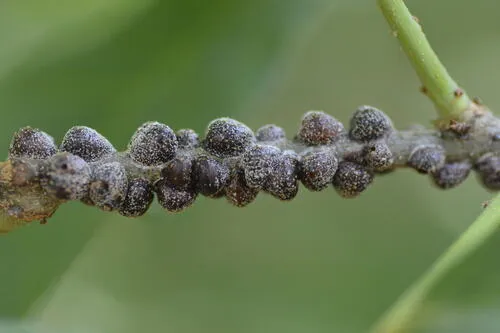
Identification and Appearance
Classification
- Kingdom
- Animalia
- Phylum
- Arthropoda
- Class
- Insecta
- Order
- Hemiptera (True Bugs, Cicadas, Hoppers, Aphids and Allies)
- Suborder
- Sternorrhyncha
- Superfamily
- Coccoidea
- Family
- Coccidae (Soft Scale Insects)
- Genus
- Parthenolecanium
Imported taxonomy record. Source availability varies; see the source references and editorial policy below.
Habitat and Range
Geographic Range
"...known throughout most of the United States ".
Diet and Behavior
Life History
" Parthenolecanium quercifex is an oak pest that has one generation per year and is native to much of North America. Adults produce eggs in the late spring, usually in May. Gravid females lay a dozen to several thousand eggs in an ovisac. First instars migrate from ovisacs to leaves and feed on phloem throughout summer. In fall they molt and migrate back to tree stems. Second instars overwinter and undergo development into adults in the early spring. Meineke, et al. found that overwintering second instars were 13 times more abundant on hot trees than on cold trees. P. quercifex was locally acclimated or adapted to urban thermal conditions and that this led directly to higher abundance. Warmer ambient temperatures due to heat accumulation on paved surfaces in urban areas (i.e. heat islands) increased populations of Parthenolecanium quercifex (Fitch) on oak trees in Raleigh, North Carolina ".
About True Bugs, Cicadas, Hoppers, Aphids and Allies: the wider group
Order-level background for Hemiptera, the group containing Parthenolecanium quercifex. Species-specific details appear above.
Group overview
Hemiptera (true bugs) includes over 80,000 described species across cicadas, aphids, leafhoppers, shield bugs, and bed bugs. Aphids alone cost global agriculture an estimated $2.5 billion annually in crop losses.
Ecological role of the group
Many Hemiptera are essential food sources for birds and predatory insects. Cicadas provide massive nutrient pulses during emergence events - a single Brood X emergence can involve trillions of individuals across 15 states.
Economic and practical significance of the group
The brown marmorated stink bug (Halyomorpha halys) caused $37 million in apple crop losses in a single year in the U.S. Mid-Atlantic region. Bed bug infestations in the U.S. increased by 500% between 2001-2010, costing the hotel industry hundreds of millions annually.
Recorded sources for this group: USDA, EPA, University research. Imported estimates may describe particular regions or reporting periods.
Photos of Oak Lecanium Scale (2)
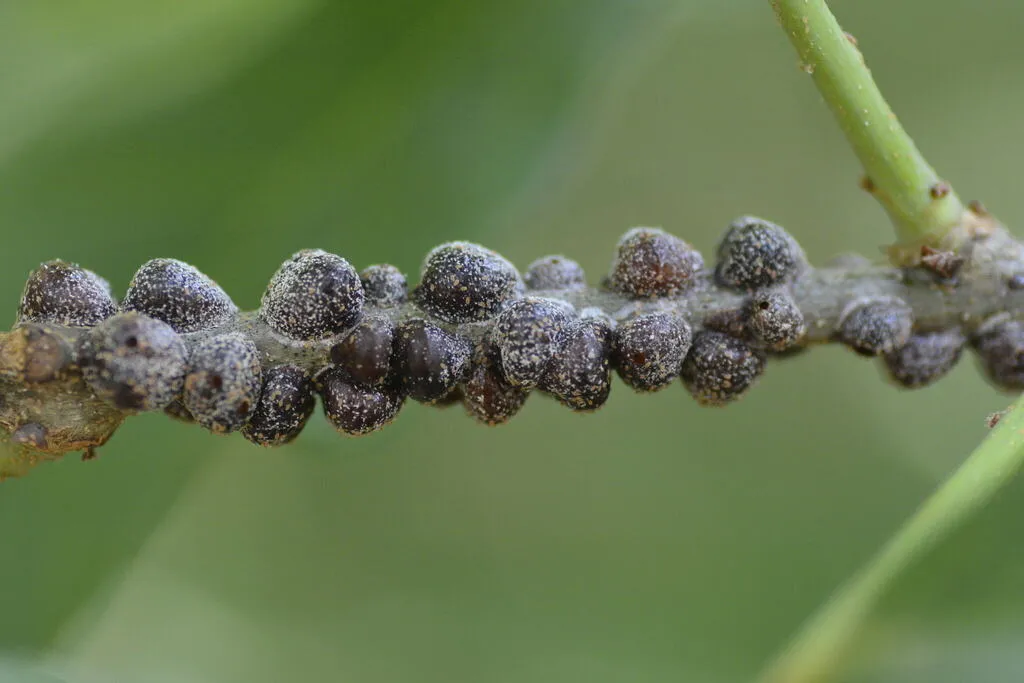
Photo credits: Contributed by v belov; Additional contributions by Beatriz Moisset , kschnei
Frequently Asked Questions About Oak Lecanium Scale
How big is Oak Lecanium Scale?
Adult females 4.0-6.0 mm long .
Where is Oak Lecanium Scale found?
Range: ...known throughout most of the United States .
What is the life cycle of a Oak Lecanium Scale?
Parthenolecanium quercifex is an oak pest that has one generation per year and is native to much of North America. Adults produce eggs in the late spring, usually in May. Gravid females lay a dozen to several thousand eggs in an ovisac. First instars migrate from ovisacs to leaves and feed on phloem throughout summer. In fall they molt and migrate back to tree stems. Second instars overwinter and undergo development into adults in the early spring. Meineke, et al. found that overwintering second instars were 13 times more abundant on hot trees than on cold trees. P. quercifex was locally acclimated or adapted to urban thermal conditions and that this led directly to higher abundance. Warmer ambient temperatures due to heat accumulation on paved surfaces in urban areas (i.e. heat islands) increased populations of Parthenolecanium quercifex (Fitch) on oak trees in Raleigh, North Carolina .