
Sawtoothed Grain Beetle
Oryzaephilus surinamensis
This record describes Oryzaephilus surinamensis (species). Recorded family: Silvanidae. Recorded order: Coleoptera.
Identification and Appearance
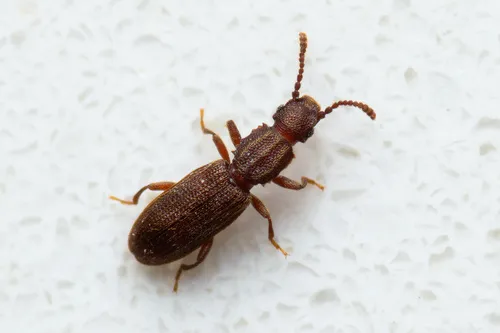
see In O. surinamensis , the angle of head just behind the eye this area is broad and blunt; in O. mercator , short and pointed surinamensis mercator serious pest of stored grain; presence in household products is incidental and causes little concern ; does not attack unbroken grain, but uses small lesions on the surface to gain entrance
Wikipedia reference for Oryzaephilus surinamensis: http://en.wikipedia.org/wiki/Oryzaephilus_surinamensis.
Classification
- Kingdom
- Animalia
- Phylum
- Arthropoda
- Class
- Insecta
- Order
- Coleoptera (Beetles)
- Suborder
- Polyphaga
- Superfamily
- Cucujoidea
- Family
- Silvanidae (Silvanid Flat Bark Beetles)
- Subfamily
- Silvaninae
- Genus
- Oryzaephilus
Imported taxonomy record. Source availability varies; see the source references and editorial policy below.
Habitat and Range
Habitat
primarily, granaries, grain elevators, flour mills, but capable to survive winter in temperate climes outdoors ; adults have not been seen in flight, but they have been collected in light traps
Geographic Range
cosmopolitan (spread by trade), of unclear origin
Diet and Behavior
Life History
eggs laid singly or in small clusters in crevices in the food material during a 2‒5 month period and hatch in 3‒17 days; larva passes through 3‒5 instars and makes a pupal cell attached to some solid object to pupate; typical life cycle takes 30‒50 days; up to 7 generations per year; adults typically live 6‒10 months (sometimes >3 yrs) ( 5 )
Additional species information
Species notes from the sources
Etymology: Oryzaephilus surinamensis (Linnaeus 1758)
About Primitive Winged Insects: the wider group
Order-level background for Coleoptera, the group containing Oryzaephilus surinamensis. Species-specific details appear above.
Group overview
Coleoptera is the largest order of insects with over 400,000 described species, representing ~25% of all known animal species and ~40% of all insects. In the U.S. alone, nearly 30,000 beetle species have been identified.
Ecological role of the group
Beetles are prominent decomposers, especially in forests, breaking down dead wood and recycling nutrients. As predators, they reduce populations of pest insects. Many species are also important pollinators of flowering plants.
Economic and practical significance of the group
Beetles have major economic significance: leaf beetles (Chrysomelidae) and weevils (Curculionoidea) are among the most destructive agricultural pests globally, costing billions annually, while predatory species like ladybugs provide natural pest control.
Recorded sources for this group: Britannica, Smithsonian, NCSU Entomology. Imported estimates may describe particular regions or reporting periods.
Photos of Sawtoothed Grain Beetle (2)
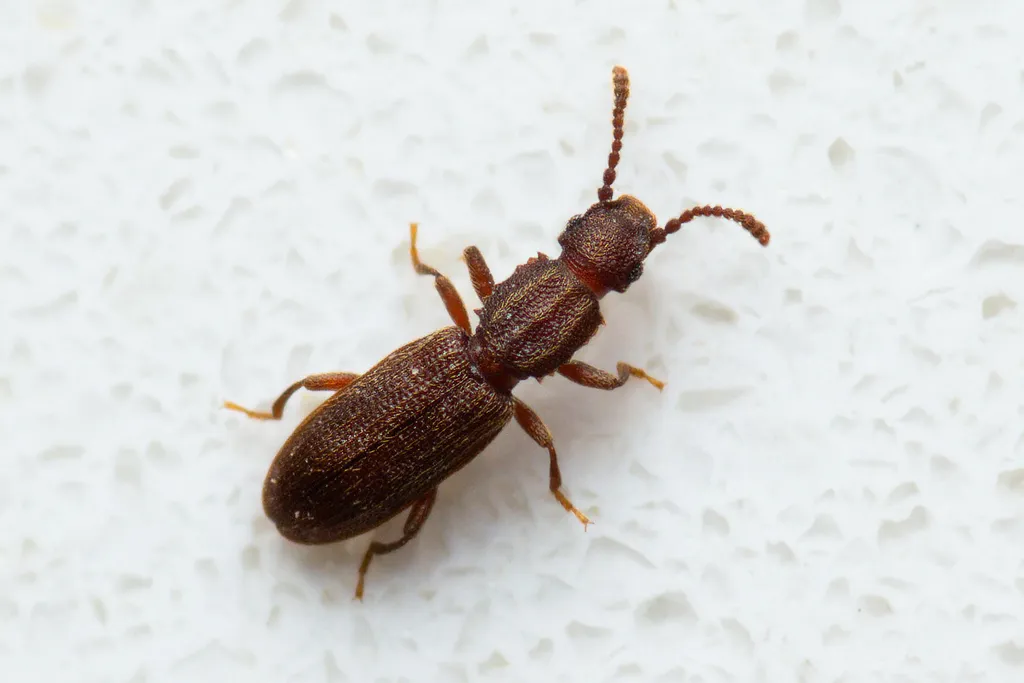
Photo credits: Contributed by Joyce Gross; Additional contributions by Beatriz Moisset , v belov , James Bailey
Frequently Asked Questions About Sawtoothed Grain Beetle
What is Sawtoothed Grain Beetle?
Sawtoothed Grain Beetle (Oryzaephilus surinamensis) is a species in the family Silvanidae, within the order Coleoptera.
How big is Sawtoothed Grain Beetle?
2.5‒3.5 mm
How do you identify Sawtoothed Grain Beetle?
see In O. surinamensis , the angle of head just behind the eye this area is broad and blunt; in O. mercator , short and pointed surinamensis mercator
Where is Sawtoothed Grain Beetle found?
| Feature | Details |
|---|---|
| Habitat | primarily, granaries, grain elevators, flour mills, but capable to survive winter in temperate climes outdoors ; adults have not been seen in flight, but they have been collected in light traps |
| Range | cosmopolitan (spread by trade), of unclear origin |
What is the life cycle of a Sawtoothed Grain Beetle?
eggs laid singly or in small clusters in crevices in the food material during a 2‒5 month period and hatch in 3‒17 days; larva passes through 3‒5 instars and makes a pupal cell attached to some solid object to pupate; typical life cycle takes 30‒50 days; up to 7 generations per year; adults typically live 6‒10 months (sometimes >3 yrs) ( 5 )