
European Sowbug
Oniscus asellus
This record describes Oniscus asellus (species). Recorded family: Oniscidae. Recorded order: Isopoda.
Identification and Appearance
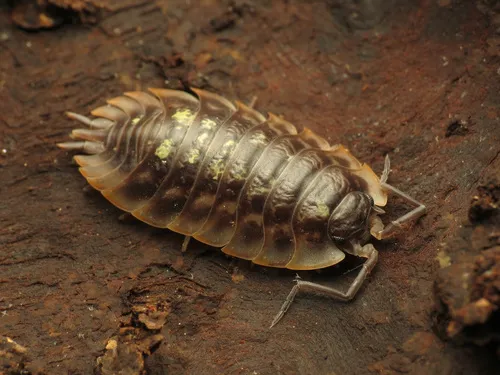
Flat, brown-black with pale mottling and pale edges to the segmental plates. The body ends in a two-pointed segment - the telson . - shiny, even surface, greyish colour with white margins, sometimes with little yellow dots. - wide oval shape, and the body is quite flat - 3 segments of the flagellum, long antennae - no significant protrusion or middle lobe on the head (compared to: Porcellio scaber, where you find an apiculate protrusion in the middle) - no lungs (white bodies) >>> Porcellio scaber has 2 pairs on the abdomen, ventral side. - at first it doesnt run away, but clings on the surface (that's why it belongs to the clinger type isopods) Not harmful to humans, rather helpful in cleaning up plant waste etc. Occasionally reported to eat garden plants, but generally considered beneficial.
Classification
Habitat and Range
Habitat
Dark damp places with rotting organic matter - their favorite place in a garden is usually the compost heap, where they are very effective decomposers. Can reliably be found under rocks and logs, too.
Diet and Behavior
Diet: Dead organic matter, animal waste or rotting wood and other plant material.
About Isopods: the wider group
Order-level background for Isopoda, the group containing Oniscus asellus. Species-specific details appear above.
Group overview
Isopoda includes ~10,000 described species of woodlice, pill bugs, and sea slaters. Woodlice are the only crustaceans to have fully adapted to life on land. Pill bugs (roly-polies) can roll into a perfect ball for defense.
Ecological role of the group
Woodlice are critical soil decomposers, breaking down dead plant material and recycling calcium and other nutrients. They breathe through gill-like structures and require moist environments. Giant deep-sea isopods (Bathynomus) can grow up to 50cm long.
Economic and practical significance of the group
Woodlice are generally beneficial in gardens as decomposers, though they can occasionally damage seedlings and soft fruits in large numbers.
Recorded sources for this group: Soil ecology research, marine biology. Imported estimates may describe particular regions or reporting periods.
Photos of European Sowbug (2)
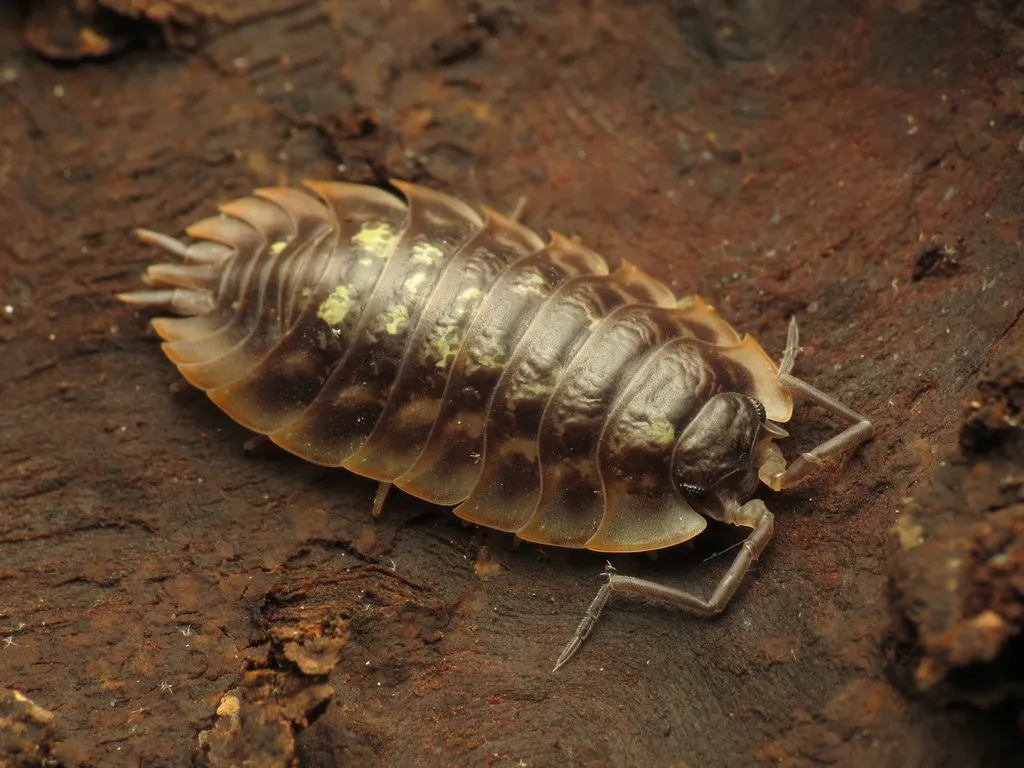
Photo credits: Contributed by Hannah Nendick-Mason; Additional contributions by cotinis , Beatriz Moisset , Astrobirder
Frequently Asked Questions About European Sowbug
What is European Sowbug?
European Sowbug (Oniscus asellus) is a species in the family Oniscidae, within the order Isopoda.
How big is European Sowbug?
Up to 16 mm long and up to 6 mm wide.
How do you identify European Sowbug?
Flat, brown-black with pale mottling and pale edges to the segmental plates. The body ends in a two-pointed segment - the telson . - shiny, even surface, greyish colour with white margins, sometimes with little yellow dots. - wide oval shape, and the body is quite flat - 3 segments of the flagellum, long antennae - no significant protrusion or middle lobe on the head (compared to: Porcellio scaber, where you find an apiculate protrusion in the middle) - no lungs (white bodies) >>> Porcellio scaber has 2 pairs on the abdomen, ventral side. - at first it doesnt run away, but clings on the surface (that's why it belongs to the clinger type isopods)
Where is European Sowbug found?
Habitat: Dark damp places with rotting organic matter - their favorite place in a garden is usually the compost heap, where they are very effective decomposers. Can reliably be found under rocks and logs, too.
What does European Sowbug eat?
The diet of the European Sowbug includes Dead organic matter, animal waste or rotting wood and other plant material..