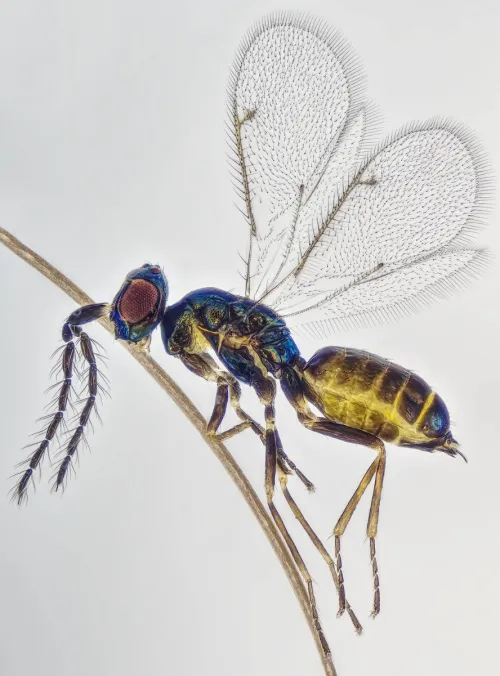
Omphale
This record describes Omphale (genus). Recorded family: Eulophidae. Recorded order: Hymenoptera.
Identification and Appearance
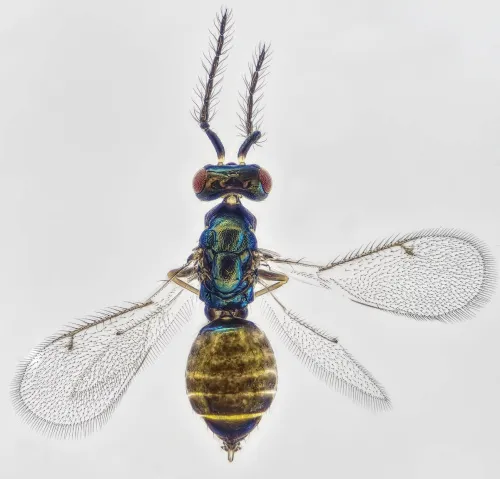
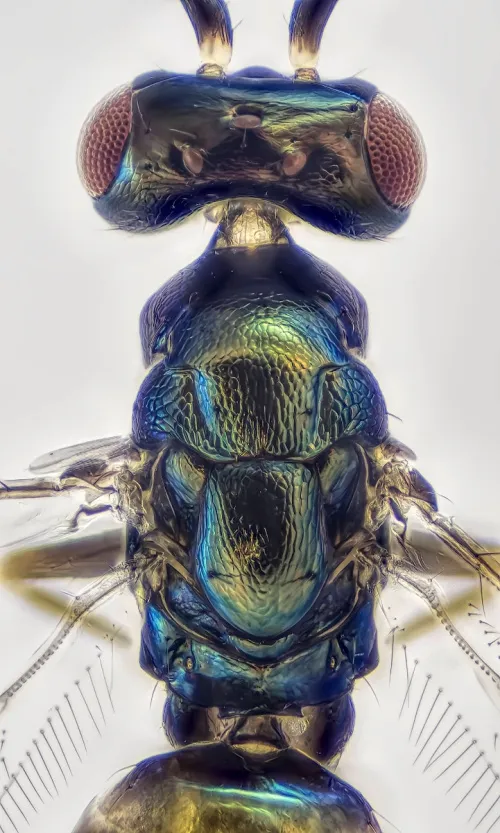
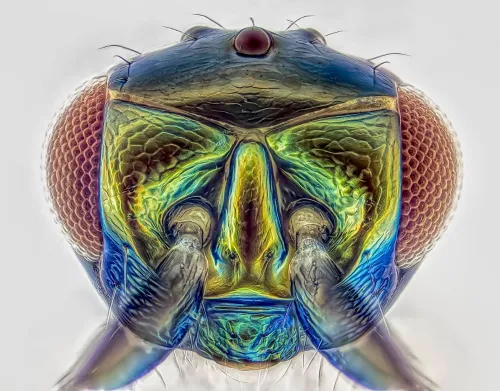
With over 270 species described worldwide and 35 UK species, Omphale is a highly diverse but taxonomically challenging group due to their small size (frequently under 2mm) and subtle physical variations. Identifying Omphale species to genus level is very difficult. The face features a distinct V-shaped or transverse frontal groove (sulcus). The clypeus (the lower face above the mouthparts) is clearly set off from the rest of the face by distinct sutures or grooves at least on its sides. The thorax is typically shiny with a beautifully fine, engraved, mesh-like texture (reticulation). The propodeum (the very back segment of the thorax) is characteristically smooth and lacks a central ridge (median carina). The wings are relatively clear but feature long setae (hairs), especially trailing off the marginal vein. Unless identified by a recognized expert, explain how the specimen was identified and include photos of key features. Omphale species are koinobiont endoparasitoids, meaning the female wasp lays her egg inside a living host (usually an egg or early larva). The host continues to grow and develop normally for a time before the wasp larva eventually consumes it from the inside out. Most Omphale species target gall midges (Diptera: Cecidomyiidae). These midges trick plants into forming abnormal tissue growths (galls) to protect their larvae. Omphale females use their specialized ovipositors to drill straight through the plant gall tissue and precisely inject their eggs into the hidden midge larvae. Evidence suggests intense host specialization; most Omphale species specialize in a single type of gall midge, which has historically driven rapid speciation within the genus. Hansson, C. & Shevtsova, E. (2012) Revision of the European species of Omphale Haliday (Hymenoptera, Chalcidoidea, Eulophidae). ZooKeys, (232), 1. No additional images available for this species.
Classification
- Kingdom
- Animalia
- Phylum
- Arthropoda
- Class
- Insecta
- Order
- Hymenoptera (Ants, Bees, Wasps and Sawflies)
- Superfamily
- Chalcidoidea
- Family
- Eulophidae
- Subfamily
- Entedoninae
- Tribe
- Entedonini
- Genus
- Omphale
Imported taxonomy record. Source availability varies; see the source references and editorial policy below.
Additional species information
Recorded status
Widespread.
About Flies: the wider group
Order-level background for Hymenoptera, the group containing Omphale. Species-specific details appear above.
Group overview
Hymenoptera includes over 150,000 described species of ants, bees, wasps, and sawflies. Earth harbors approximately 20 quadrillion (20×10^15) ants, with a combined biomass of ~12 megatons of dry carbon - exceeding the combined biomass of all wild birds and mammals (PNAS, 2022).
Ecological role of the group
About 35% of the world's food crops depend on animal pollinators. The chocolate industry, valued at over $100 billion, depends on pollinating flies and midges. Ants are the dominant soil engineers in most terrestrial ecosystems, turning more soil than earthworms in many habitats.
Economic and practical significance of the group
Pollinators contribute $235-577 billion worth of annual global food production (FAO). In the U.S., bee pollination alone benefits crops valued at $18 billion annually, and honey bees are responsible for $5.4 billion in agricultural productivity. Between April 2023-2024, 55.1% of managed honey bee colonies were lost. The U.S. bee population dropped from 5 million to 2.5 million.
Recorded sources for this group: FAO, USDA, EPA, PNAS (2022), US Fish & Wildlife Service. Imported estimates may describe particular regions or reporting periods.