
Saunders' Webspinner
Oligotoma saundersii
This record describes Oligotoma saundersii (species). Recorded family: Oligotomidae. Recorded order: Embioptera.
Identification and Appearance
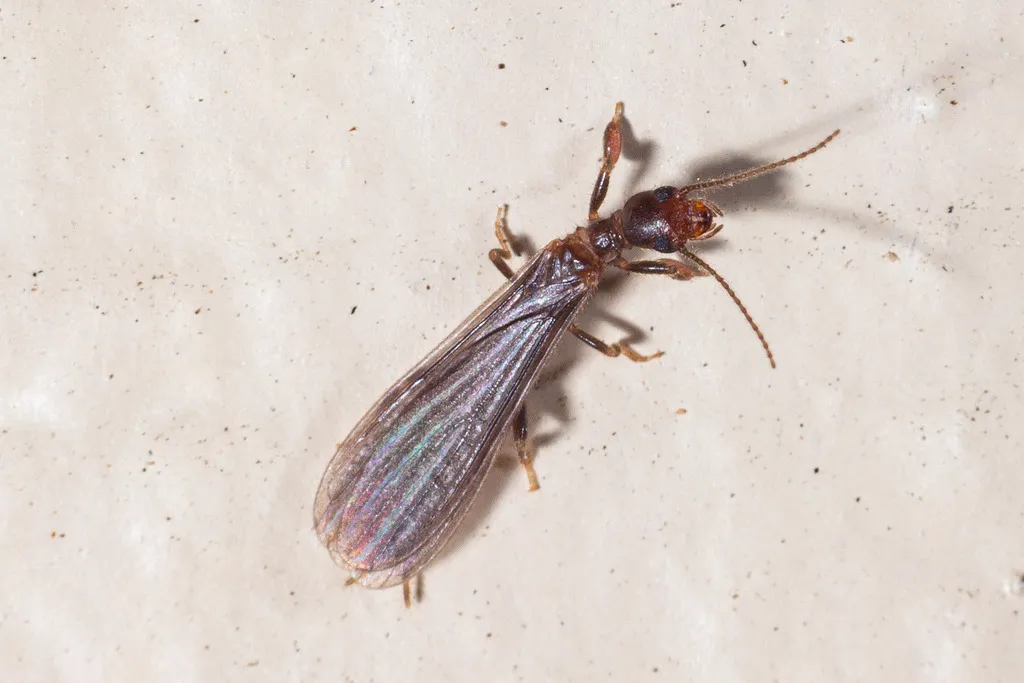
Similar to O. nigra but a bit lighter in color and with a yellowish tinge, esp. near leg joints. In O. saundersii males, the head tends to be darker than the rest of the body (in O. nigra the whole insect is uniformly black). Females and nymphs ID'd by association with identified males. (S.D. Rider's comments) Male -- Female -- Nymph
Wikipedia reference for Oligotoma saundersii: http://en.wikipedia.org/wiki/Oligotoma_saundersii.
Classification
- Kingdom
- Animalia
- Phylum
- Arthropoda
- Class
- Insecta
- Order
- Embioptera (Webspinners)
- Family
- Oligotomidae
- Genus
- Oligotoma
Imported taxonomy record. Source availability varies; see the source references and editorial policy below.
Habitat and Range
Geographic Range
FL-TX-FL - Map ( Rider 2009 ); native to so. Asia, now widespread in the tropics globally
Diet and Behavior
Life History
eggs almost completely covered with chewed substrate and also possibly fecula more in Rider (2009)
Additional species information
Species notes from the sources
Etymology: Oligotoma saundersii ( Westwood 1837)
About Webspinners: the wider group
Order-level background for Embioptera, the group containing Oligotoma saundersii. Species-specific details appear above.
Group overview
Embioptera (webspinners) includes ~400 described species. They are unique among insects for spinning silk from glands in their front feet (tarsi) - the only insects to produce silk from their legs.
Ecological role of the group
Webspinners are social insects that live in communal silk galleries. They can run equally fast forwards and backwards through their tunnels. Most species are wingless, though males of some species have wings.
Economic and practical significance of the group
Webspinners have minimal economic impact as they feed primarily on dead plant material. They are mostly tropical and subtropical, living in silk-lined tunnels under bark, rocks, or leaf litter.
Recorded sources for this group: Entomological research. Imported estimates may describe particular regions or reporting periods.
Photos of Saunders' Webspinner (3)
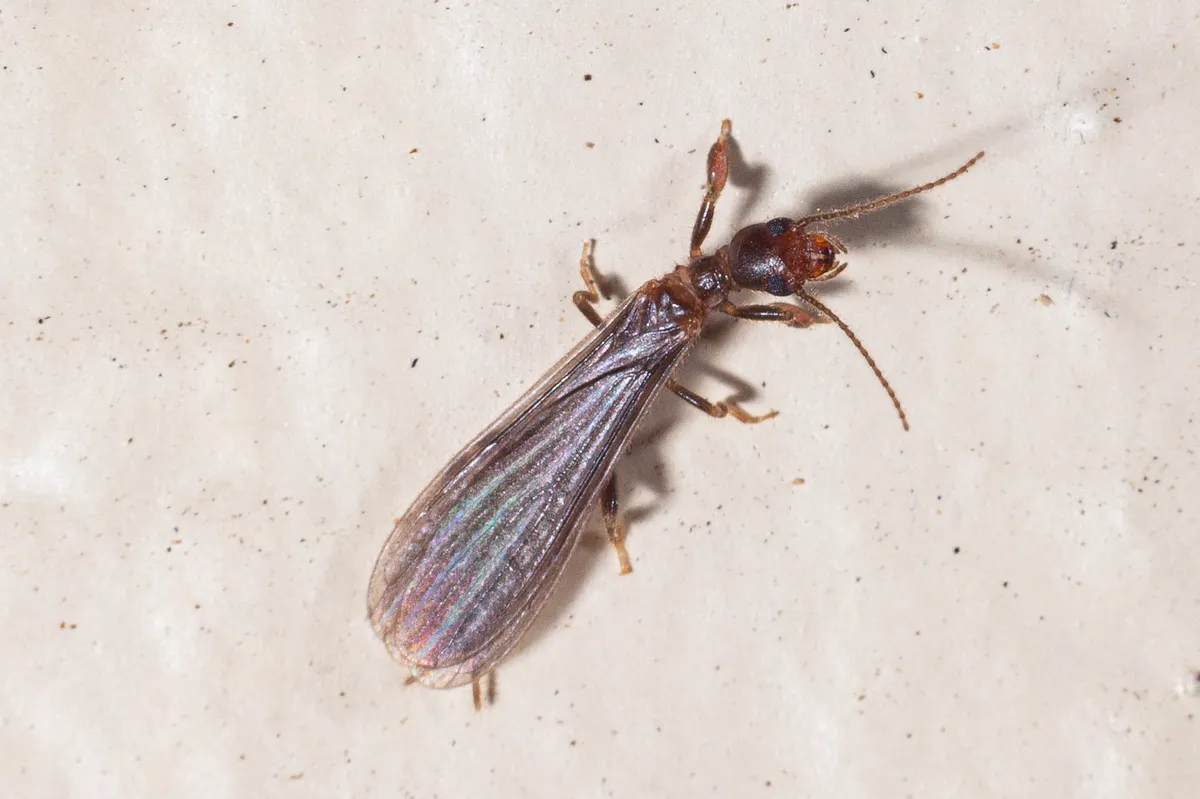
Photo credits: Contributed by john and jane balaban; Additional contributions by Beatriz Moisset , Mike Quinn , v belov , Harsi S. Parker , PaleoJon
Frequently Asked Questions About Saunders' Webspinner
What is Saunders' Webspinner?
Saunders' Webspinner (Oligotoma saundersii) is a species in the family Oligotomidae, within the order Embioptera.
How do you identify Saunders' Webspinner?
Similar to O. nigra but a bit lighter in color and with a yellowish tinge, esp. near leg joints. In O. saundersii males, the head tends to be darker than the rest of the body (in O. nigra the whole insect is uniformly black). Females and nymphs ID'd by association with identified males. (S.D. Rider's comments) Male -- Female -- Nymph
Where is Saunders' Webspinner found?
Range: FL-TX-FL - Map ( Rider 2009 ); native to so. Asia, now widespread in the tropics globally
What is the life cycle of a Saunders' Webspinner?
eggs almost completely covered with chewed substrate and also possibly fecula more in Rider (2009)