
Nectopsyche exquisita
This record describes Nectopsyche exquisita (species). Recorded family: Leptoceridae. Recorded order: Trichoptera.
Identification and Appearance
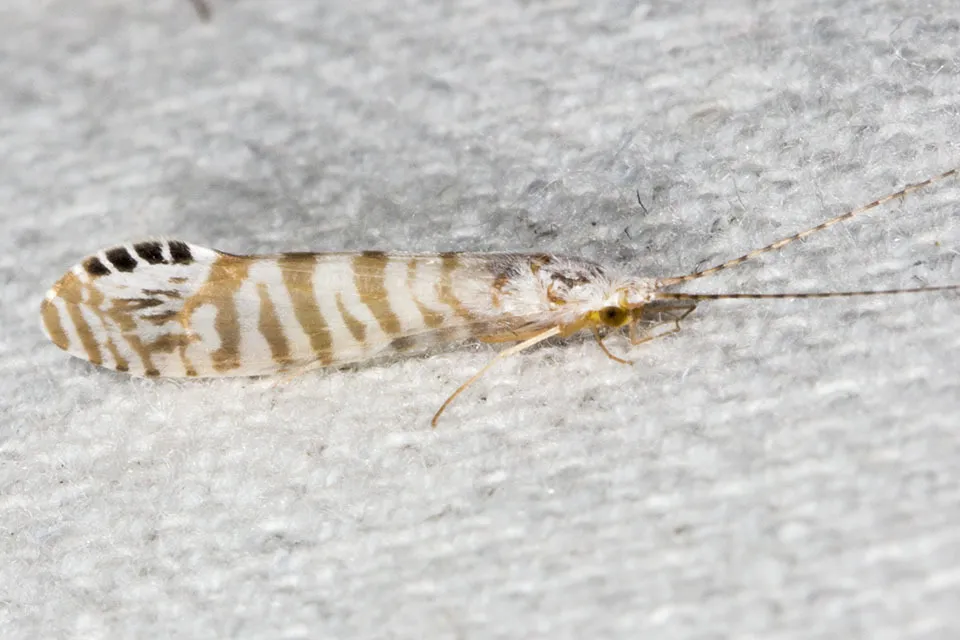
Adult: body long and slender; antennae banded dark and pale brown, much longer than body; head and thorax yellowish-brown and covered with white hair; forewing with brownish-yellow crossbands and four square black spots on posterior margin near apex
Wikipedia reference for Nectopsyche exquisita: http://en.wikipedia.org/wiki/Nectopsyche_exquisita.
Classification
- Kingdom
- Animalia
- Phylum
- Arthropoda
- Class
- Insecta
- Order
- Trichoptera (Caddisflies)
- Suborder
- Integripalpia
- Superfamily
- Leptoceroidea
- Family
- Leptoceridae (Long-horned Caddisflies)
- Genus
- Nectopsyche (White Miller Caddisflies)
Imported taxonomy record. Source availability varies; see the source references and editorial policy below.
Habitat and Range
Habitat
larvae live in standing or slow-moving water that has a sandy bottom and aquatic vegetation adults may be found resting near the larval habitat during the day, but are nocturnal and attracted to light
Geographic Range
e. & so. US & adjacent Canada (NS-SK)
Seasonal Activity
adults present spring to fall
Additional species information
Species notes from the sources
Etymology: Nectopsyche exquisita (Walker 1852)
About Caddisflies: the wider group
Order-level background for Trichoptera, the group containing Nectopsyche exquisita. Species-specific details appear above.
Group overview
Trichoptera (caddisflies) includes ~14,500 described species worldwide. Larvae are aquatic and build protective cases from silk, sand, pebbles, and plant material - each species creates a distinctive case design.
Ecological role of the group
Caddisfly larvae are critical food sources for trout and other freshwater fish, making them essential to recreational fishing industries worth billions annually. Their silk is being researched as an underwater adhesive for medical applications.
Economic and practical significance of the group
Caddisfly larvae are among the most important biological indicators of water quality. Their presence or absence in streams is used by the EPA and state agencies to assess pollution levels and ecosystem health.
Recorded sources for this group: EPA, freshwater ecology research. Imported estimates may describe particular regions or reporting periods.
Photos of Nectopsyche exquisita (3)
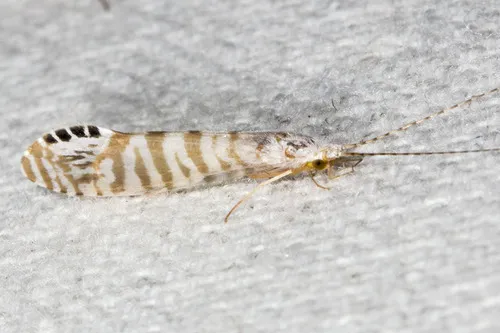
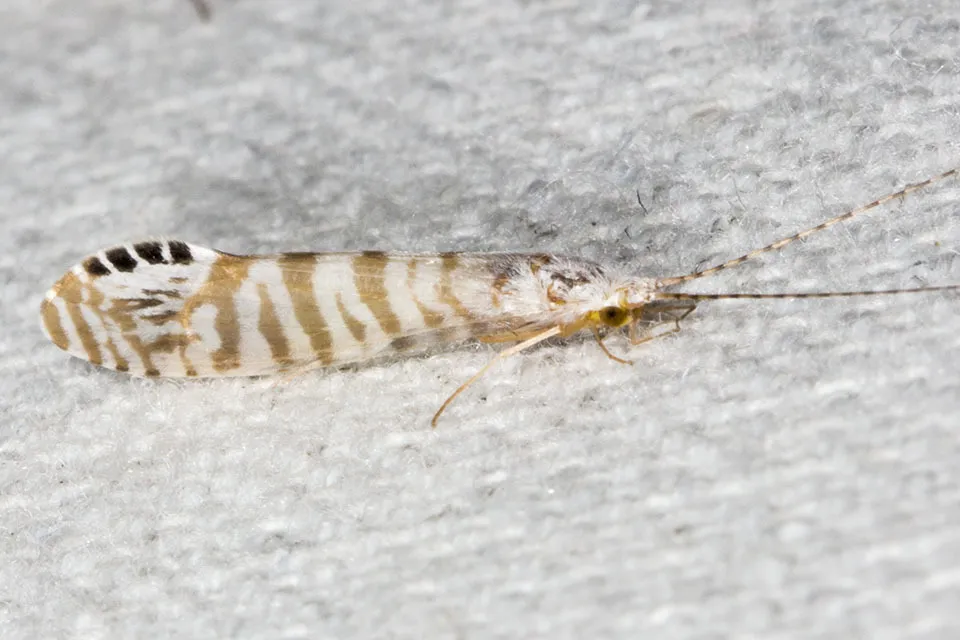
Photo credits: Contributed by Robin McLeod; Additional contributions by v belov
Frequently Asked Questions About Nectopsyche exquisita
What is Nectopsyche exquisita?
Nectopsyche exquisita is a species in the family Leptoceridae, within the order Trichoptera.
How big is Nectopsyche exquisita?
body 11-17 mm
How do you identify Nectopsyche exquisita?
Adult: body long and slender; antennae banded dark and pale brown, much longer than body; head and thorax yellowish-brown and covered with white hair; forewing with brownish-yellow crossbands and four square black spots on posterior margin near apex
Where is Nectopsyche exquisita found?
| Feature | Details |
|---|---|
| Habitat | larvae live in standing or slow-moving water that has a sandy bottom and aquatic vegetation adults may be found resting near the larval habitat during the day, but are nocturnal and attracted to light |
| Range | e. & so. US & adjacent Canada (NS-SK) |
When is Nectopsyche exquisita active?
Nectopsyche exquisita: seasonal activity - adults present spring to fall.