
Mompha cephalonthiella - Hodges#1433
Mompha cephalonthiella
This record describes Mompha cephalonthiella (species). Recorded family: Momphidae. Recorded order: Lepidoptera.
Identification and Appearance
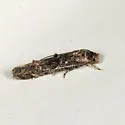
Adult : Antennae gray, annulated with dark brown, with four or five very distinct white annulations near the tip ● FW irregularly spotted with velvety black, with an ochreous patch at the base of the inner margin, dusted with golden in the middle, and white specks along the costa ● Ochreous patches are not distinct in outline, and seem to be composed of confluent streaks ● Two tufts of elevated scales within the inner margin, the first velvety black, the second ochreous, margined with velvety black, and larger than the first ● Three velvety black, slightly oblique costal streaks, the first small, placed before the middle ; the second larger, behind the middle; and the third and largest just before the ciliae ● There is an oblique costal streak of rather dense white dusting before the apex, and an opposite dorsal one. Three dark brown hinder marginal lines, one at the base of the ciliae, the second before the apex and the third at the apex ● In some lights, the tufts glow with crimson and purple hues, and the ochreous patches assume the form of indefinite wide bands.
Classification
- Kingdom
- Animalia
- Phylum
- Arthropoda
- Class
- Insecta
- Order
- Lepidoptera (Butterflies and Moths)
- Superfamily
- Gelechioidea
- Family
- Momphidae (Momphid Moths)
- Subfamily
- Momphinae
- Genus
- Mompha
Imported taxonomy record. Source availability varies; see the source references and editorial policy below.
Diet and Behavior
Diet: The larvae feed on Buttonbush, Cephalanthus occidentalis
Additional species information
Species notes from the sources
Etymology: cephalanthiella is from Cephalanthus, the generic name of the host plant + the diminutive suffix -ella
About Butterflies and Moths: the wider group
Order-level background for Lepidoptera, the group containing Mompha cephalonthiella. Species-specific details appear above.
Group overview
Lepidoptera includes approximately 180,000 described species of butterflies and moths. Moths outnumber butterflies roughly 10:1. The monarch butterfly's eastern population has declined by more than 80% since the mid-1990s, and the western population by over 95% since the 1980s. The IUCN lists the migratory monarch as Vulnerable.
Ecological role of the group
Butterflies and moths are essential indicators of ecosystem health. As caterpillars, they are a primary food source for birds - a single nest of blue tit chicks requires ~10,000 caterpillars. Adult moths pollinate many night-blooming plants.
Economic and practical significance of the group
Lepidoptera are critical pollinators. In Europe, grassland butterfly species have declined by almost 50% since the early 1990s. In the UK, three-quarters of butterflies are in decline. In the U.S., five butterfly species have gone extinct since 1950, with 29 listed as endangered.
Recorded sources for this group: IUCN Red List, Xerces Society, USFWS, PNAS, WWF. Imported estimates may describe particular regions or reporting periods.
Photos of Mompha cephalonthiella - Hodges#1433 (5)
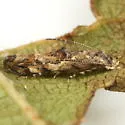
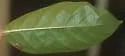
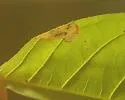
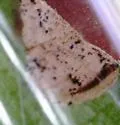
Photo credits: Contributed by Chuck Entz; Additional contributions by ceiseman , Robert Lord Zimlich
Frequently Asked Questions About Mompha cephalonthiella - Hodges#1433
What is Mompha cephalonthiella - Hodges#1433?
Mompha cephalonthiella - Hodges#1433 (Mompha cephalonthiella) is a species in the family Momphidae, within the order Lepidoptera.
How big is Mompha cephalonthiella - Hodges#1433?
expanse ≈ 7-8mm
How do you identify Mompha cephalonthiella - Hodges#1433?
Adult : Antennae gray, annulated with dark brown, with four or five very distinct white annulations near the tip ● FW irregularly spotted with velvety black, with an ochreous patch at the base of the inner margin, dusted with golden in the middle, and white specks along the costa ● Ochreous patches are not distinct in outline, and seem to be composed of confluent streaks ● Two tufts of elevated scales within the inner margin, the first velvety black, the second ochreous, margined with velvety black, and larger than the first ● Three velvety black, slightly oblique costal streaks, the first small, placed before the middle ; the second larger, behind the middle; and the third and largest just before the ciliae ● There is an oblique costal streak of rather dense white dusting before the apex, and an opposite dorsal one. Three dark brown hinder marginal lines, one at the base of the ciliae, the second before the apex and the third at the apex ● In some lights, the tufts glow with crimson and purple hues, and the ochreous patches assume the form of indefinite wide bands.
What does Mompha cephalonthiella - Hodges#1433 eat?
The diet of the Mompha cephalonthiella - Hodges#1433 includes The larvae feed on Buttonbush, Cephalanthus occidentalis.