
Minotaur Beetle
Typhaeus typhoeus
This record describes Typhaeus typhoeus (species). Recorded family: Geotrupidae. Recorded order: Coleoptera.
Identification and Appearance
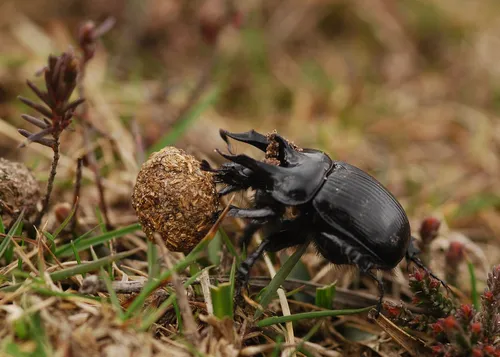
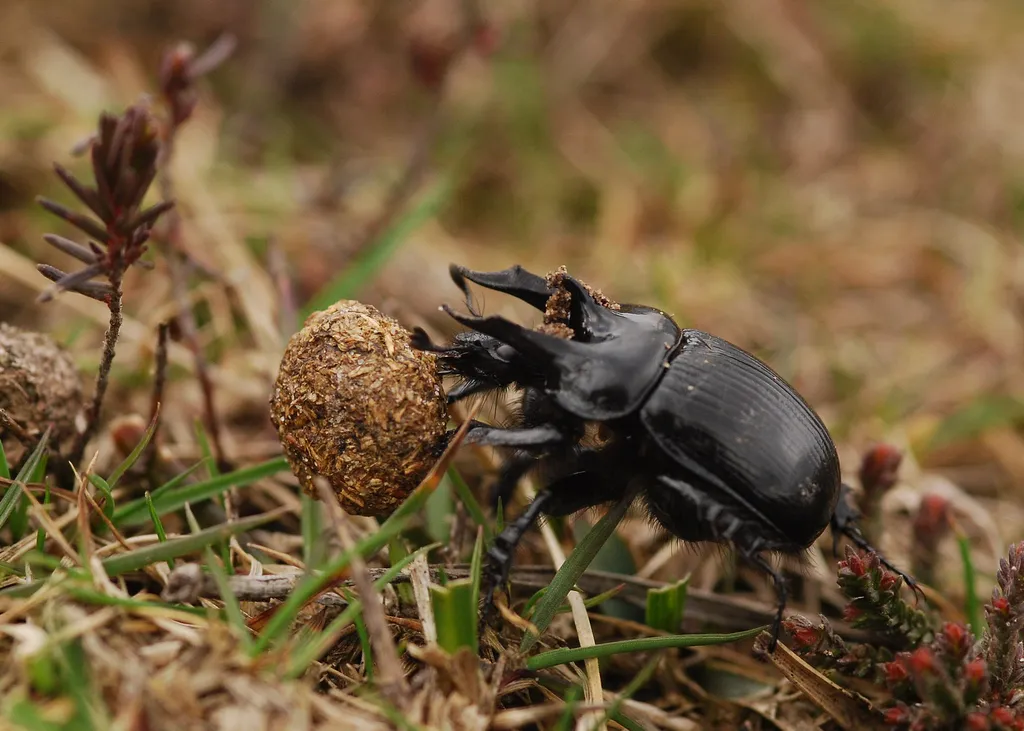
12 to 20mm. Shining black. The pronotum of the male has forward-projecting horns on either side, slightly variable in length, tending to be proportionately longer in larger specimens. There is a smaller horn in the centre. The female lacks the horns but has a sharp tubercle at each anterior angle of the pronotum. Prefers short, grazed turf on dry, sandy soils. Creates burrows under the dung of rabbits, sheep, deer, horse and occasionally cattle. These can reach 1 to 1.5m in depth. Jan-May and Aug-Oct. Most sightings are in Spring or Autumn. The larvae feed on herbivore dung in side branches of the tunnels, built and stocked by the adults. The adults overwinter as pairs in burrows and will sometimes emerge on mild winter days. Local in England and Wales becoming scarce further north. Very rare in Scotland. Occasional and local in our region. All records have been confined to the Charnwood Forest area.
Wikipedia reference for Typhaeus typhoeus: http://en.wikipedia.org/wiki/Typhaeus_typhoeus.
Classification
- Kingdom
- Animalia
- Phylum
- Arthropoda
- Class
- Insecta
- Order
- Coleoptera
- Family
- Geotrupidae
- Genus
- Typhaeus
Imported taxonomy record. Source availability varies; see the source references and editorial policy below.
Habitat and Range
Habitat
Prefers short, grazed turf on dry, sandy soils. Creates burrows under the dung of rabbits, sheep, deer, horse and occasionally cattle. These can reach 1 to 1.5m in depth.
Seasonal Activity
Jan-May and Aug-Oct. Most sightings are in Spring or Autumn.
Diet and Behavior
Life History
The larvae feed on herbivore dung in side branches of the tunnels, built and stocked by the adults. The adults overwinter as pairs in burrows and will sometimes emerge on mild winter days.
Additional species information
Recorded status
Local in England and Wales becoming scarce further north. Very rare in Scotland.
About Primitive Winged Insects: the wider group
Order-level background for Coleoptera, the group containing Typhaeus typhoeus. Species-specific details appear above.
Group overview
Coleoptera is the largest order of insects with over 400,000 described species, representing ~25% of all known animal species and ~40% of all insects. In the U.S. alone, nearly 30,000 beetle species have been identified.
Ecological role of the group
Beetles are prominent decomposers, especially in forests, breaking down dead wood and recycling nutrients. As predators, they reduce populations of pest insects. Many species are also important pollinators of flowering plants.
Economic and practical significance of the group
Beetles have major economic significance: leaf beetles (Chrysomelidae) and weevils (Curculionoidea) are among the most destructive agricultural pests globally, costing billions annually, while predatory species like ladybugs provide natural pest control.
Recorded sources for this group: Britannica, Smithsonian, NCSU Entomology. Imported estimates may describe particular regions or reporting periods.
Photos of Minotaur Beetle (3)
Frequently Asked Questions About Minotaur Beetle
What is Minotaur Beetle?
Minotaur Beetle (Typhaeus typhoeus) is a species in the family Geotrupidae, within the order Coleoptera.
Where is Minotaur Beetle found?
Habitat: Prefers short, grazed turf on dry, sandy soils. Creates burrows under the dung of rabbits, sheep, deer, horse and occasionally cattle. These can reach 1 to 1.5m in depth.
When is Minotaur Beetle active?
Minotaur Beetle: seasonal activity - Jan-May and Aug-Oct. Most sightings are in Spring or Autumn..
What is the life cycle of a Minotaur Beetle?
The larvae feed on herbivore dung in side branches of the tunnels, built and stocked by the adults. The adults overwinter as pairs in burrows and will sometimes emerge on mild winter days.