
Telephone-pole Beetle
Micromalthus debilis
This record describes Micromalthus debilis (species). Recorded family: Micromalthidae. Recorded order: Coleoptera.
Identification and Appearance
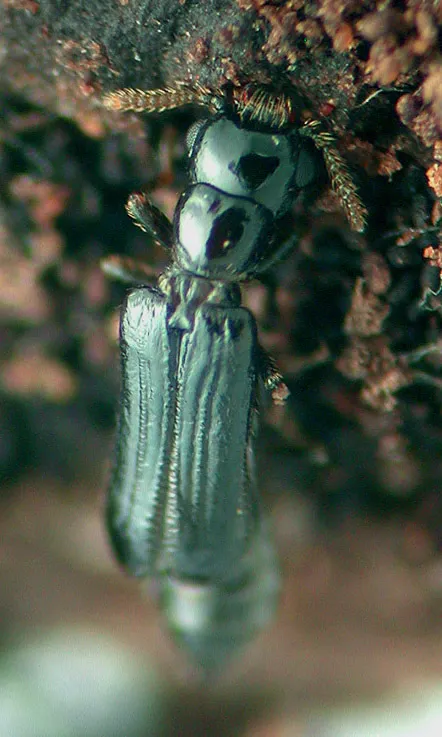
Wikipedia reference for Micromalthus debilis: http://en.wikipedia.org/wiki/Telephone-pole_beetle.
Classification
- Kingdom
- Animalia
- Phylum
- Arthropoda
- Class
- Insecta
- Order
- Coleoptera (Beetles)
- Suborder
- Archostemata
- Family
- Micromalthidae (Telephone-pole Beetles)
- Genus
- Micromalthus
Imported taxonomy record. Source availability varies; see the source references and editorial policy below.
Habitat and Range
Habitat
Red rotten oak logs, at lights, indoors, traps.
Geographic Range
native to e.US, spread globally by commerce (Philips 2001)
Diet and Behavior
Life History
Complicated, involving hypermetamorphosis, paedogenesis and parthenogenesis. "The adults are actually no longer able to reproduce, and the species has evolved to utilize paedogenesis... They have all the characteristics of larvae other than that one tiny detail, and it occurs before a pupal stage, the adults are still typical beetles occuring after a pupal stage with truncate elytra and dead-end genitalia. Adults are rare, only emerging after a spike in temperature (Prairie fires perhaps?) and the females have a grasping mechanism that will destroy the male adeagus in their efforts to mate despite the fact that it'll be fruitless because they are sterile in the adult stage. ...Research being done right now to figure them out. Including the male larvae that cannibalize their own mothers." Comment by Natalie Hernandez
Additional species information
Species notes from the sources
Etymology: Micromalthus debilis LeConte 1878
About Primitive Winged Insects: the wider group
Order-level background for Coleoptera, the group containing Micromalthus debilis. Species-specific details appear above.
Group overview
Coleoptera is the largest order of insects with over 400,000 described species, representing ~25% of all known animal species and ~40% of all insects. In the U.S. alone, nearly 30,000 beetle species have been identified.
Ecological role of the group
Beetles are prominent decomposers, especially in forests, breaking down dead wood and recycling nutrients. As predators, they reduce populations of pest insects. Many species are also important pollinators of flowering plants.
Economic and practical significance of the group
Beetles have major economic significance: leaf beetles (Chrysomelidae) and weevils (Curculionoidea) are among the most destructive agricultural pests globally, costing billions annually, while predatory species like ladybugs provide natural pest control.
Recorded sources for this group: Britannica, Smithsonian, NCSU Entomology. Imported estimates may describe particular regions or reporting periods.
Photos of Telephone-pole Beetle (3)
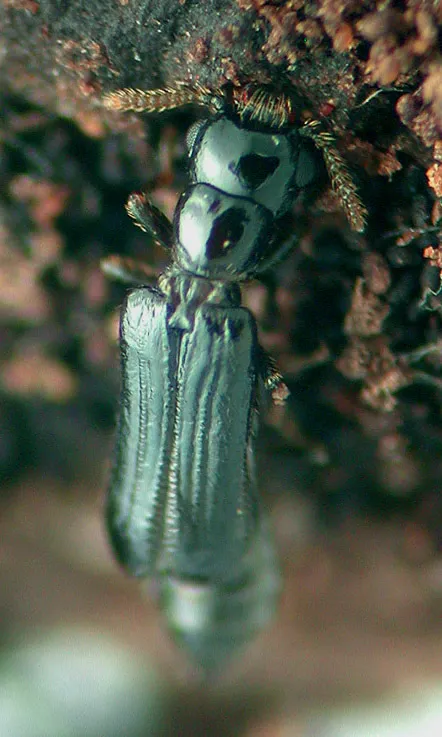
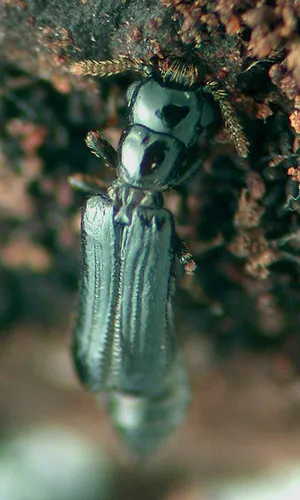
Photo credits: Contributed by Phillip Harpootlian; Additional contributions by Beatriz Moisset , Bbarnd , Mike Quinn , v belov , Arturo Santos