
Megaselia scalaris
This record describes Megaselia scalaris (species). Recorded family: Phoridae. Recorded order: Diptera.
Identification and Appearance
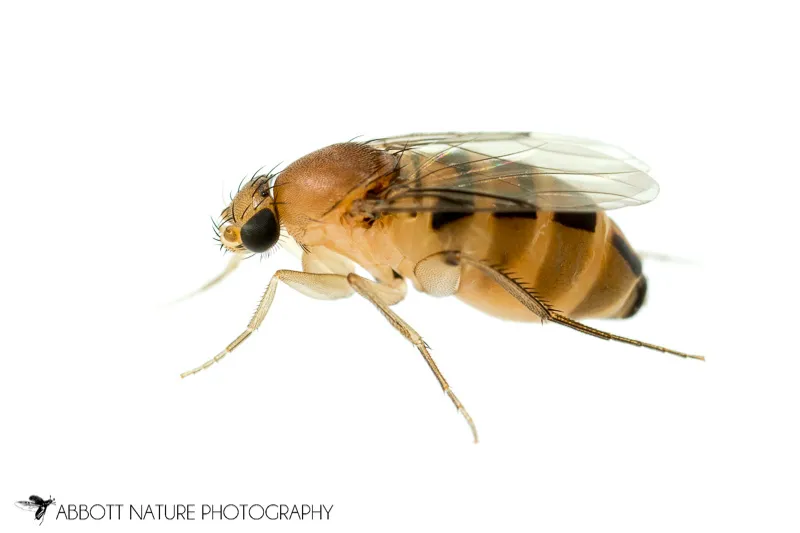
the female's abdominal tergite 6 is short, narrow, shiny, and extends laterally on the segment, unlike tergites of preceding segments [this feature can only be seen in a clear close-up photo taken at the proper angle, or by examination under a microscope] page creation based on Brian Brown's identification of this image
Wikipedia reference for Megaselia scalaris: http://en.wikipedia.org/wiki/Megaselia_scalaris.
Classification
Habitat and Range
Habitat
larvae live in a variety of habitats: moist decaying plant or animal material, sanitation filter beds, sludge in sewer pipes and trash cans in public washrooms and homes, lab cultures of Drosophila , bee and termite colonies, fresh or fermenting fruit, and sometimes in external wounds or in the digestive tract of animals, including humans larvae display a unique behavior of swallowing air when exposed to pools of liquid; the swallowed air allows them to float, and may prevent drowning during flood conditions in their normal habitat
Geographic Range
cosmopolitan - Map (GBIF)
Seasonal Activity
year-round indoors
Diet and Behavior
Diet: Larvae are most often scavengers on a variety of organic material, including carrion, both rotting and living plants, stored foods, and other substances up to and including shoe polish and paint; they also have been documented as parasitoids on calliphorid flies, noctuid caterpillars, honeybees, cockroaches, mantids, stinkbugs, scorpions, and tarantulas among other hosts.
Life History
see family page for description of the general phorid life cycle
About Flies: the wider group
Order-level background for Diptera, the group containing Megaselia scalaris. Species-specific details appear above.
Group overview
Diptera includes over 150,000 described species of flies, mosquitoes, and midges. Mosquitoes are the deadliest animal on Earth (CDC). Malaria alone causes ~249 million cases and over 608,000 deaths annually, mostly children under 5 (WHO). Vector-borne diseases account for over 17% of all infectious diseases, causing 700,000+ deaths per year.
Ecological role of the group
Despite their disease impact, flies are critical decomposers and pollinators. Hoverflies alone pollinate hundreds of crop and wildflower species. Flies are also the primary food source for many birds, bats, and fish. Forensic entomology relies heavily on fly species for crime scene analysis.
Economic and practical significance of the group
In the U.S., vector-borne disease cases tripled between 2004-2016, with over 640,000 cases reported in that period (CDC). Tickborne diseases doubled from 22,000 to 48,000 annual reports. Globally, mosquito-borne diseases cost billions in healthcare and lost productivity.
Recorded sources for this group: WHO, CDC, PNAS. Imported estimates may describe particular regions or reporting periods.
Photos of Megaselia scalaris (3)
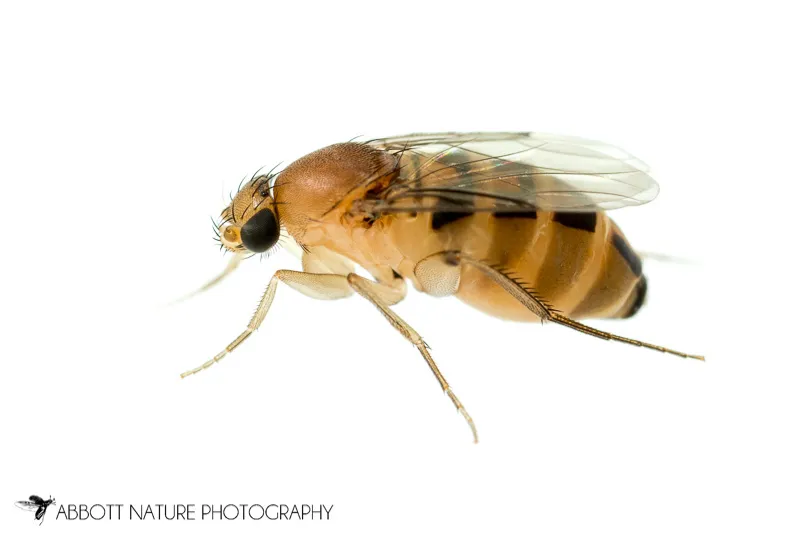
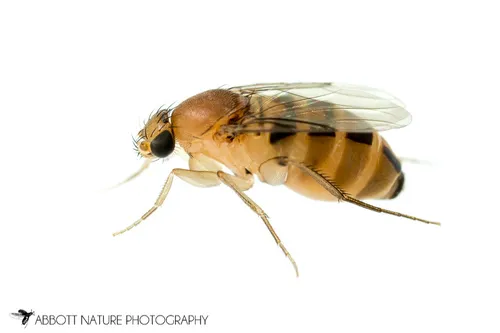
Photo credits: Contributed by Robin McLeod; Additional contributions by Beatriz Moisset , Joshua Stuart Rose , Mike Quinn
Frequently Asked Questions About Megaselia scalaris
What is Megaselia scalaris?
Megaselia scalaris is a species in the family Phoridae, within the order Diptera.
How big is Megaselia scalaris?
body length of adult males 2+ mm; females 3+ mm
How do you identify Megaselia scalaris?
the female's abdominal tergite 6 is short, narrow, shiny, and extends laterally on the segment, unlike tergites of preceding segments [this feature can only be seen in a clear close-up photo taken at the proper angle, or by examination under a microscope]
Where is Megaselia scalaris found?
| Feature | Details |
|---|---|
| Habitat | larvae live in a variety of habitats: moist decaying plant or animal material, sanitation filter beds, sludge in sewer pipes and trash cans in public washrooms and homes, lab cultures of Drosophila , bee and termite colonies, fresh or fermenting fruit, and sometimes in external wounds or in the digestive tract of animals, including humans larvae display a unique behavior of swallowing air when exposed to pools of liquid; the swallowed air allows them to float, and may prevent drowning during flood conditions in their normal habitat |
| Range | cosmopolitan - Map (GBIF) |
What does Megaselia scalaris eat?
The diet of the Megaselia scalaris includes Larvae are most often scavengers on a variety of organic material, including carrion, both rotting and living plants, stored foods, and other substances up to and including shoe polish and paint; they also have been documented as parasitoids on calliphorid flies, noctuid caterpillars, honeybees, cockroaches, mantids, stinkbugs, scorpions, and tarantulas among other hosts..
When is Megaselia scalaris active?
Megaselia scalaris: seasonal activity - year-round indoors.
What is the life cycle of a Megaselia scalaris?
see family page for description of the general phorid life cycle