
Marsh Snail agg.
Stagnicola palustris/fuscus/corvus agg.
This record describes Stagnicola palustris/fuscus/corvus agg. (species). Recorded family: Lymnaeidae.
Identification and Appearance
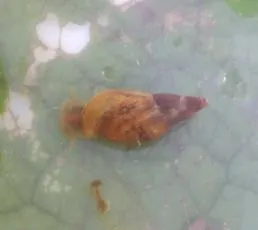
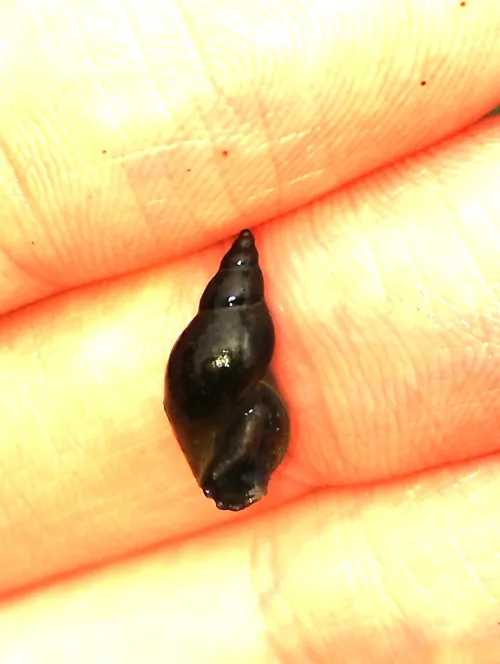
Length 20 to 25 mm. Three species Stagnicola palustris , S. fuscus and S. corvus have now been recognised that can only be separated by dissection so they are usually treated as an aggregate. They have a thicker shell than other species in the genus, with striations running longitudinally across its length. Lymnaea stagnalis is the other large 'conical' pond snail to be encountered but it can be distinguished by its sharper and more elongated spire and by its body whorl (the largest next to the mouth) being broader such that the outline is slightly concave. S. fuscus/palustris an almost straight edge profile. Found in marshes and temporary pools that can dry up. Common in much of Britain except in Northern Scotland. No additional images available for this species.
Classification
- Kingdom
- Animalia
- Phylum
- Arthropoda
- Family
- Lymnaeidae
- Genus
- Stagnicola
Imported taxonomy record. Source availability varies; see the source references and editorial policy below.
Habitat and Range
Habitat
Found in marshes and temporary pools that can dry up.
Seasonal Activity
All year round.
Additional species information
Recorded status
Common in much of Britain except in Northern Scotland.
Photos of Marsh Snail agg. (2)
Frequently Asked Questions About Marsh Snail agg.
What is Marsh Snail agg.?
Marsh Snail agg. (Stagnicola palustris/fuscus/corvus agg.) is a species in the family Lymnaeidae.
How big is Marsh Snail agg.?
20 to 25 mm. Three species
Where is Marsh Snail agg. found?
Habitat: Found in marshes and temporary pools that can dry up.
When is Marsh Snail agg. active?
Marsh Snail agg.: seasonal activity - All year round..