
Lithariapteryx elegans - Hodges#2512.1
Lithariapteryx elegans
This record describes Lithariapteryx elegans (species). Recorded family: Heliodinidae. Recorded order: Lepidoptera.
Identification and Appearance
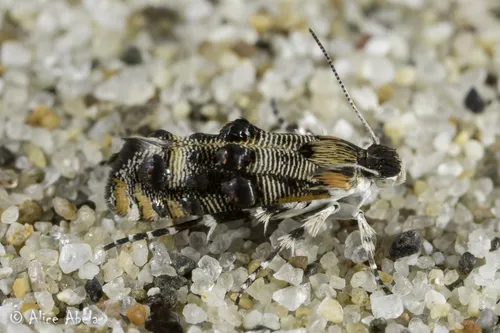
FW costal area margined with orange at base, lacking silver spots in basal 1/2. Snow white venter and peculiarly stubby forewings adorned with large, upraised scale tufts of shining steel- purplish. Excerpted from Powell: The adults are diurnal and are encountered on sunny days perching and mating on the larval food plant. On windblown coastal dunes they often are found on the sand nearby. In appearance, they have been likened to small jumping spiders (Salticidae), which are common in dune habitats; when the moths are viewed from behind, the bulging metallic colored spots resemble the eyes of a salticid. L. elegans were observed nectaring on Mesembryanthemum (Aizoaceae), an African plant growing interspersed with Abronia on beach dunes at Monterey Bay.
Classification
- Kingdom
- Animalia
- Phylum
- Arthropoda
- Class
- Insecta
- Order
- Lepidoptera (Butterflies and Moths)
- Superfamily
- Yponomeutoidea
- Family
- Heliodinidae (Sun Moths)
- Genus
- Lithariapteryx
Imported taxonomy record. Source availability varies; see the source references and editorial policy below.
Habitat and Range
Habitat
Beach foredune plant communities where host plant is present.
Geographic Range
Endemic to Monterey Bay and Pismo-Guadalupe coastal dune systems in central California. Records south to at least Santa Barbara County.
Seasonal Activity
Adults recorded March to October.
Diet and Behavior
Diet: Larval host plants are Abronia latifolia and A. umbellata .
Life History
Excerpted from Powell (1991): The larvae mine the leaves of Abronia latifolia and occasionally A. umbellata growing in close proximity to latifolia . There is considerable variation in mine form depending upon leaf thickness and other habitat factors. Typically larvae form a blotch-like mine basally in the leaf, from which digitate feeding tunnels project; often after mining out about half the leaf contents, the larva moves to another leaf. In thick-leafed plants such as Abronia maritima and A. latifolia , mines often are confined to the lower portion of the leaves and are not easily visible from above, and all of the late instar feeding may occur within one, or two overlapping leaves. In thin-leafed hosts (e.g. A. umbellata ), several adjacent leaves are incorporated into a webbed shelter. Frass is ejected from a hole basally in the mine, where it lodges in silk webbing. In sand verbenas this usually is attached from the underside of the leaf, and the mine is evidenced by a glob of webbing caked with sand and frass.
Additional species information
Species notes from the sources
Etymology: Lithariapteryx elegans Powell 1991
About Butterflies and Moths: the wider group
Order-level background for Lepidoptera, the group containing Lithariapteryx elegans. Species-specific details appear above.
Group overview
Lepidoptera includes approximately 180,000 described species of butterflies and moths. Moths outnumber butterflies roughly 10:1. The monarch butterfly's eastern population has declined by more than 80% since the mid-1990s, and the western population by over 95% since the 1980s. The IUCN lists the migratory monarch as Vulnerable.
Ecological role of the group
Butterflies and moths are essential indicators of ecosystem health. As caterpillars, they are a primary food source for birds - a single nest of blue tit chicks requires ~10,000 caterpillars. Adult moths pollinate many night-blooming plants.
Economic and practical significance of the group
Lepidoptera are critical pollinators. In Europe, grassland butterfly species have declined by almost 50% since the early 1990s. In the UK, three-quarters of butterflies are in decline. In the U.S., five butterfly species have gone extinct since 1950, with 29 listed as endangered.
Recorded sources for this group: IUCN Red List, Xerces Society, USFWS, PNAS, WWF. Imported estimates may describe particular regions or reporting periods.
Photos of Lithariapteryx elegans - Hodges#2512.1 (3)
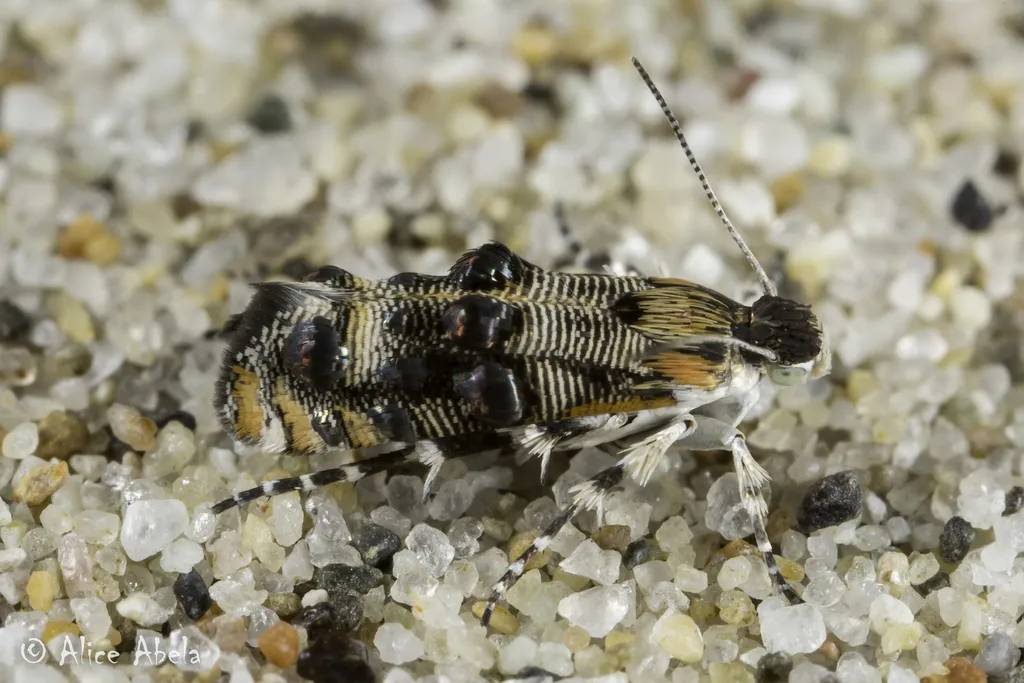
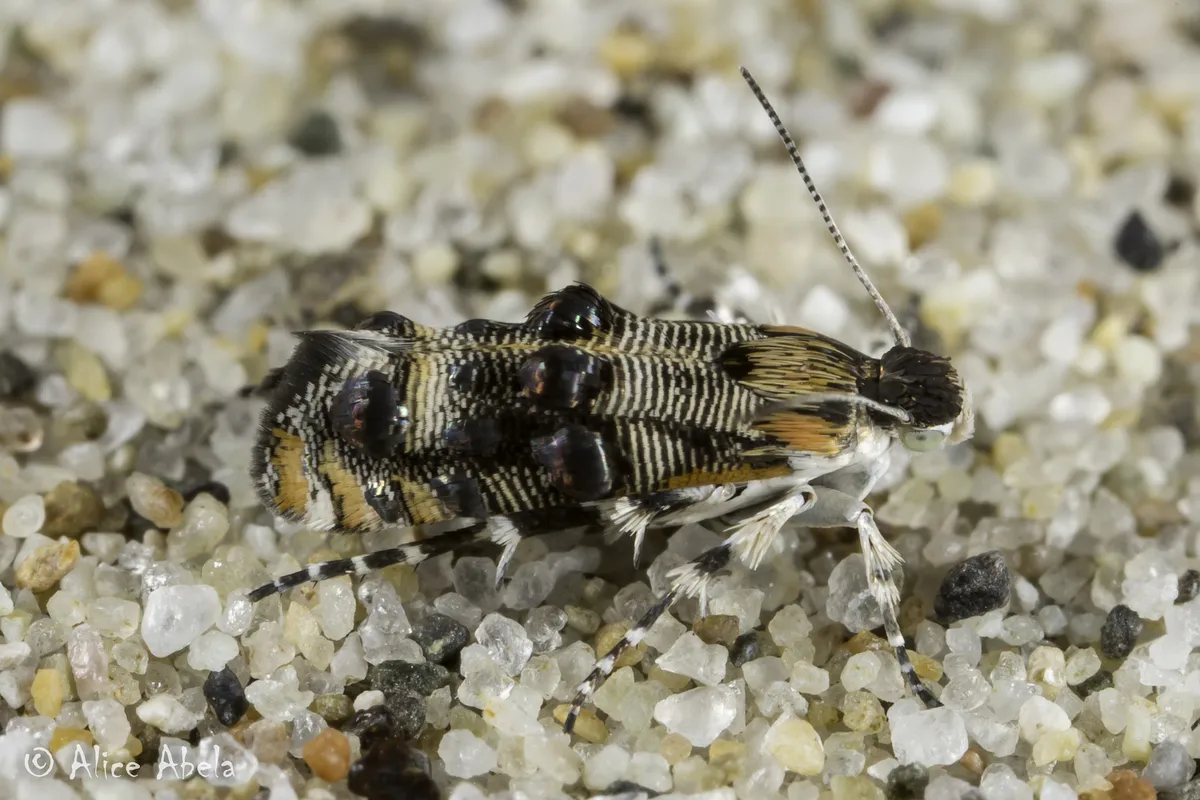
Photo credits: Contributed by Aaron Schusteff; Additional contributions by Maury Heiman
Frequently Asked Questions About Lithariapteryx elegans - Hodges#2512.1
What is Lithariapteryx elegans - Hodges#2512.1?
Lithariapteryx elegans - Hodges#2512.1 (Lithariapteryx elegans) is a species in the family Heliodinidae, within the order Lepidoptera.
How big is Lithariapteryx elegans - Hodges#2512.1?
FW length 3.5-5.1 mm.
How do you identify Lithariapteryx elegans - Hodges#2512.1?
FW costal area margined with orange at base, lacking silver spots in basal 1/2. Snow white venter and peculiarly stubby forewings adorned with large, upraised scale tufts of shining steel- purplish.
Where is Lithariapteryx elegans - Hodges#2512.1 found?
| Feature | Details |
|---|---|
| Habitat | Beach foredune plant communities where host plant is present. |
| Range | Endemic to Monterey Bay and Pismo-Guadalupe coastal dune systems in central California. Records south to at least Santa Barbara County. |
What does Lithariapteryx elegans - Hodges#2512.1 eat?
The diet of the Lithariapteryx elegans - Hodges#2512.1 includes Larval host plants are Abronia latifolia and A. umbellata ..
When is Lithariapteryx elegans - Hodges#2512.1 active?
Lithariapteryx elegans - Hodges#2512.1: seasonal activity - Adults recorded March to October..
What is the life cycle of a Lithariapteryx elegans - Hodges#2512.1?
Excerpted from Powell (1991): The larvae mine the leaves of Abronia latifolia and occasionally A. umbellata growing in close proximity to latifolia . There is considerable variation in mine form depending upon leaf thickness and other habitat factors. Typically larvae form a blotch-like mine basally in the leaf, from which digitate feeding tunnels project; often after mining out about half the leaf contents, the larva moves to another leaf. In thick-leafed plants such as Abronia maritima and A. latifolia , mines often are confined to the lower portion of the leaves and are not easily visible from above, and all of the late instar feeding may occur within one, or two overlapping leaves. In thin-leafed hosts (e.g. A. umbellata ), several adjacent leaves are incorporated into a webbed shelter. Frass is ejected from a hole basally in the mine, where it lodges in silk webbing. In sand verbenas this usually is attached from the underside of the leaf, and the mine is evidenced by a glob of webbing caked with sand and frass.