
Vernal Pool Tadpole Shrimp
Lepidurus packardi
This record describes Lepidurus packardi (species). Recorded family: Triopsidae. Recorded order: Notostraca.
Identification and Appearance
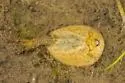
Per USFWS Recovery Plan: Two other species of Lepidurus are found in California. One, the cryptic tadpole shrimp (Lepidurus cryptus), has recently been described (Rogers 2001). This species cannot be differentiated from the vernal pool tadpole shrimp by appearance, but the two species are genetically distinct (King and Hanner 1998, Rogers 2001). The cryptic tadpole shrimp occurs in the Great Basin and intermountain regions of northern California and southern and eastern Oregon, whereas the vernal pool tadpole shrimp occurs in the Central Valley, Delta, and east San Francisco Bay area (Rogers 2001). The cryptic tadpole shrimp is not known to occur within the range of the vernal pool tadpole shrimp as described in the listing rule (U.S. Fish and Wildlife Service 1994a). The other species, Lepidurus lemmoni, was described by Holmes in 1894 (Holmes 1894). This species is found in alkali playas high in calcium salts in California in the Mojave Desert in Inyo, Kern, San Bernardino, and Riverside Counties, in the Great Basin in Lassen, Modoc, and Siskiyou Counties, and also in Oregon, but does not cooccur with L. packardi (Rogers 2001, C. Rogers in litt. 2005). Lepidurus lemmoni is distinguished from L. packardi by having more than 50 leg pairs (vs. less than 40 in L. packardi), and the nuchal organ being placed behind the eyes (vs. between the eyes as in all other Lepidurus).
Classification
- Kingdom
- Animalia
- Phylum
- Arthropoda
- Class
- Branchiopoda
- Order
- Notostraca (Tadpole Shrimp)
- Family
- Triopsidae
- Genus
- Lepidurus
Imported taxonomy record. Source availability varies; see the source references and editorial policy below.
Additional species information
Species notes from the sources
Etymology: Lepidurus packardi Simon, 1886
About Tadpole Shrimp: the wider group
Order-level background for Notostraca, the group containing Lepidurus packardi. Species-specific details appear above.
Group overview
This is a smaller arthropod order with specialized ecological roles. Arthropods are the most diverse animal phylum, comprising over 80% of all known animal species with approximately 1.2 million described species globally.
Ecological role of the group
Members of this order contribute to broader arthropod ecosystem functions including decomposition, predation, and serving as food sources for vertebrates. Arthropod biodiversity is essential for ecosystem resilience.
Economic and practical significance of the group
While this order has limited direct economic impact, arthropods collectively provide ecosystem services worth trillions of dollars annually through pollination, decomposition, pest control, and nutrient cycling.
Recorded sources for this group: General entomology and arthropod research. Imported estimates may describe particular regions or reporting periods.