
Lachesilla fuscipalpis
This record describes Lachesilla fuscipalpis (species). Recorded family: Lachesillidae. Recorded order: Psocodea.
Identification and Appearance
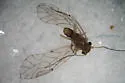
The hypandrium of the male is very distinct (See E. L. Mockford. 1993. North American Psocoptera Fig. 643). The subgenital plate of the female resembles Fig. 62 in A. Badonnel. 1971 (1972?). Psocopteres edaphiques du Chili. Bulletin du Museum National D'Histoire Naturelle Series 3, No 1, Bandonnel described this species from brachypterous females (see above). The male was later described: A. N. Garcia Aldrete. Description of the male Lachesilla fuscipalpis Badonnel and new records from Peru and Mexico.1974. Anales del Instituto de Biologa, Universidad Nacional Autonoma de Mexico 45: 71-74.
Classification
- Kingdom
- Animalia
- Phylum
- Arthropoda
- Class
- Insecta
- Order
- Psocodea (Barklice, Booklice, and Parasitic Lice)
- Suborder
- Psocomorpha
- Family
- Lachesillidae (Fateful Barklice)
- Genus
- Lachesilla
Imported taxonomy record. Source availability varies; see the source references and editorial policy below.
Habitat and Range
Habitat
This species has been collected on Juniper, pines palms and dead oak leaaves.
Geographic Range
First recorded in Chile. Records now include those from Peru, Mexico, and Arizona ("It was "taken once as an introduction on bromeliads and orchids from Mexico"").
About Barklice, Booklice, and Parasitic Lice: the wider group
Order-level background for Psocodea, the group containing Lachesilla fuscipalpis. Species-specific details appear above.
Group overview
Psocodea includes ~11,000 described species of booklice, barklice, and parasitic lice. Booklice (Psocoptera) are among the most common household insects, thriving in humid environments where they feed on mold and fungi.
Ecological role of the group
Barklice are important decomposers that feed on algae, lichens, and fungi on tree bark. They help recycle nutrients in forest ecosystems. Parasitic lice have co-evolved with their hosts for millions of years, providing insights into host evolutionary history.
Economic and practical significance of the group
Head lice (Pediculus humanus capitis) affect an estimated 6-12 million children aged 3-11 in the U.S. annually (CDC). The U.S. lice treatment market is valued at over $1 billion per year.
Recorded sources for this group: CDC, dermatology research, entomology textbooks. Imported estimates may describe particular regions or reporting periods.
Photos of Lachesilla fuscipalpis (5)
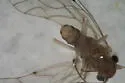
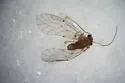
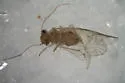
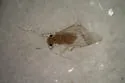
Photo credits: Contributed by Diane Young
Frequently Asked Questions About Lachesilla fuscipalpis
What is Lachesilla fuscipalpis?
Lachesilla fuscipalpis is a species in the family Lachesillidae, within the order Psocodea.
How big is Lachesilla fuscipalpis?
Male ~ 2.9 mm, female ~ 2.7 mm
How do you identify Lachesilla fuscipalpis?
The hypandrium of the male is very distinct (See E. L. Mockford. 1993. North American Psocoptera Fig. 643). The subgenital plate of the female resembles Fig. 62 in A. Badonnel. 1971 (1972?). Psocopteres edaphiques du Chili. Bulletin du Museum National D'Histoire Naturelle Series 3, No 1,
Where is Lachesilla fuscipalpis found?
| Feature | Details |
|---|---|
| Habitat | This species has been collected on Juniper, pines palms and dead oak leaaves. |
| Range | First recorded in Chile. Records now include those from Peru, Mexico, and Arizona (It was taken once as an introduction on bromeliads and orchids from Mexico). |