
Silver-striped Sedge
Hesperophylax designatus
This record describes Hesperophylax designatus (species). Recorded family: Limnephilidae. Recorded order: Trichoptera.
Identification and Appearance
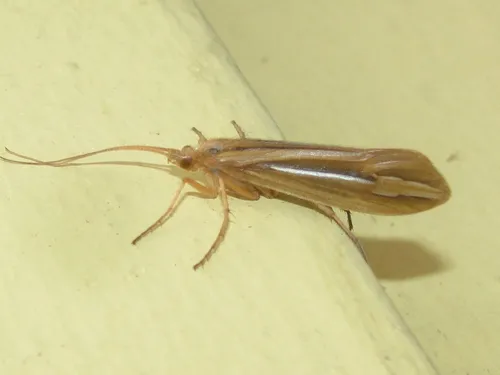
Adult: forewing brownish-orange with three thin silvery-white longitudinal stripes: the main stripe is about half the wing's length and situated centrally, just anterior to its midpoint; two smaller black-edged white stripes run parallel over posterior third of wing, offset above and below the level of the first stripe, and extending to the outer margin (see photo ) Larva: abdomen enclosed in elongate cylindrical case composed of rock/stone fragments Will come to artificial lights at night.
Classification
- Kingdom
- Animalia
- Phylum
- Arthropoda
- Class
- Insecta
- Order
- Trichoptera (Caddisflies)
- Suborder
- Integripalpia
- Superfamily
- Limnephiloidea
- Family
- Limnephilidae (Northern Caddisflies)
- Subfamily
- Limnephilinae
- Tribe
- Limnephilini
- Genus
- Hesperophylax
Imported taxonomy record. Source availability varies; see the source references and editorial policy below.
Habitat and Range
Geographic Range
Alaska to Newfoundland, extending south in the east to Pennsylvania and Illinois, and south in the west to New Mexico and California; absent in southeastern states
Seasonal Activity
adults fly from June to August in Yukon Territory
Diet and Behavior
Diet: larvae feed mainly on detritus
About Caddisflies: the wider group
Order-level background for Trichoptera, the group containing Hesperophylax designatus. Species-specific details appear above.
Group overview
Trichoptera (caddisflies) includes ~14,500 described species worldwide. Larvae are aquatic and build protective cases from silk, sand, pebbles, and plant material - each species creates a distinctive case design.
Ecological role of the group
Caddisfly larvae are critical food sources for trout and other freshwater fish, making them essential to recreational fishing industries worth billions annually. Their silk is being researched as an underwater adhesive for medical applications.
Economic and practical significance of the group
Caddisfly larvae are among the most important biological indicators of water quality. Their presence or absence in streams is used by the EPA and state agencies to assess pollution levels and ecosystem health.
Recorded sources for this group: EPA, freshwater ecology research. Imported estimates may describe particular regions or reporting periods.
Photos of Silver-striped Sedge (2)
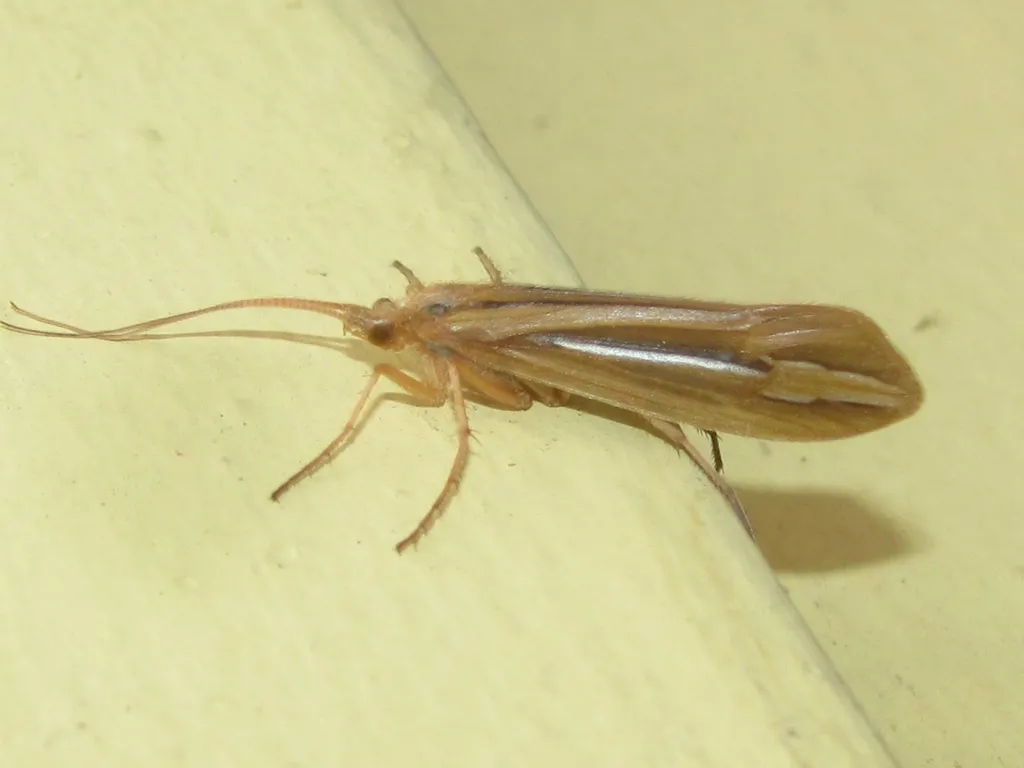
Photo credits: Contributed by Robin McLeod; Additional contributions by Chuck Sexton , marcelsuch
Frequently Asked Questions About Silver-striped Sedge
What is Silver-striped Sedge?
Silver-striped Sedge (Hesperophylax designatus) is a species in the family Limnephilidae, within the order Trichoptera.
How do you identify Silver-striped Sedge?
Adult: forewing brownish-orange with three thin silvery-white longitudinal stripes: the main stripe is about half the wing's length and situated centrally, just anterior to its midpoint; two smaller black-edged white stripes run parallel over posterior third of wing, offset above and below the level of the first stripe, and extending to the outer margin (see photo ) Larva: abdomen enclosed in elongate cylindrical case composed of rock/stone fragments
Where is Silver-striped Sedge found?
Range: Alaska to Newfoundland, extending south in the east to Pennsylvania and Illinois, and south in the west to New Mexico and California; absent in southeastern states
What does Silver-striped Sedge eat?
The diet of the Silver-striped Sedge includes larvae feed mainly on detritus.
When is Silver-striped Sedge active?
Silver-striped Sedge: seasonal activity - adults fly from June to August in Yukon Territory.