
Elliot's Plume Moth - Hodges#6204
Hellinsia elliottii
This record describes Hellinsia elliottii (species). Recorded family: Pterophoridae. Recorded order: Lepidoptera.
Identification and Appearance
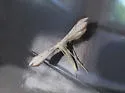
Both Hellinsia homodactylus and H. elliottii have a pure white ground color on the wings, thorax, and abdomen, without the pale yellow, buff, or tan shading of many related species. For photo records, one must ensure that the midleg tibial scale structure details show well and that the dorsal view of the moth is not overexposed nor washed out with a flash, so that the true ground color can be confirmed as white. H. homodactylus and H. elliottii can be distinguished by their different midleg tibial scale structures (Barnes & Lindsey 1921: 416-421) or by genitalia (Hunt & Matthews 2020: 71). In H. elliottii, the midleg tibia has two scale tufts of similar size and shape: one medial tuft and one apical tuft just before the tarsus. In H. homodactylus, there is no medial tuft, but there is a fringe of scales along the inner surface of the tibia. Forewing markings of both species are variable and often lacking, making their use unreliable for species ID. In the southeastern US, there is another white species, H. habecki , with a more prominent, oblique dark bar from the forewing cleft spot to the costa and with the hindwing ground color contrastingly darker than that of the white forewing (Matthews 2010). This species has midtibia tufts similar to those of H. elliottii and may not always be distinguishable in live photos where their ranges overlap.
Classification
- Kingdom
- Animalia
- Phylum
- Arthropoda
- Class
- Insecta
- Order
- Lepidoptera (Butterflies and Moths)
- Superfamily
- Pterophoroidea
- Family
- Pterophoridae (Plume Moths)
- Subfamily
- Pterophorinae
- Tribe
- Oidaematophorini
- Genus
- Hellinsia
Imported taxonomy record. Source availability varies; see the source references and editorial policy below.
About Butterflies and Moths: the wider group
Order-level background for Lepidoptera, the group containing Hellinsia elliottii. Species-specific details appear above.
Group overview
Lepidoptera includes approximately 180,000 described species of butterflies and moths. Moths outnumber butterflies roughly 10:1. The monarch butterfly's eastern population has declined by more than 80% since the mid-1990s, and the western population by over 95% since the 1980s. The IUCN lists the migratory monarch as Vulnerable.
Ecological role of the group
Butterflies and moths are essential indicators of ecosystem health. As caterpillars, they are a primary food source for birds - a single nest of blue tit chicks requires ~10,000 caterpillars. Adult moths pollinate many night-blooming plants.
Economic and practical significance of the group
Lepidoptera are critical pollinators. In Europe, grassland butterfly species have declined by almost 50% since the early 1990s. In the UK, three-quarters of butterflies are in decline. In the U.S., five butterfly species have gone extinct since 1950, with 29 listed as endangered.
Recorded sources for this group: IUCN Red List, Xerces Society, USFWS, PNAS, WWF. Imported estimates may describe particular regions or reporting periods.
Photos of Elliot's Plume Moth - Hodges#6204 (5)
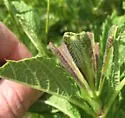
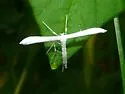
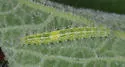
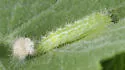
Photo credits: Contributed by JoAnneRusso; Additional contributions by marcie oconnor , treichard