
Clover thrips
Haplothrips leucanthemi
This record describes Haplothrips leucanthemi (species). Recorded family: Phlaeothripidae. Recorded order: Thysanoptera.
Identification and Appearance
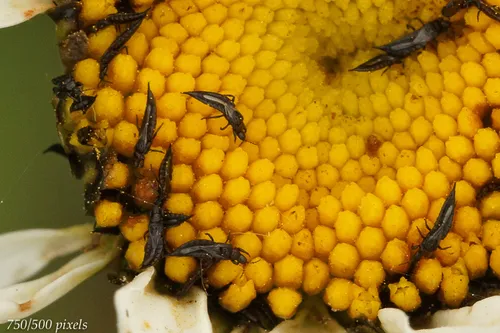
Both sexes winged. Body brown to dark brown, fore tarsi and base of antennal segment III yellow; forewing pale with base extensively shaded. ITIS reports it as a native species. Associated with large daisy flowers, such as those of Chrysanthemum leucanthemum .
Wikipedia reference for Haplothrips leucanthemi: https://en.wikipedia.org/wiki/Haplothrips_leucanthemi.
Classification
- Kingdom
- Animalia
- Phylum
- Arthropoda
- Class
- Insecta
- Order
- Thysanoptera (Thrips)
- Family
- Phlaeothripidae (Tube-tailed Thrips)
- Subfamily
- Phlaeothripinae
- Genus
- Haplothrips
Imported taxonomy record. Source availability varies; see the source references and editorial policy below.
Additional species information
Species notes from the sources
Etymology: Author: Schrank, 1781
About Thrips: the wider group
Order-level background for Thysanoptera, the group containing Haplothrips leucanthemi. Species-specific details appear above.
Group overview
Thysanoptera (thrips) includes ~6,000 described species. Thrips are among the smallest flying insects - most are just 1-2mm long. Despite their tiny size, they are major agricultural pests worldwide.
Ecological role of the group
Some thrip species are actually beneficial predators that feed on pest mites and other small arthropods. Thrips are also pollinators of some tropical plants, including certain palm species.
Economic and practical significance of the group
Western flower thrips (Frankliniella occidentalis) is considered one of the top 10 most economically important pest insects globally, causing billions in crop damage through direct feeding and transmission of tospoviruses like tomato spotted wilt virus.
Recorded sources for this group: USDA, agricultural entomology research. Imported estimates may describe particular regions or reporting periods.
Photos of Clover thrips (3)
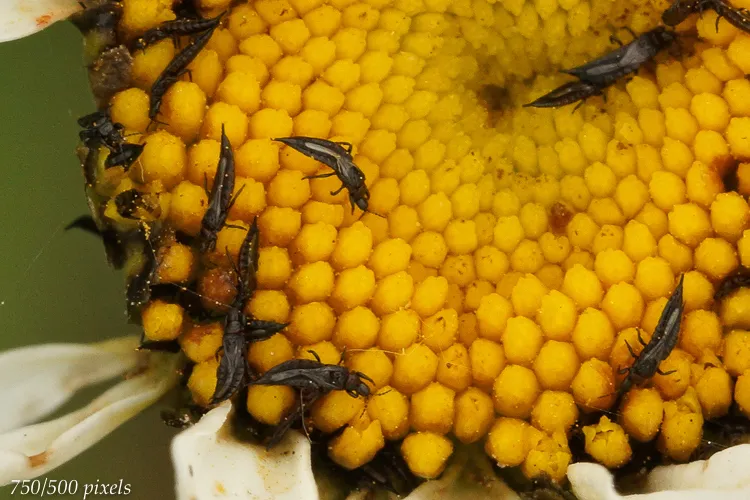
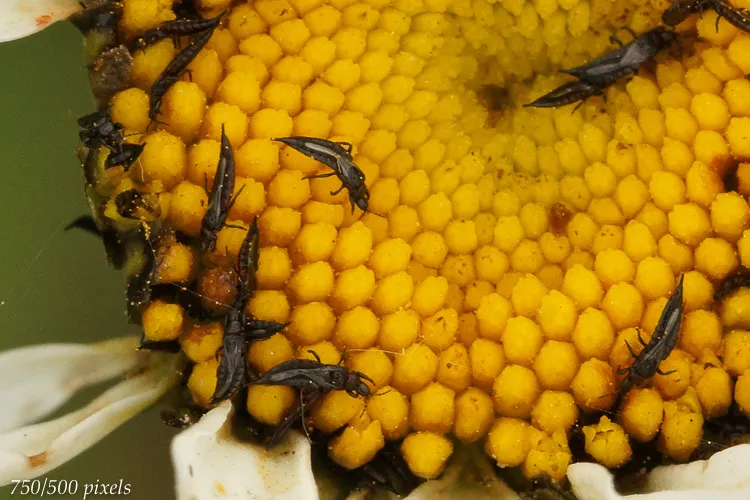
Photo credits: Contributed by Lynette Elliott; Additional contributions by Beatriz Moisset