
Eumesosoma roeweri
This record describes Eumesosoma roeweri (species). Recorded family: Sclerosomatidae. Recorded order: Opiliones.
Identification and Appearance
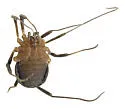
Classification
- Kingdom
- Animalia
- Phylum
- Arthropoda
- Class
- Arachnida
- Order
- Opiliones (Harvestmen)
- Suborder
- Eupnoi
- Superfamily
- Phalangioidea
- Family
- Sclerosomatidae
- Genus
- Eumesosoma
Imported taxonomy record. Source availability varies; see the source references and editorial policy below.
Habitat and Range
Habitat
Considered a specialist in prairies and grasslands.
Geographic Range
Central US: Texas, Louisiana, Oklahoma, Arkansas, Kansas, Missouri, Nebraska, Iowa, South Dakota, North Dakota, and Wisconsin. Also recorded from Boyle County, Kentucky, which was regarded as an introduction (Cokendolpher 1980), but should be the focus of a future molecular study.
Seasonal Activity
Northern states (Dakotas, Minnesota, Iowa, Nebraska, and Kansas): Adults from late July to early October; immatures from early May to August. Southern states (Oklahoma, Arkansas, Louisiana, and Texas): Adults year round; immatures from February to late May.
Diet and Behavior
Life History
"Limited information suggests oviposition takes place in the autumn, with eggs hatching in the spring (late winter in warmer climates) and sexual maturation occuring by summer. Specimens maintained in the laboratory do well on a diet of beer and sugar water, but lettuce, cockroaches, and moths are eaten as well; no cannibalism was noted." --Cokendolpher 1980
About Harvestmen: the wider group
Order-level background for Opiliones, the group containing Eumesosoma roeweri. Species-specific details appear above.
Group overview
Opiliones (harvestmen/daddy longlegs) includes ~6,650 described species. Despite common myths, harvestmen are NOT spiders - they have a single fused body (not two segments), no venom glands, and no silk. They are completely harmless.
Ecological role of the group
Some harvestmen species practice paternal care - males guard eggs, a rare behavior among arachnids. Many species can detach their legs when caught by predators (autotomy), and the detached leg continues twitching to distract the predator.
Economic and practical significance of the group
Harvestmen have minimal economic impact. They are primarily beneficial as predators of small arthropods and as decomposers of organic matter in forest and garden ecosystems.
Recorded sources for this group: Arachnology research. Imported estimates may describe particular regions or reporting periods.
Photos of Eumesosoma roeweri (5)
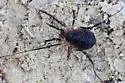
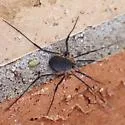
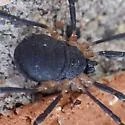
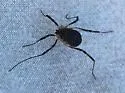
Photo credits: Contributed by marshal hedin; Additional contributions by Ray Fisher
Frequently Asked Questions About Eumesosoma roeweri
Where is Eumesosoma roeweri found?
| Feature | Details |
|---|---|
| Habitat | Considered a specialist in prairies and grasslands. |
| Range | Central US: Texas, Louisiana, Oklahoma, Arkansas, Kansas, Missouri, Nebraska, Iowa, South Dakota, North Dakota, and Wisconsin. Also recorded from Boyle County, Kentucky, which was regarded as an introduction (Cokendolpher 1980), but should be the focus of a future molecular study. |
When is Eumesosoma roeweri active?
Eumesosoma roeweri: seasonal activity - Northern states (Dakotas, Minnesota, Iowa, Nebraska, and Kansas): Adults from late July to early October; immatures from early May to August. Southern states (Oklahoma, Arkansas, Louisiana, and Texas): Adults year round; immatures from February to late May..
What is the life cycle of a Eumesosoma roeweri?
Limited information suggests oviposition takes place in the autumn, with eggs hatching in the spring (late winter in warmer climates) and sexual maturation occuring by summer. Specimens maintained in the laboratory do well on a diet of beer and sugar water, but lettuce, cockroaches, and moths are eaten as well; no cannibalism was noted. --Cokendolpher 1980