
Eulimnadia geayi
This record describes Eulimnadia geayi (species). Recorded family: Limnadiidae. Recorded order: Diplostraca.
Identification and Appearance
Classification
- Kingdom
- Animalia
- Phylum
- Arthropoda
- Class
- Branchiopoda
- Order
- Diplostraca
- Suborder
- Spinicaudata
- Family
- Limnadiidae
- Genus
- Eulimnadia
Imported taxonomy record. Source availability varies; see the source references and editorial policy below.
Habitat and Range
Geographic Range
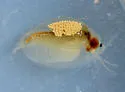
Known in our range from Bernalillo Co., NM. Summarizing from one image post , which includes contributions from D. Christopher Rogers : This species has heretofore apparently only been reported from Venezuela, Colombia, Mexico , and Brasil . Rabet 2010 , however, states, "the occurrence of this species in Colombia is not established". This is due to confusion with a Venezuelan locality. It also states, "Localities in Mexico (Daday de Deés 1926 ) should be confirmed by genetic or egg morphology studies". Regarding the latter, Belk 1989 concludes that adult morphology is generally inadequate for species ID in this genus, and that use of egg features is required. In addition, Maeda-Martinez et al. report that the specimen used for Daday de Deés 1926 was badly damaged and not properly identifiable. And, Maeda-Martinez et al. state that they have not found any material in Mexico that matches E. geayi ." The Bugguide post , therefore, is the first valid record for North America.
About Diplostraca: the wider group
Order-level background for Diplostraca, the group containing Eulimnadia geayi. Species-specific details appear above.
Group overview
Diplostraca includes ~3,500 described species of water fleas (Daphnia) and clam shrimp. Daphnia are among the most studied organisms in ecology and toxicology - they reproduce by parthenogenesis, producing only females under good conditions.
Ecological role of the group
Daphnia are keystone species in freshwater food webs - they filter algae from water and are primary prey for fish. A single Daphnia can filter up to 4 mL of water per hour, and their populations can dramatically improve water clarity in lakes.
Economic and practical significance of the group
Daphnia are the global standard test organism for aquatic toxicology (EPA, OECD). They are essential in aquaculture as live food for fish fry. The Daphnia genome was the first crustacean genome to be sequenced (2011).
Recorded sources for this group: EPA ecotoxicology, freshwater ecology, genomics. Imported estimates may describe particular regions or reporting periods.
Photos of Eulimnadia geayi (5)
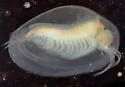
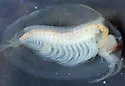
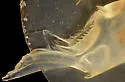
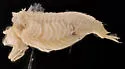
Photo credits: Contributed by Edward L. Ruden