
Echinothrips americanus
This record describes Echinothrips americanus (species). Recorded family: Thripidae. Recorded order: Thysanoptera.
Identification and Appearance
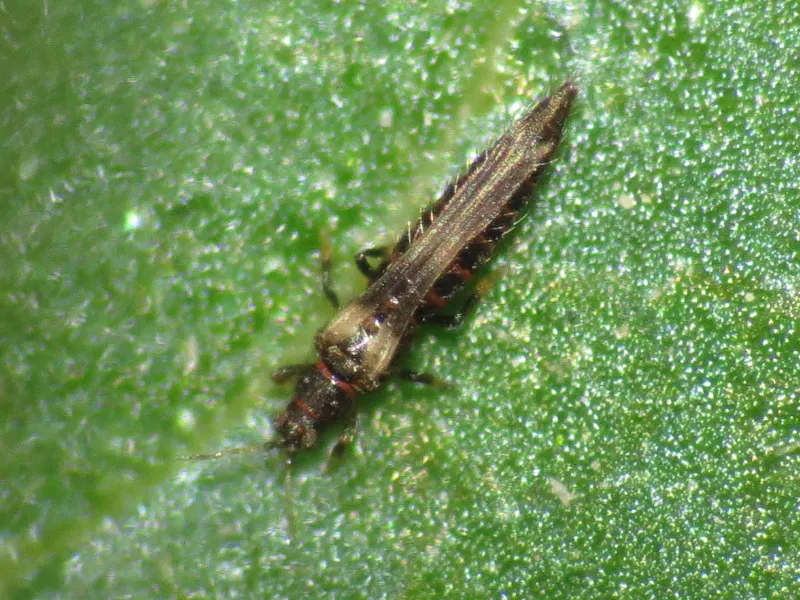
These thrips are generally slow-moving compared to a western flower thrips (WFT). Damage to crops can range from minor to extensive, and production may decrease.
Wikipedia reference for Echinothrips americanus: https://en.wikipedia.org/wiki/Echinothrips_americanus.
Classification
- Kingdom
- Animalia
- Phylum
- Arthropoda
- Class
- Insecta
- Order
- Thysanoptera (Thrips)
- Family
- Thripidae
- Subfamily
- Thripinae
- Genus
- Echinothrips
Imported taxonomy record. Source availability varies; see the source references and editorial policy below.
Habitat and Range
Geographic Range
Bermuda, Canada (south), Mexico, USA (most of the eastern states), but introduced to Europe (Italy, Netherlands, Austria, UK, Czech Republic, South Bohemia) and also Thailand.
Diet and Behavior
Diet: Host plants reported: 40 cultivated and 59 native species.
Life History
They deposit their eggs inside the leaf tissue. The pre-pupae and pupal stages are on the leaf tissue. Developmental time varies with different host species.
About Thrips: the wider group
Order-level background for Thysanoptera, the group containing Echinothrips americanus. Species-specific details appear above.
Group overview
Thysanoptera (thrips) includes ~6,000 described species. Thrips are among the smallest flying insects - most are just 1-2mm long. Despite their tiny size, they are major agricultural pests worldwide.
Ecological role of the group
Some thrip species are actually beneficial predators that feed on pest mites and other small arthropods. Thrips are also pollinators of some tropical plants, including certain palm species.
Economic and practical significance of the group
Western flower thrips (Frankliniella occidentalis) is considered one of the top 10 most economically important pest insects globally, causing billions in crop damage through direct feeding and transmission of tospoviruses like tomato spotted wilt virus.
Recorded sources for this group: USDA, agricultural entomology research. Imported estimates may describe particular regions or reporting periods.
Photos of Echinothrips americanus (2)
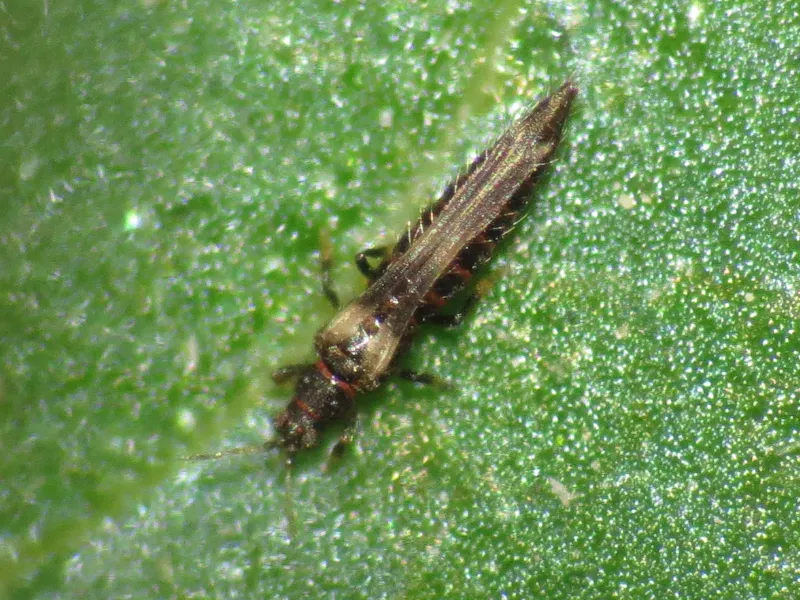
Photo credits: Contributed by John S. Ascher; Additional contributions by Beatriz Moisset
Frequently Asked Questions About Echinothrips americanus
What is Echinothrips americanus?
Echinothrips americanus is a species in the family Thripidae, within the order Thysanoptera.
Where is Echinothrips americanus found?
Range: Bermuda, Canada (south), Mexico, USA (most of the eastern states), but introduced to Europe (Italy, Netherlands, Austria, UK, Czech Republic, South Bohemia) and also Thailand.
What does Echinothrips americanus eat?
The diet of the Echinothrips americanus includes Host plants reported: 40 cultivated and 59 native species..
What is the life cycle of a Echinothrips americanus?
They deposit their eggs inside the leaf tissue. The pre-pupae and pupal stages are on the leaf tissue. Developmental time varies with different host species.