
Cynortoides quadrispinosa
This record describes Cynortoides quadrispinosa (species). Recorded family: Cosmetidae. Recorded order: Opiliones.
Identification and Appearance
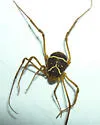
Per Shahan Derkarabetian , This species can be easily differentiated from V. ornatus based on several characteristics: 1) C. quadrispinosa has two pairs of spines (on the third and fourth areas) while V. ornatus has one elongate pair; 2) in C. quadrispinosa the white band of pigmentation is straighter and goes in between the two pairs of spines, while in V. ornatus the white pigmented band is heavily curved and is posterior to the large pair of spines; and 3) the leg femurs of C. quadrispinosa are obviously lighter in color compared to the body, while the leg femurs of V. ornatus are of more uniform coloration with the body.
Classification
- Kingdom
- Animalia
- Phylum
- Arthropoda
- Class
- Arachnida
- Order
- Opiliones (Harvestmen)
- Suborder
- Laniatores
- Superfamily
- Travunioidea
- Family
- Cosmetidae
- Genus
- Cynortoides
Imported taxonomy record. Source availability varies; see the source references and editorial policy below.
Habitat and Range
Geographic Range
Jamaica; evidently introduced into S. Florida.
Additional species information
Species notes from the sources
Etymology: Cynortoides quadrispinosa Goodnight & Goodnight, 1942
About Harvestmen: the wider group
Order-level background for Opiliones, the group containing Cynortoides quadrispinosa. Species-specific details appear above.
Group overview
Opiliones (harvestmen/daddy longlegs) includes ~6,650 described species. Despite common myths, harvestmen are NOT spiders - they have a single fused body (not two segments), no venom glands, and no silk. They are completely harmless.
Ecological role of the group
Some harvestmen species practice paternal care - males guard eggs, a rare behavior among arachnids. Many species can detach their legs when caught by predators (autotomy), and the detached leg continues twitching to distract the predator.
Economic and practical significance of the group
Harvestmen have minimal economic impact. They are primarily beneficial as predators of small arthropods and as decomposers of organic matter in forest and garden ecosystems.
Recorded sources for this group: Arachnology research. Imported estimates may describe particular regions or reporting periods.
Photos of Cynortoides quadrispinosa (5)
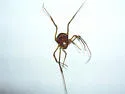
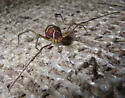
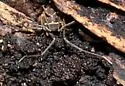
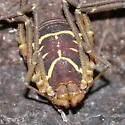
Photo credits: Contributed by Ken Wolgemuth
Frequently Asked Questions About Cynortoides quadrispinosa
What is Cynortoides quadrispinosa?
Cynortoides quadrispinosa is a species in the family Cosmetidae, within the order Opiliones.
How do you identify Cynortoides quadrispinosa?
Per Shahan Derkarabetian , This species can be easily differentiated from V. ornatus based on several characteristics: 1) C. quadrispinosa has two pairs of spines (on the third and fourth areas) while V. ornatus has one elongate pair; 2) in C. quadrispinosa the white band of pigmentation is straighter and goes in between the two pairs of spines, while in V. ornatus the white pigmented band is heavily curved and is posterior to the large pair of spines; and 3) the leg femurs of C. quadrispinosa are obviously lighter in color compared to the body, while the leg femurs of V. ornatus are of more uniform coloration with the body.
Where is Cynortoides quadrispinosa found?
Range: Jamaica; evidently introduced into S. Florida.