
Conasellus racovitzai
This record describes Conasellus racovitzai (species). Recorded family: Asellidae. Recorded order: Isopoda.
Identification and Appearance
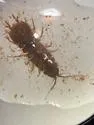
The two subspecies (likely to be full species) are mostly told apart by range, although there are some morphological differences too. This should be helpful in the west, where it's unclear which subspecies is introduced (although ssp. racovitzai is at least known from Washington). Those features are (from Williams, 1970): 1. The second (longer) antennae are on average longer in australis compared to the body length 2. The shape of the tip of the male first pleopod is more rounded in australis and more truncate in racovitzai 3. The endite of the male second pleopod's exopod is longer compared to the endopod in australis than in racovitzai and is generally wider than long in australis 4. The male second pleopod's endopod is squatter in australis than in racovitzai 5. The tube at the tip of the male second pleopod's endopod (the cannula) is wider in australis than in racovitzai and generally has a thickened outer lateral margin This species is likely to be split into 2 different species in the near future
Classification
Habitat and Range
Habitat
Epigean (surface waters)
Geographic Range
disjunct: across the northeastern-north central US and adjacent Canada (ssp racovitzai ), and in the far southeastern US (ssp australis ). Introduced across the west and in Europe
Additional species information
Species notes from the sources
Etymology: Caecidotea racovitzai (Williams, 1970)
About Isopods: the wider group
Order-level background for Isopoda, the group containing Conasellus racovitzai. Species-specific details appear above.
Group overview
Isopoda includes ~10,000 described species of woodlice, pill bugs, and sea slaters. Woodlice are the only crustaceans to have fully adapted to life on land. Pill bugs (roly-polies) can roll into a perfect ball for defense.
Ecological role of the group
Woodlice are critical soil decomposers, breaking down dead plant material and recycling calcium and other nutrients. They breathe through gill-like structures and require moist environments. Giant deep-sea isopods (Bathynomus) can grow up to 50cm long.
Economic and practical significance of the group
Woodlice are generally beneficial in gardens as decomposers, though they can occasionally damage seedlings and soft fruits in large numbers.
Recorded sources for this group: Soil ecology research, marine biology. Imported estimates may describe particular regions or reporting periods.
Photos of Conasellus racovitzai (3)
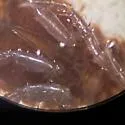
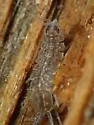
Photo credits: Contributed by Sequoia Wrens; Additional contributions by Joshua Stuart Rose
Frequently Asked Questions About Conasellus racovitzai
What is Conasellus racovitzai?
Conasellus racovitzai is a species in the family Asellidae, within the order Isopoda.
How do you identify Conasellus racovitzai?
The two subspecies (likely to be full species) are mostly told apart by range, although there are some morphological differences too. This should be helpful in the west, where it's unclear which subspecies is introduced (although ssp. racovitzai is at least known from Washington). Those features are (from Williams, 1970): 1. The second (longer) antennae are on average longer in australis compared to the body length 2. The shape of the tip of the male first pleopod is more rounded in australis and more truncate in racovitzai 3. The endite of the male second pleopod's exopod is longer compared to the endopod in australis than in racovitzai and is generally wider than long in australis 4. The male second pleopod's endopod is squatter in australis than in racovitzai 5. The tube at the tip of the male second pleopod's endopod (the cannula) is wider in australis than in racovitzai and generally has a thickened outer lateral margin
Where is Conasellus racovitzai found?
| Feature | Details |
|---|---|
| Habitat | Epigean (surface waters) |
| Range | disjunct: across the northeastern-north central US and adjacent Canada (ssp racovitzai ), and in the far southeastern US (ssp australis ). Introduced across the west and in Europe |