
Camberwell Beauty
Nymphalis antiopa
This record describes Nymphalis antiopa (species). Recorded family: Nymphalidae.
Identification and Appearance
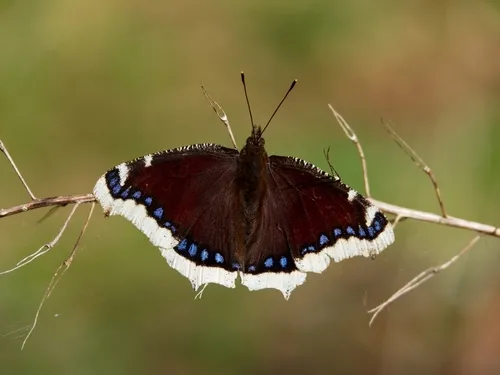
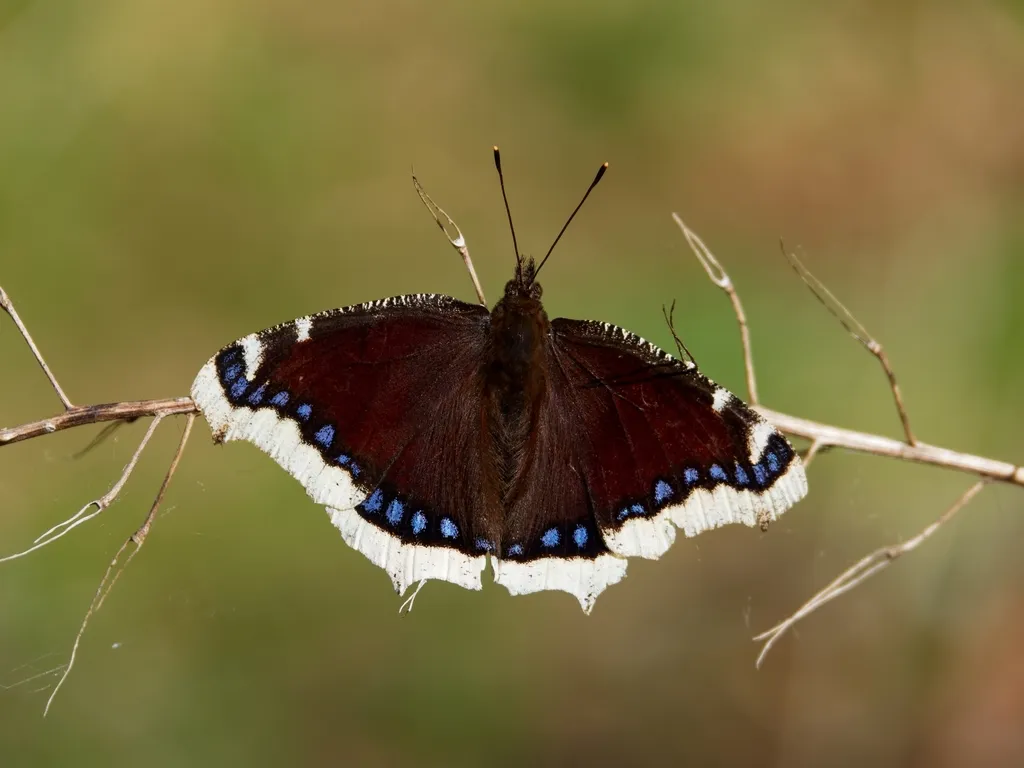
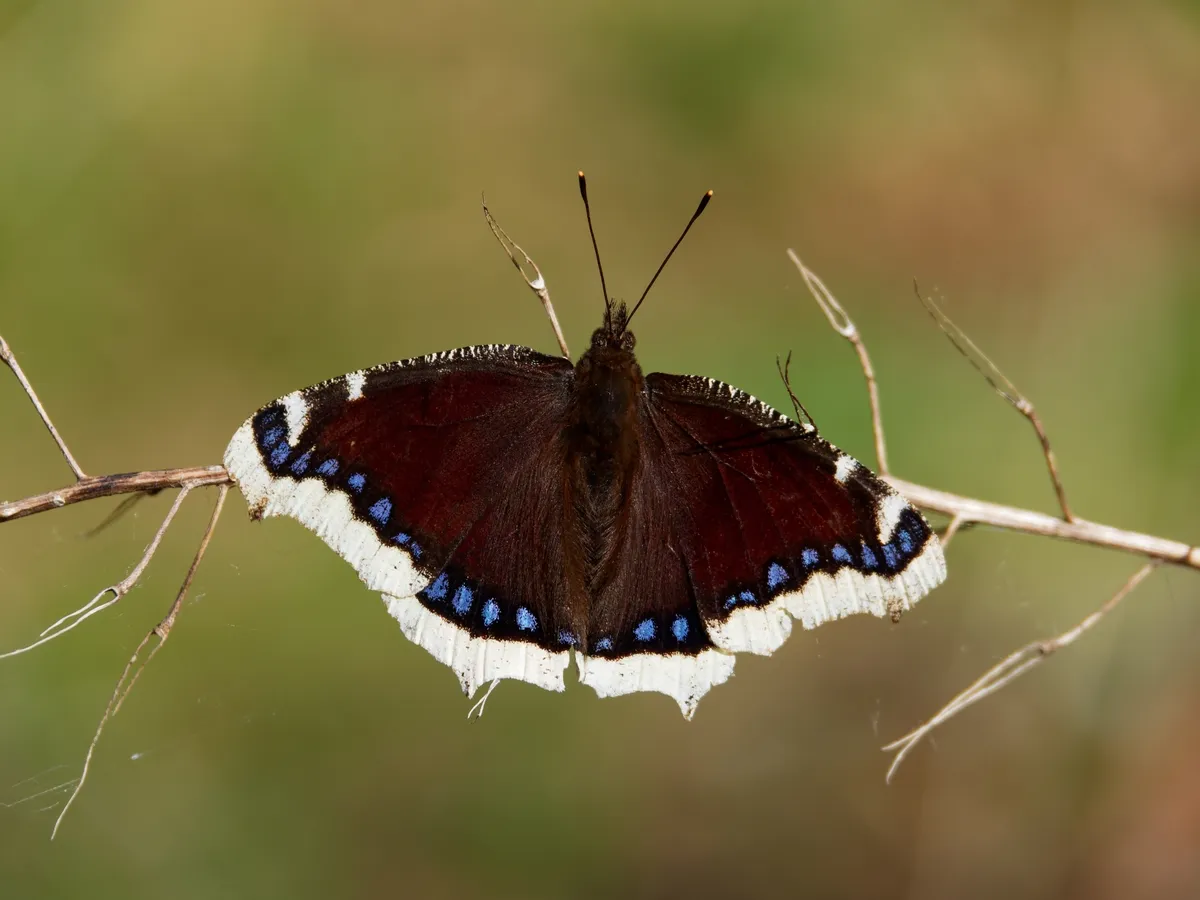
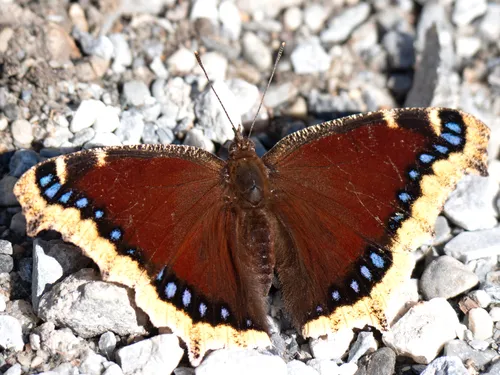
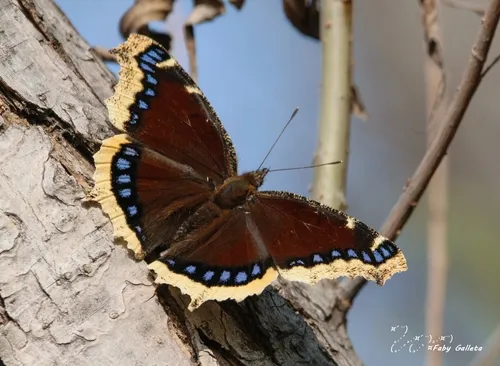
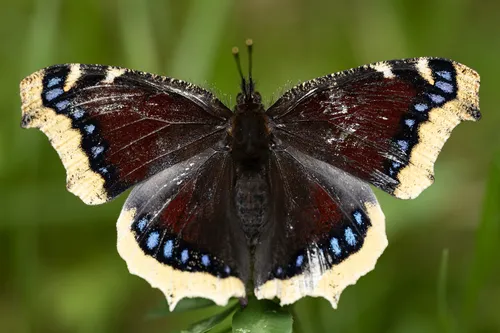
Known in America as the Mourning Cloak, it is a large and very distinctive butterfly, its deep maroon-red wings have a pale border that is fringed with blue. This butterfly is a great wanderer and is often seen in gardens feeding on rotting fruit, such as plums. The same individual will often remain in the same location for several days. In the spring the adults will feed from Willow flowers and sap runs. Although the adults have been seen in every month of the year, immigrants start to arrive in June and July, with a definite peak of sightings in August and September. Earlier sightings are from individuals emerging from hibernation. Eggs are laid in clusters around a twig. There is one brood per year. Some of the adults in Britain go into hibernation and a few survive the winter. This species is a rare migrant to the British Isles. Although there have been sightings from many parts of the British Isles, most records are from eastern counties. In some years there is a relatively-large influx of individuals, the last time was in 2006, when individuals were reported throughout the British Isles.
Wikipedia reference for Nymphalis antiopa: https://en.wikipedia.org/wiki/Nymphalis antiopa.
Classification
- Kingdom
- Animalia
- Phylum
- Arthropoda
- Class
- Insecta
- Superfamily
- Papilionoidea
- Family
- Nymphalidae (Brush-footed Butterflies)
- Subfamily
- Nymphalinae
- Tribe
- Nymphalini
- Genus
- Nymphalis (Tortoiseshells)
Imported taxonomy record. Source availability varies; see the source references and editorial policy below.
Habitat and Range
Habitat
This butterfly is a great wanderer and is often seen in gardens feeding on rotting fruit, such as plums. The same individual will often remain in the same location for several days. In the spring the adults will feed from Willow flowers and sap runs.
Seasonal Activity
Although the adults have been seen in every month of the year, immigrants start to arrive in June and July, with a definite peak of sightings in August and September. Earlier sightings are from individuals emerging from hibernation.
Diet and Behavior
Life History
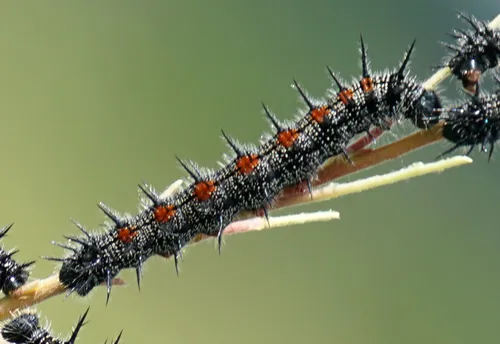
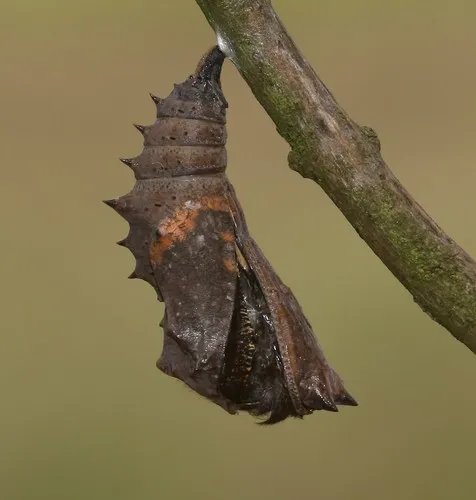
Eggs are laid in clusters around a twig. There is one brood per year. Some of the adults in Britain go into hibernation and a few survive the winter.
Additional species information
Recorded status
This species is a rare migrant to the British Isles. Although there have been sightings from many parts of the British Isles, most records are from eastern counties. In some years there is a relatively-large influx of individuals, the last time was in 2006, when individuals were reported throughout the British Isles.
Photos of Camberwell Beauty (9)
Frequently Asked Questions About Camberwell Beauty
What is Camberwell Beauty?
Camberwell Beauty (Nymphalis antiopa) is a species in the family Nymphalidae.
Where is Camberwell Beauty found?
Habitat: This butterfly is a great wanderer and is often seen in gardens feeding on rotting fruit, such as plums. The same individual will often remain in the same location for several days. In the spring the adults will feed from Willow flowers and sap runs.
When is Camberwell Beauty active?
Camberwell Beauty: seasonal activity - Although the adults have been seen in every month of the year, immigrants start to arrive in June and July, with a definite peak of sightings in August and September. Earlier sightings are from individuals emerging from hibernation..
What is the life cycle of a Camberwell Beauty?
Eggs are laid in clusters around a twig. There is one brood per year. Some of the adults in Britain go into hibernation and a few survive the winter.